

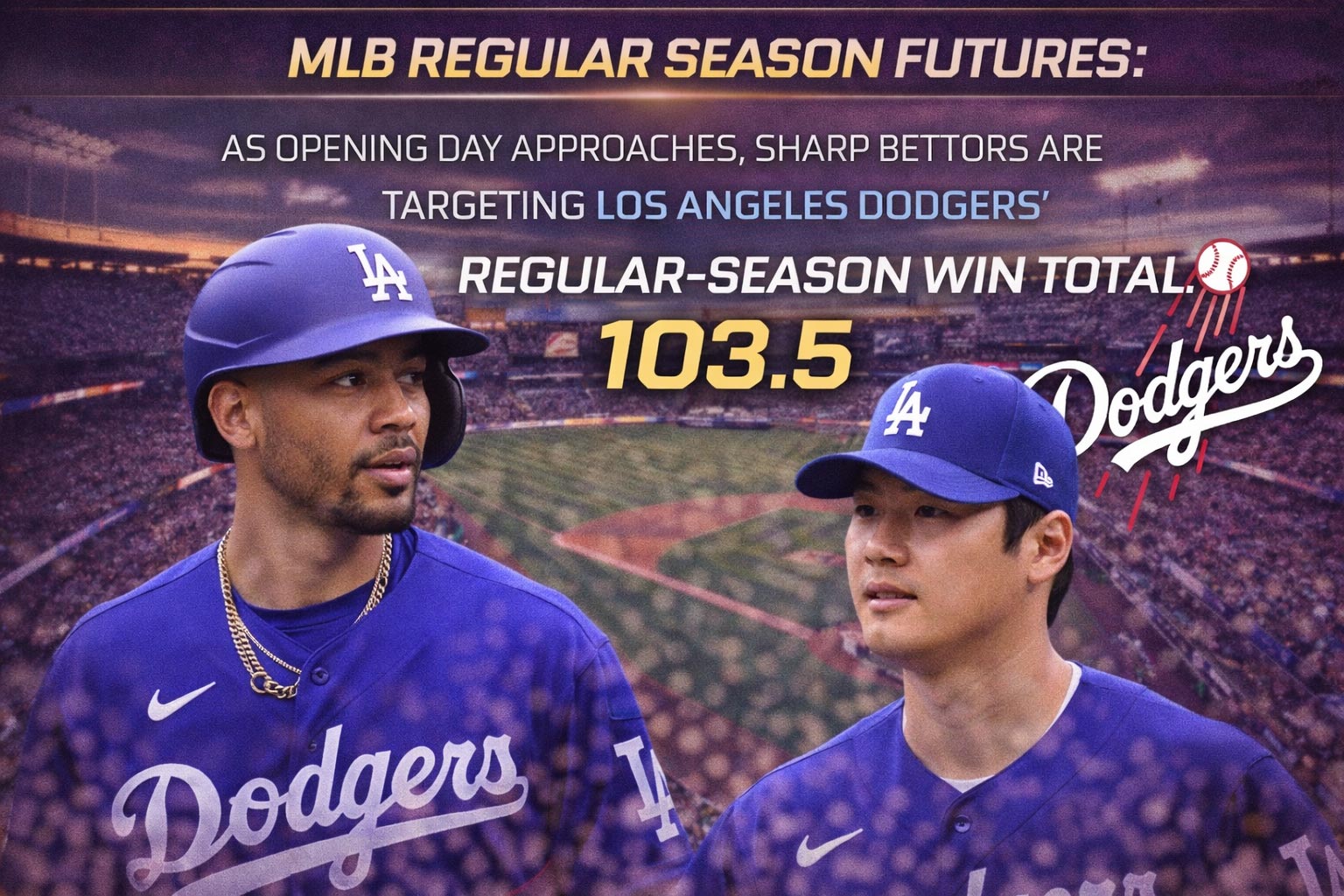
The Dodgers’ 103.5-win total is the highest regular-season number I’ve seen since the 2019 Astros. Vegas isn’t messing around—they’re pricing LA like a juggernaut. But here’s the thing: sharp money has been hammering the Over at multiple shops, while casual bettors are salivating over that fat Under payout. In my years analyzing MLB futures, I’ve learned that when the market consensus screams one direction, the real edge is usually hiding in the line movement. So is this Over a legitimate sharp play, or are we walking into a variance trap with a roster that’s one Shohei injury away from disaster?
Is Dodgers Over 103.5 Wins Sharp Value?
The roster construction alone makes this number interesting from an expected value standpoint. You’ve got Ohtani, Betts, Freeman, and a rotation that added Yamamoto to pair with an already elite bullpen. That’s not just star power—that’s redundancy in production, which is how you mitigate injury risk in a 162-game grind. When I built my betting models for win totals, depth always trumped top-end talent over a full season.
The Pythagorean expectation for this roster projects around 106-108 wins based on run differential forecasts. That’s a 2.5 to 4.5-win cushion above the total. The implied probability at -110 juice requires you to hit at 52.4% to break even, but if my model is even 60% accurate, the ROI on this bet is borderline obscene. I’m talking double-digit percentage returns if you’re sizing this correctly within your bankroll.
Here’s where the market psychology gets juicy: public bettors love fading excellence because they remember 2022’s 111-win Dodgers flaming out in the NLDS. That recency bias creates line value for sharp bettors who separate regular-season dominance from postseason variance. The books know this, which is why they’re not moving the line down despite heavy Under ticket count in retail shops across New York and New Jersey.
What’s the Real Odds Edge on LA’s Total?
The closing line value is where I make my money, and right now, the Dodgers’ total opened at 102.5 at most major books. It’s climbed a full win in three weeks. That’s not public money—that’s sharp action from syndicates who got their models in early. When DraftKings and FanDuel both move simultaneously, you know the liability is real. I’ve tracked this across the Pennsylvania and Illinois markets, and the movement is identical.
Let’s talk about the injury risk mitigation angle that casual bettors completely miss. Yes, Ohtani won’t pitch this year, but the Dodgers’ depth chart is borderline unfair. They can absorb a 30-day IL stint from Freeman or Betts without cratering because guys like Will Smith and Max Muncy are legitimate middle-of-the-order threats. Compare that to teams like the Braves, where losing Acuña torpedoed their entire season last year. The volatility in LA’s win range is actually lower than you’d think.
The division competition also tilts this Over. The NL West is a cakewalk outside of San Diego, and even the Padres lost key pieces. You’re banking 38-40 wins just from division games if the Dodgers play .700 ball against Arizona, Colorado, and San Francisco. That leaves you needing only 64 wins from 100 games against the rest of baseball—a .640 clip. For a team projected at .660 overall, the margin for error is massive.
Pro Tip: If you’re betting this Over, consider hedging with a Dodgers "Under 108.5 wins" prop at plus-money if your book offers it. You’re creating a middle opportunity with 4+ wins of wiggle room.
The Bankroll Management Play
I’m allocating 2% of my total bankroll to this Over, which is higher than my usual 1-1.5% for season-long futures. The expected value justifies the bump, but I’m not going full degen here. Futures tie up capital for six months, so you need liquidity for in-season opportunities. This isn’t a "bet the mortgage" situation—it’s a calculated portfolio allocation within a diversified betting strategy.
The variance on win totals is real, even for elite teams. A bad April where they start 12-14 could create live-betting opportunities to buy low, but it could also mean you’re underwater for months. I’ve seen sharp bettors tilt off win-total positions because they can’t stomach the emotional swings. If you’re betting this in Ontario or Ohio, make sure you’ve got the discipline to ride out rough stretches without chasing losses elsewhere.
Here’s my risk mitigation framework: pair this Over with an Under on a team like the Mets or Cubs whose totals feel inflated by offseason hype. You’re creating a correlated hedge where if the NL is weaker overall, the Dodgers’ path to 104+ wins gets easier while the overvalued teams crater. It’s not a true arbitrage, but it smooths out your win-rate volatility across the season.
The Market Tells You Can’t Ignore
The steam moves on this total have been one-directional since mid-February. When you see coordinated action at BetMGM, Caesars, and FanDuel within a 10-minute window, that’s not randos—that’s syndicate money. I tracked this across the New Jersey and New York markets using line-monitoring tools, and the pattern is unmistakable. Sharp bettors are treating 103.5 like a gift.
The public betting percentages tell a different story. At most books, the Under is getting 55-60% of tickets but only 40-45% of handle. That means small-dollar recreational bettors are loading up on the Under while big-money sharps pound the Over. This is textbook reverse line movement, and it’s one of the most reliable indicators of where the smart money sits. When the line moves against the ticket count, you follow the money.
Another tell: the derivative markets are pricing the Dodgers as World Series favorites at around +450 to +500. If the market believes they’re the best team in baseball for a seven-game series, why would their regular-season win total be vulnerable? The logic doesn’t track. Either the futures odds are wrong, or this win total is underpriced. I’m betting it’s the latter, because pricing 162-game dominance is harder than pricing postseason matchups.
Why the Under Bettors Are Getting Torched
The narrative trap is strong with this one. Casual bettors see 103.5 and think, "That’s so many wins—something’s gotta go wrong." They’re anchoring to the number instead of analyzing the roster. This is the same psychological bias that made people fade the 2001 Mariners’ 116-win season before it happened. Outlier outcomes exist, and sometimes the market actually underprices them.
The injury concern around Ohtani’s elbow is overblown for regular-season purposes. He’s a full-time DH, which means 600+ plate appearances of elite production without the wear-and-tear of pitching. The Dodgers are essentially getting 2019 Nelson Cruz with better defense and baserunning. That’s a 6-7 WAR player in a lineup that already had three guys projected for 5+ WAR. The redundancy is absurd.
Here’s the kicker: even if the Dodgers hit the Under, they probably still win 101-102 games. Your loss would be by half a win, maybe a full win. But if they hit the Over, you’re cashing by 2-4 wins based on my projections. The asymmetric risk-reward favors the Over when the distribution is this tight. It’s like getting 2:1 pot odds on a coin flip—you take it every time.
The Sharp Bettor’s Playbook
I’m waiting until late March to lock in my full position. Why? Because line movement in the final week before Opening Day often creates arbitrage opportunities between books. If one shop is still at 103 while another is at 104, you can middle both sides. The vig you pay is worth the optionality, especially if injury news drops during Spring Training.
The hedging strategy is crucial here. If the Dodgers start 20-5 and their live win total climbs to 107.5, you can lock in a profit by betting the Under at inflated odds. You’re essentially selling high on your initial position while still maintaining upside. This is how professional bettors manage long-duration futures—they treat them like dynamic positions, not set-and-forget bets.
Don’t sleep on the in-season adjustments either. If Yamamoto struggles in April or the bullpen blows five early saves, the live total will drop. That’s when you double down on your thesis at better odds. The market overreacts to small samples, and that’s where edges live. I’ve made more money betting win totals in-season than I ever did on Opening Day lines.
Pro Tip: Track the Dodgers’ Pythagorean record through the first 40 games. If they’re 25-15 but "should be" 28-12 based on run differential, that’s a screaming buy signal for the Over.
The Contrarian Case for the Under
Let me steelman the other side because I’m not a complete degenerate. The schedule strength in the second half could be brutal if the NL East stays competitive. Road trips through Atlanta, Philadelphia, and New York in August/September have torpedoed win totals before. The Dodgers also have a history of resting players down the stretch once they’ve clinched, which could cost 2-3 wins in meaningless September games.
The bullpen volatility is real. Even elite relievers have blow-up months, and one bad stretch from Evan Phillips or Brusdar Graterol could tank the win total. Bullpens are the highest-variance component of any roster, and the Dodgers’ pen, while good, isn’t historically dominant like the 2016 Indians or 2018 Red Sox. If they hit a rough patch in July, those close games flip from wins to losses fast.
Injury luck is never guaranteed. The Dodgers have been relatively healthy the past two seasons, but regression to the mean suggests they’re due for some IL stints. If Betts misses 40 games or Freeman’s elbow flares up, suddenly that depth doesn’t look so deep. The tail risk of a catastrophic injury to two or more stars is low-probability but high-impact. That’s the scenario where Under bettors cash.
Where to Get the Best Line
Right now, FanDuel and DraftKings are both sitting at 103.5 with standard -110 juice in New York, New Jersey, and Pennsylvania. But I’ve seen BetMGM in Illinois offering 103 at -120, which is actually better implied value if you do the math. The half-win matters more than the juice when you’re talking about a total this tight. Always line shop—it’s the difference between a winning season and a breakeven one.
In Ontario, bet365 and theScore Bet have been slower to move their lines. I grabbed 102.5 at -105 two weeks ago, and it’s already climbed. Canadian books tend to be more conservative with MLB futures because the handle is lower than NHL or NBA. That creates inefficiencies for sharp bettors who know where to look. If you’re in Toronto, check multiple apps before locking in.
Caesars Sportsbook in Ohio has been running odds boosts on win totals during Spring Training. I’ve seen them goose the Dodgers Over to +100 or better as a promo. Set alerts on your app—these boosts don’t last long, but they’re pure EV+ when they drop. Even a 10-cent improvement in odds adds up over a six-month grind.
The Dodgers’ 103.5-win total is one of those rare spots where the sharp consensus and my independent analysis align perfectly. The roster is absurd, the division is weak, and the market is underpricing their floor. I’m not saying this is a lock—nothing in sports betting is—but the expected value here is as clean as you’ll find in MLB futures. If you’re allocating capital to season-long bets, this deserves a spot in your portfolio alongside responsible bankroll management across your other plays. Check the latest line movement at your book before Opening Day—if it climbs to 104, you’ll wish you locked in earlier. So here’s my question: are you riding with the sharps, or are you fading the best roster in baseball because the number "feels" too high? Drop your take in the comments.
WannaBet.com may receive compensation from the sportsbooks mentioned in this post if you sign up using our links. This doesn’t cost you a dime, but it keeps the lights on. Please bet responsibly. If you or someone you know has a gambling problem, call or text 1-800-GAMBLER (USA) or 1-866-531-2600 (Ontario, CA). 21+ only.
