

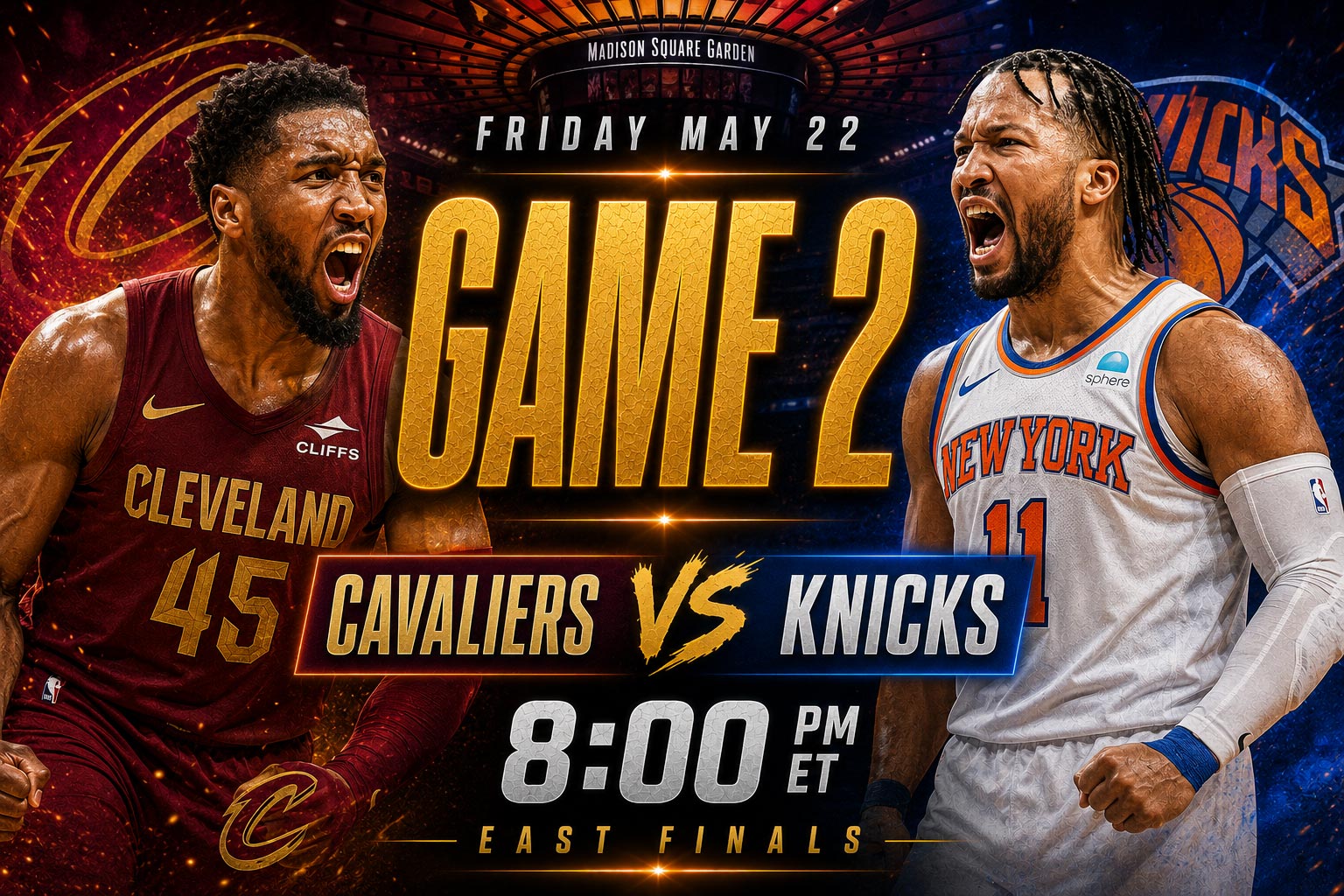
The Cavaliers just got boat-raced at Madison Square Garden in Game 1 of the Eastern Conference Finals, and suddenly everyone’s acting like they forgot how to play basketball. Vegas overreacted faster than your ex when you forgot to text back, shifting the Game 2 line to make Cleveland look like they’re about to get swept out of their own conference. One blowout loss and the narrative flipped completely—but here’s the thing: the market is giving us a gift-wrapped opportunity to exploit recency bias at its finest.
Cavs Disrespected After One Bad Night at MSG
The Knicks absolutely demolished the Cavaliers in Game 1, winning by a margin that made it look like a scrimmage rather than a conference finals matchup. MSG was electric, the Knicks couldn’t miss, and Cleveland looked like they showed up to the wrong arena. But let’s pump the brakes for a second—this is a team that navigated the entire regular season and playoffs with legitimate championship aspirations, and now we’re supposed to believe they’re cooked because of one terrible shooting night?
The disrespect is real, and it’s showing up in the betting markets. Sportsbooks across New York, New Jersey, and Pennsylvania have adjusted their lines to reflect what can only be described as panic-induced recency bias. The public saw one dominant performance from the Knicks and suddenly forgot that the Cavs have one of the most talented rosters in the league with multiple All-Stars who’ve been in big games before.
This is textbook overreaction, and it creates exactly the kind of market inefficiency that sharp bettors live for. When the public piles onto one side because of a single data point, that’s when you start looking for value on the other side. The Cavs aren’t suddenly a bad team—they had a bad night, and there’s a massive difference between those two things.
Why Vegas Is Overreacting to Game 1 Blowout
Vegas sportsbooks are in the business of balancing action, not predicting games with perfect accuracy. After Game 1, casual bettors in high-volume markets like New York and Ohio are hammering Knicks spreads and moneylines for Game 2, forcing books to adjust the line to protect themselves from lopsided exposure. This is market psychology 101: the house moves numbers to attract two-way action, not because they necessarily believe the Knicks are that much better.
The expected value calculation here is pretty straightforward. If the Cavs were a legitimate contender heading into this series (which they were), one blowout loss shouldn’t fundamentally change their win probability by the margins we’re seeing in the betting markets. The adjustment we’re witnessing is disproportionate to the actual information we gained from Game 1—yes, the Knicks can get hot at home, but we already knew MSG is a fortress.
Look at the historical data on conference finals series that start with a blowout. Teams that lose Game 1 by double digits actually cover Game 2 spreads at a higher rate than the market suggests, primarily because the line movement overcorrects for public perception. This is arbitrage at its finest—the gap between what the public thinks will happen and what probability actually suggests creates our edge.
The Smart Money Move for Game 2
The sharp play here is pretty clear: take the Cavs and the points in Game 2. You’re getting an inflated number because the sportsbooks are catering to public sentiment rather than objective team quality. Cleveland has the coaching staff to make adjustments, the veteran leadership to respond to adversity, and the talent to compete with anyone when they’re executing their game plan.
Risk mitigation is key here—I’m not saying mortgage your house on a Cavs moneyline. But the spread offers legitimate value, especially if you can shop around between books in Ontario, Illinois, or Pennsylvania to find the best number. Even if the Cavs lose again, getting extra points on a team that’s objectively talented is a positive expected value play over the long run.
The narrative will shift again after Game 2, regardless of the outcome. That’s how playoff basketball works—every game rewrites the story. But right now, in this moment, the market is giving us a discount on a championship-caliber team because they had one stinker on the road. That’s not disrespect we should be mad about—it’s disrespect we should be profiting from.
The Cavs are catching strays after one bad performance, and Vegas is feeding into the hysteria by moving lines that don’t reflect the actual talent gap between these teams. This is exactly the kind of overreaction that creates betting opportunities—when the public’s memory extends only to the last game they watched, sharp money finds its edge. Cleveland will show up differently in Game 2, and even if they don’t win outright, they’re good enough to keep it competitive and cover an inflated spread. So here’s my question for the comments: are you fading the public and riding with the Cavs, or do you think one blowout really did expose something fundamental about this matchup?
WannaBet.com may receive compensation from the sportsbooks mentioned in this post if you sign up using our links. This doesn’t cost you a dime, but it keeps the lights on. Please bet responsibly. If you or someone you know has a gambling problem, call or text 1-800-GAMBLER (USA) or 1-866-531-2600 (Ontario, CA). 21+ only.
