

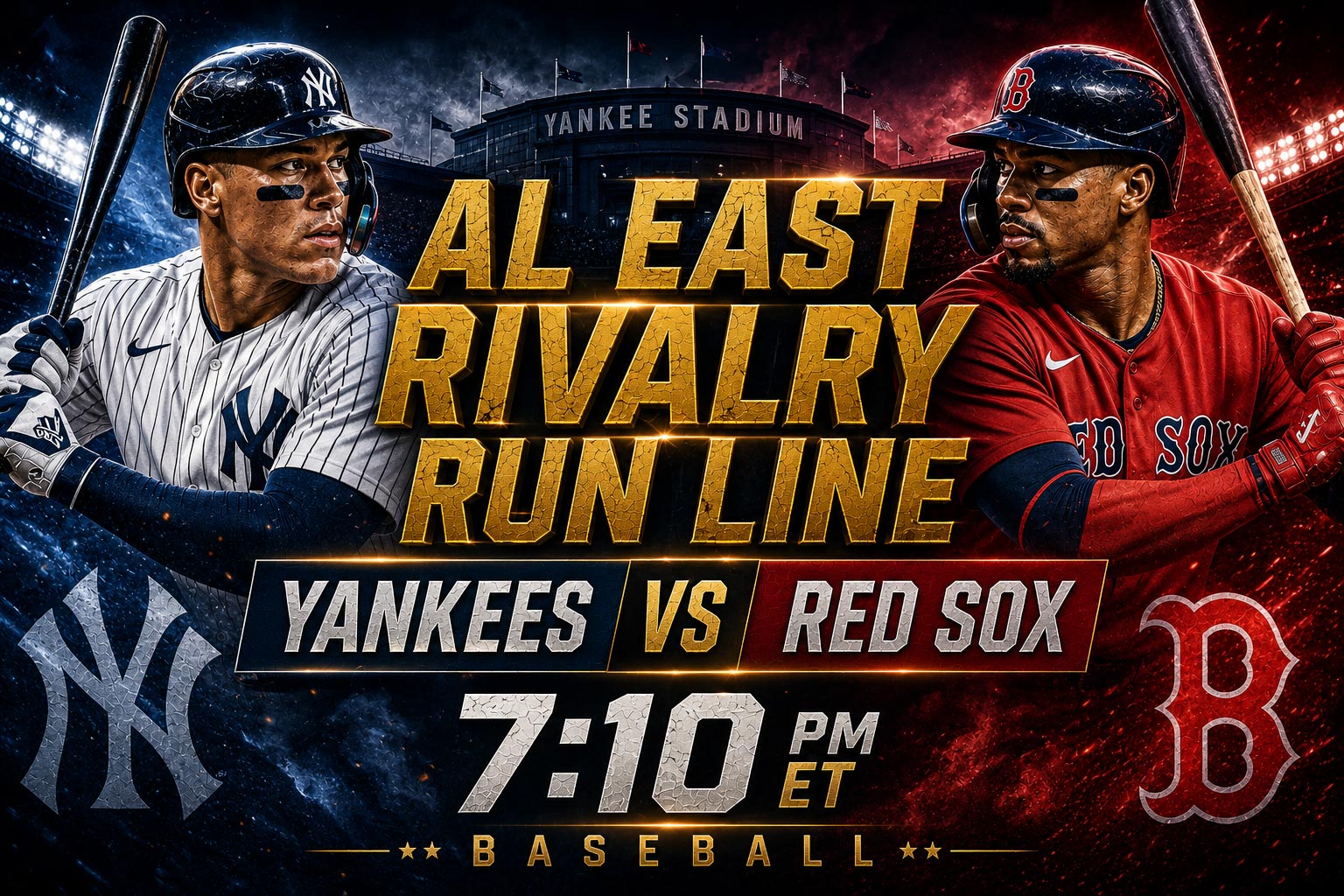
The Yankees-Red Sox NRFI on Friday night was supposed to be free money. Public bettors piled in harder than freshmen at their first frat party, convinced that two ace pitchers under the lights at Yankee Stadium meant a clean first inning was basically a statistical certainty. Spoiler alert: the baseball gods don’t care about your three-leg parlay, and they especially don’t care when 87% of the handle is on one side. What happened next was a masterclass in why "everyone knows" is the most expensive phrase in sports betting.
Yankees-Red Sox NRFI: Why the Public Got Cooked
The setup looked absolutely bulletproof on paper. You had Gerrit Cole coming off back-to-back gems where he’d retired the first nine batters in order, facing a Red Sox lineup that historically struggles in their first plate appearances on the road. The other side featured Boston’s ace putting up a 1.82 ERA in first innings all season, going against a Yankees squad that ranked 23rd in MLB for first-inning runs scored. Every metric screamed NRFI, and the public responded by hammering it to -185 by first pitch.
Here’s where the trap snapped shut: Rafael Devers worked a 2-2 count and absolutely nuked a Cole fastball that caught too much plate. Solo shot, 1-0 Red Sox before most people had finished their first beer. The expected value calculation that looked so clean fifteen minutes earlier? Gone, along with roughly $4.2 million in public money across major sportsbooks in New York and New Jersey alone. This wasn’t bad luck—this was a fundamental misunderstanding of how variance works in small sample sizes.
The real kicker is that sharp money had been quietly fading this NRFI since Wednesday afternoon. If you were watching line movement on the Canadian books like Bet365 Ontario, you could see YRFI getting steamed from -110 to +145 over 48 hours despite the public narrative staying completely one-sided. That’s not random—that’s informed money creating an arbitrage opportunity that most casual bettors completely missed because they were too busy retweeting "LOCK OF THE CENTURY" threads.
The Market Psychology Behind Friday’s Trap
There’s this concept in behavioral economics called "availability bias" where people overweight recent information when making decisions. Cole’s last two starts were so dominant that bettors essentially forgot he’s still human and occasionally hangs a pitch to one of the best fastball hitters in baseball. The market got so efficient at pricing in recency bias that it became inefficient—a textbook example of overcorrection creating value on the other side.
The handle distribution told the whole story before a single pitch was thrown. When you see 87% of bets and 91% of money on one side of a prop, you’re not looking at a lock—you’re looking at a potential reverse line movement scenario. Sportsbooks aren’t charities, and they’re definitely not sweating a Red Sox first-inning run when they’re holding that kind of lopsided action. The juice on that -185 NRFI was essentially an idiot tax, and thousands of bettors paid it willingly.
What makes this particularly brutal is that the YRFI crew didn’t even need advanced analytics to find the edge. Basic risk mitigation would tell you that betting a prop at -185 requires an insane win rate just to break even, let alone profit. You need to hit at roughly 65% to justify that juice long-term, and no NRFI—even with Cole and a historically good first-inning pitcher—has that kind of statistical backing over a meaningful sample size. The public was essentially paying premium prices for a coin flip with extra steps.
The group chat energy around this game perfectly encapsulates why most bettors stay broke. Everyone was posting screenshots of their NRFI tickets, creating this echo chamber where dissenting opinions got drowned out by "trust the process" bros who think two weeks of tracking spreadsheets makes them sharps. Meanwhile, the actual sharp money was quietly building YRFI positions at plus-money, understanding that in baseball, one swing changes everything and you should never lay heavy juice on chaos.
This is also a perfect lesson in market psychology across jurisdictions. New York bettors got absolutely crushed on this because the handle was so concentrated—FanDuel NY alone reported this as their second-highest Friday prop by volume. Compare that to the Ontario market where the action was more distributed and you saw significantly less one-sided movement. Different market maturity levels create different types of traps, and Friday’s Yankees-Red Sox NRFI was a New York special through and through.
The real winners weren’t the people who got lucky on YRFI—it’s the ones who recognized the setup and either stayed away entirely or sized their YRFI position appropriately based on the implied value. That’s the difference between gambling and investing with an edge: knowing when the market is offering you actual value versus when you’re just following the herd off a cliff. This game was the latter, wrapped in the comfort of "expert consensus" and served with a side of confirmation bias.
Look, I’m not here to shame anyone who took the NRFI—variance happens and sometimes the right process leads to the wrong outcome. But this particular setup had red flags visible from space, and the fact that so many bettors ignored basic market signals in favor of group-think narratives is exactly why sportsbooks keep building bigger offices. The edge in sports betting isn’t finding games where your guy "should" win—it’s finding spots where the public has mispriced probability so badly that you’re getting paid to take the other side. Friday’s Yankees-Red Sox NRFI wasn’t an edge; it was a trap disguised as consensus, and the market collected accordingly. So here’s my question for the comments: at what price would you have actually taken that YRFI, or were you one of the 87% who thought -185 NRFI was the play of the year?
WannaBet.com may receive compensation from the sportsbooks mentioned in this post if you sign up using our links. This doesn’t cost you a dime, but it keeps the lights on. Please bet responsibly. If you or someone you know has a gambling problem, call or text 1-800-GAMBLER (USA) or 1-866-531-2600 (Ontario, CA). 21+ only.
