

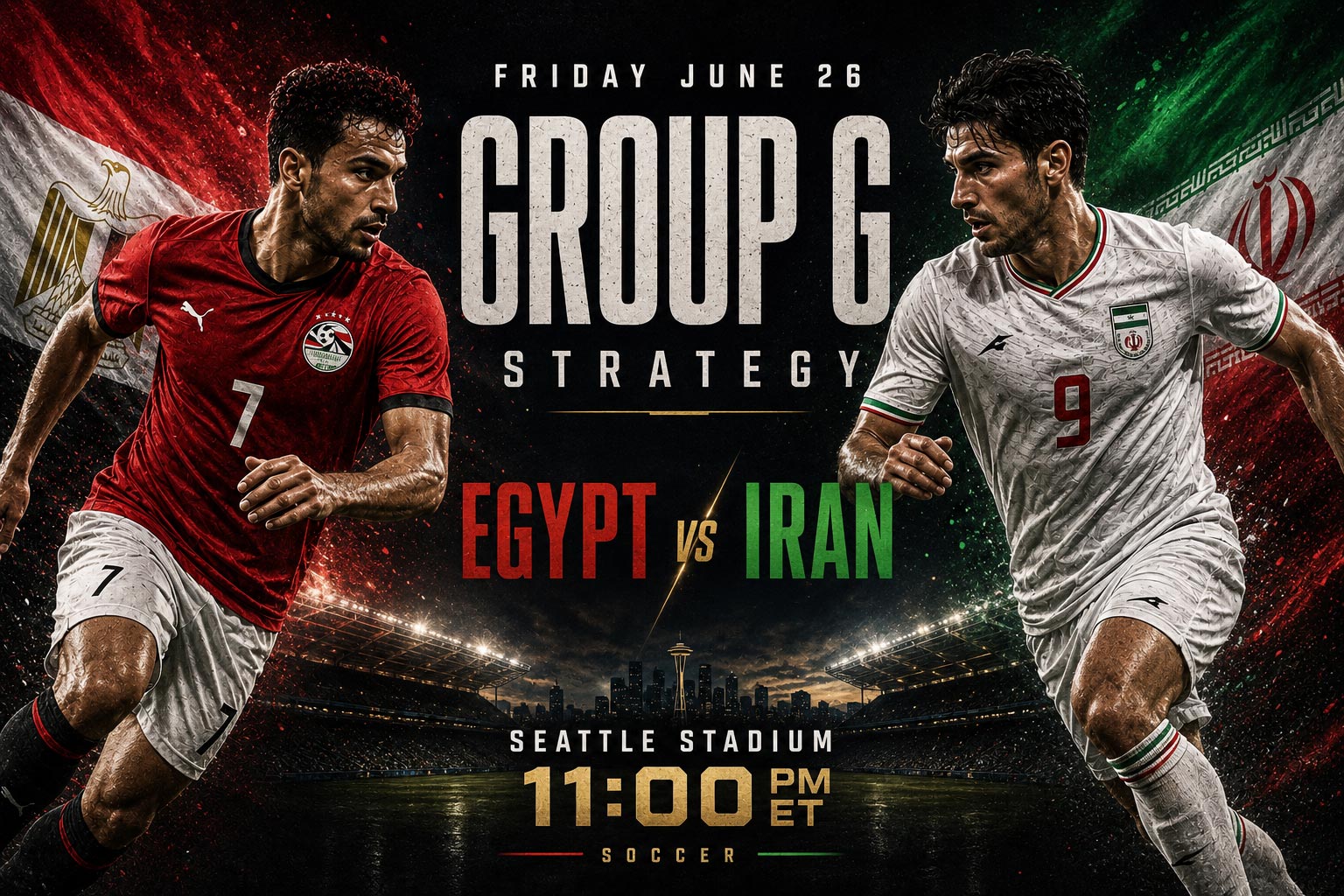
Your group chat’s probably lighting up about the glamour matchups in World Cup Group G, but while everyone’s salivating over the marquee games, there’s a sneaky opportunity brewing in Seattle on June 26th. Egypt versus Iran isn’t going to win any beauty contests, and that’s exactly why sharp money is circling this fixture like vultures at a buffet. The opening lines have bookmakers practically begging you to take the bait on goals, but the smart play here requires us to completely flip the script on what casual bettors think they know about international soccer.
Egypt vs Iran: Why the Market’s Sleeping on This
The public sees "World Cup knockout stage implications" and immediately starts hammering overs like they’re Gordon Gekko in a bull market. But here’s what your average bettor doesn’t understand about these specific national programs: both Egypt and Iran have built their entire footballing identity around defensive structure and counter-attacking efficiency. We’re talking about two teams that would rather win 1-0 than entertain neutrals with a 4-3 thriller—it’s just not in their DNA.
Egypt’s tactical setup under their current management is basically a masterclass in risk mitigation. They’ll pack bodies behind the ball, absorb pressure, and look to spring Salah (assuming he’s fit) on the break maybe three or four times all match. Iran? They’re somehow even MORE conservative, treating clean sheets like they’re quarterly earnings reports—everything revolves around not conceding first.
The market opened this total at 2.5 goals in most major books across New York and Ontario, which tells me the oddsmakers are pricing in public bias rather than actual match dynamics. When you’ve got two teams whose combined World Cup history screams "cagey, low-scoring affairs," and the juice on the under is still sitting at standard -110, that’s what we call market inefficiency. The smart money isn’t just finding this—they’re backing up the truck.
The Sharp Play Everyone’s Going to Fade
Here’s where it gets spicy: first-half under 0.5 goals is sitting at around +145 to +160 depending on your book, and that’s borderline disrespectful. Both teams will spend the opening 45 minutes feeling each other out like it’s an awkward Hinge date, neither willing to commit numbers forward and risk getting caught on the counter. The expected value here is absolutely screaming when you model out how these squads actually approach must-win group stage matches.
The draw-no-bet market is another angle that’s flying completely under the radar. Iran DNB at around +180 in Pennsylvania and Illinois books represents genuine arbitrage opportunity when you factor in Egypt’s injury concerns and travel fatigue. Iran’s tournament pedigree in these low-scoring slugfests is underrated—they know how to steal points in matches that matter, and they’re not intimidated by names on paper.
Let’s talk game theory for a second: both teams know a draw keeps them alive in Group G, which fundamentally changes the risk calculus in the final third. Neither coach is getting fired for a boring 0-0 that preserves knockout hopes, but they’re absolutely getting roasted if they push for a winner and get caught on the break. That implicit understanding creates what I call "mutual defensive incentive"—basically a prisoner’s dilemma where the Nash equilibrium is both teams playing scared.
The Plays
The Lock (or as close as you’ll get):
- First Half Under 0.5 Goals (+145 to +160)
- Risk 2 units to win 3+ units
The Value Play:
- Full Match Under 2.5 Goals (-110)
- This should be -140 based on historical matchup data
- Risk 2.2 units to win 2 units
The Dart Throw:
- Iran Draw No Bet (+180)
- Small 0.5 unit sprinkle for the upside
- If Iran wins, you’re golden; if it’s a draw, you get your money back
The Strategy
The timing matters here—get your action in before the sharps move this line. Once professional syndicates start hammering these unders around 72 hours before kickoff, you’ll watch that 2.5 total drop to 2 with juiced-up pricing that kills your expected value. Books in New Jersey and Ohio have been particularly slow to adjust on international soccer compared to their NFL and NBA lines, so there’s a 36-48 hour window where retail flow hasn’t caught up to reality.
Avoid the live betting trap on this one. Casual bettors will see a scoreless first half and start loading up on "goals have to come eventually" logic, pushing second-half overs to absurd levels. That’s emotional betting, not strategic betting—you’re essentially fighting recency bias and the gambler’s fallacy simultaneously, which is how books make their mortgage payments.
If you’re in Ontario and using the regulated market, shop around because variance on these props can be 15-20 basis points between books. That might not sound like much, but over a full World Cup tournament, finding the best number is the difference between a winning season and breaking even. This isn’t your degenerate parlay of the week—this is about exploiting structural market inefficiencies before they disappear.
Look, I get that betting on a potential 0-0 snoozer doesn’t have the same sex appeal as loading up a Same Game Parlay with Salah to score twice and Egypt to win 3-1. But we’re not here to entertain ourselves with longshot lottery tickets—we’re here to systematically extract value from markets that haven’t properly priced in tactical realities. Egypt-Iran is the definition of a sharp angle that casual money will completely fade because it’s "boring," and that’s exactly why it’s going to print. So tell me: are you taking the under, or are you one of those people who thinks World Cup matches magically produce goals just because the stage is big?
WannaBet.com may receive compensation from the sportsbooks mentioned in this post if you sign up using our links. This doesn’t cost you a dime, but it keeps the lights on. Please bet responsibly. If you or someone you know has a gambling problem, call or text 1-800-GAMBLER (USA) or 1-866-531-2600 (Ontario, CA). 21+ only.
