

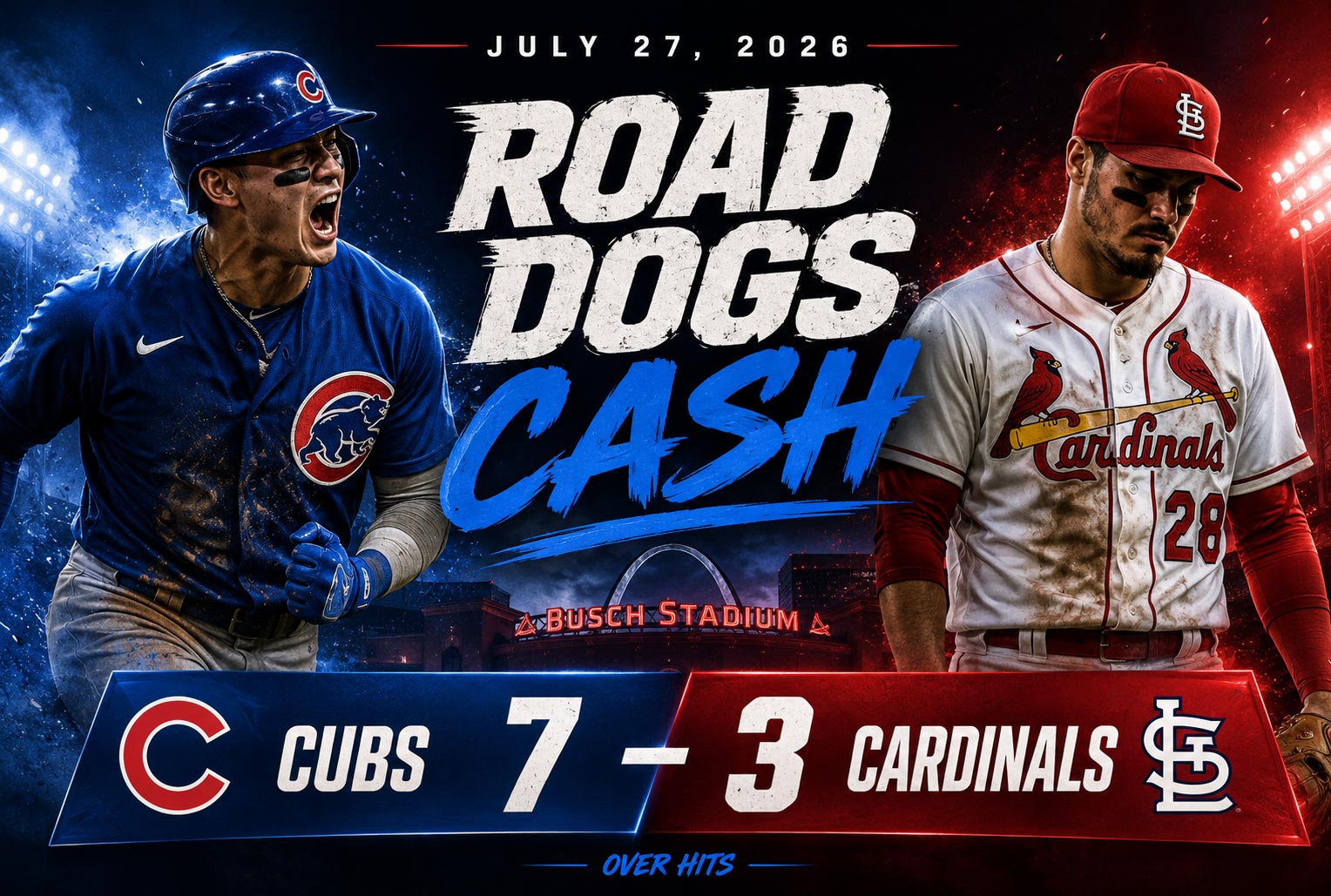
The Cubs just delivered a masterclass in road underdog value at Busch Stadium, and if you weren’t on it, you’re probably still wondering why your "home field advantage" narrative didn’t pay rent. Chicago waltzed into St. Louis as slight dogs, dismantled the Cardinals 7-3, and handed sharp bettors a three-course meal: moneyline cash, run line cover, and an Over that hit cleaner than a Sammy Sosa swing in ’98. This wasn’t luck—this was market inefficiency getting exploited in real-time, and the oddsmakers are probably still trying to figure out what happened.
Cubs Cash as Road Dogs: Chicago Crushes Cards
The setup was almost too beautiful: Vegas had this NL Central showdown priced as basically a coin flip, with the Cardinals holding a razor-thin moneyline edge purely on home cooking at Busch. The total sat at a modest 8.5 runs, screaming "pitcher’s duel" to the casual bettor scrolling through their sportsbook app during lunch break. But here’s the thing about market perception versus reality—sometimes the sharpest play is the one staring everyone in the face, and the crowd still fades it because "St. Louis at home" sounds sexier than "Cubs road value."
Chicago didn’t just win this game; they boat-raced it down the Mississippi. The final 7-3 scoreline wasn’t some backdoor cover or garbage-time miracle—this was domination wrapped in a bow for anyone who recognized the edge. The Cubs jumped out early, weathered whatever Cardinals resistance materialized, and then absolutely feasted on St. Louis’s bullpen late like it was an all-you-can-eat buffet at Golden Corral.
The betting implications? Pure dopamine for anyone who played this correctly. Moneyline backers cashed at plus-money. Run line players (-1.5) got their four-run cushion and then some. Over bettors watched 10 combined runs sail past that 8.5 number like it was standing still. If you parlayed Cubs ML + Over, you’re probably still doing the Griddy in your living room, and honestly, you’ve earned it.
Why Sharp Money Hammered the Wrigley Visitors
Let’s talk market psychology for a second, because this is where the Harvard MBA actually comes in handy instead of just being an expensive piece of paper. The public loves betting home favorites in divisional matchups—it’s comfortable, it feels safe, and it aligns with every narrative sports media has been feeding casual fans since the dawn of time. But sharp money doesn’t give a damn about narratives; it cares about price inefficiency and exploitable edges.
The Cardinals’ bullpen had been showing cracks for weeks leading into this matchup, and anyone doing actual homework instead of just checking box scores knew this. Chicago’s lineup, meanwhile, had been quietly mashing against right-handed pitching in exactly the situations St. Louis was going to present. The market priced this game like the Cardinals’ home field was worth a full run of value, but the actual talent differential and matchup dynamics suggested Chicago should’ve been closer to even money or maybe even slight favorites themselves.
Then there’s the totals play, which is where the real money got made if you were paying attention. Eight-and-a-half runs in a divisional rivalry with two teams that had been trending toward offensive explosions and shaky relief pitching? That’s not a "stay away" number—that’s a "bet the Over and sleep like a baby" number. The sharp action clearly recognized this, and when the Cardinals’ bullpen imploded late, it was basically a formality that we were sailing past the total.
Here’s the framework that matters: expected value isn’t about being right every single time; it’s about identifying spots where the market has mispriced the actual probability of outcomes. The Cubs as road dogs represented positive EV because the true win probability was higher than the implied probability from the odds. The Over at 8.5 was positive EV because both bullpens were cooked and the offensive environments favored run production. Stack those edges, and you’ve got yourself a classic case of market arbitrage disguised as "just another Thursday night baseball game."
The Cubs-Cardinals result is a perfect case study in why blindly following public money and lazy narratives will drain your bankroll faster than a bottle service tab at a Miami club. Road dogs with legitimate edges, totals that don’t account for recent bullpen performance, and matchup dynamics that favor the visitor—these are the spots where actual profit lives, not in hammering chalk because "home teams just feel right." If you caught this one, congrats on the payday. If you didn’t, take notes for next time because this exact scenario plays out multiple times every week across baseball. What’s your go-to strategy for identifying road dog value—are you riding with sharp money moves or still trusting home field advantage like it’s 1987?
WannaBet.com may receive compensation from the sportsbooks mentioned in this post if you sign up using our links. This doesn’t cost you a dime, but it keeps the lights on. Please bet responsibly. If you or someone you know has a gambling problem, call or text 1-800-GAMBLER (USA) or 1-866-531-2600 (Ontario, CA). 21+ only.
