

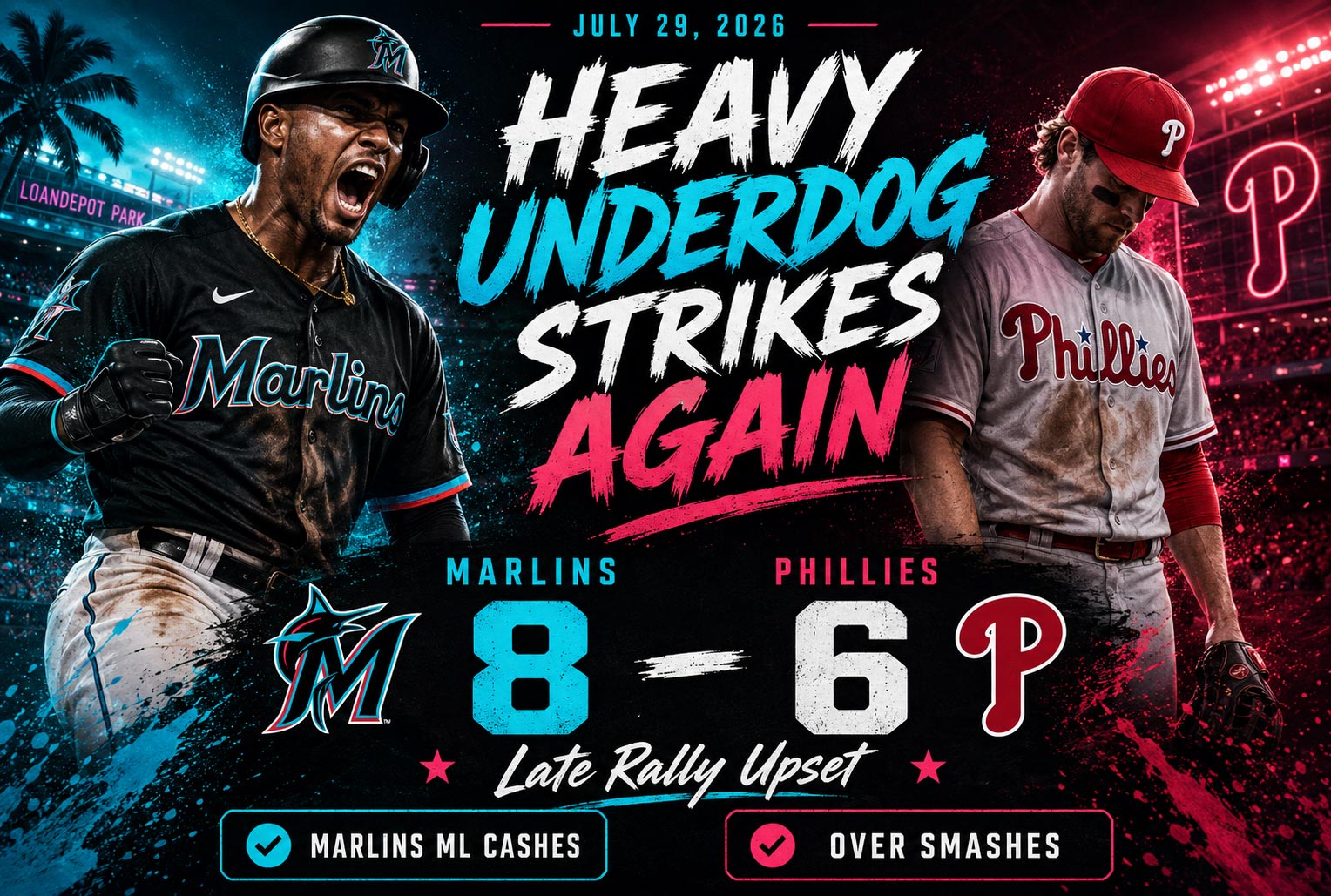
The Phillies rolled into Miami on July 29th as heavy road chalk, and Pennsylvania sportsbooks were absolutely printing tickets on Philly moneyline and run line action. The public loved everything about this setup: elite lineup, momentum from their recent homestand, and facing a Marlins team that looked cooked. Then Miami did what they’ve been doing all season—they turned the betting public’s bankroll into dust with an 8-6 comeback win that had sharp bettors cackling all the way to the window. If you’ve been fading favorites in this MLB season, you’re probably driving a new car right now.
Marlins Cash Again: Philly Public Gets Cooked
The setup was almost too perfect for recreational bettors. Philly opened as -165 favorites on most books, with the run line sitting at -1.5 (+110), and Pennsylvania handle was flowing one direction like it was the Schuylkill River. Everyone and their mother was hammering the Phillies, convinced that Miami’s pitching staff would fold faster than a cheap lawn chair in August humidity.
Through seven innings, it looked like the public might actually survive this one. The Phillies were up 6-5, and the group chats were already celebrating—screenshots being prepared, victory laps being drafted. Then the 8th inning happened, and Miami dropped a two-spot that sent every Philly bettor into an existential crisis about why they keep trusting road favorites in divisional games.
The Marlins closed it out 8-6, and suddenly every sharp bettor who grabbed Miami at +145 was looking like Nostradamus. Meanwhile, DraftKings and FanDuel customer service lines in Pennsylvania were probably lighting up like a Christmas tree. This wasn’t just a bad beat—it was a masterclass in why the public loses money on MLB favorites.
Why Sharp Money Keeps Fading the Favorites
Here’s the thing about MLB underdogs that Harvard doesn’t teach you in statistics class: they win way more often than the odds suggest they should. The expected value on dogs priced between +130 and +160 is genuinely insane if you’re selective about your spots. Sharp money recognized that Miami at home, even with their dumpster fire of a season, had enough offensive firepower to hang with anyone in a high-variance game.
The market psychology here is textbook behavioral economics. Recreational bettors suffer from what I call "brand name bias"—they see "Phillies" and think playoff contender, they see "Marlins" and think tanking. But the oddsmakers know this, which is exactly why the line gets inflated to -165 when the true price should probably be closer to -140. That 25-cent difference? That’s your edge, and sharp bettors exploited it like a tax loophole.
The over-bettors got their consolation prize at least. With a total that probably opened around 8.5 runs, this game sailed over with room to spare, finishing at 14 combined runs. When two teams are trading haymakers and the bullpens are shakier than a Jenga tower, taking the over becomes less of a gamble and more of a probability play. The sharps went two-for-two on this game while the public went home wondering why they ever trusted road favorites in Miami.
The July 29th Marlins upset is just another data point in what’s becoming the most profitable trend of the 2024 MLB season: fading public favorites in divisional matchups. Pennsylvania bettors learned an expensive lesson about the difference between watching SportsCenter highlights and understanding market inefficiencies. Next time you see a road favorite getting 75% of the public money in a divisional game, maybe—just maybe—consider what the sharp 25% knows that you don’t. What’s your worst beat this season? Drop it in the comments because misery loves company.
"WannaBet.com may receive compensation from the sportsbooks mentioned in this post if you sign up using our links. This doesn’t cost you a dime, but it keeps the lights on. Please bet responsibly. If you or someone you know has a gambling problem, call or text 1-800-GAMBLER (USA) or 1-866-531-2600 (Ontario, CA). 21+ only."
