

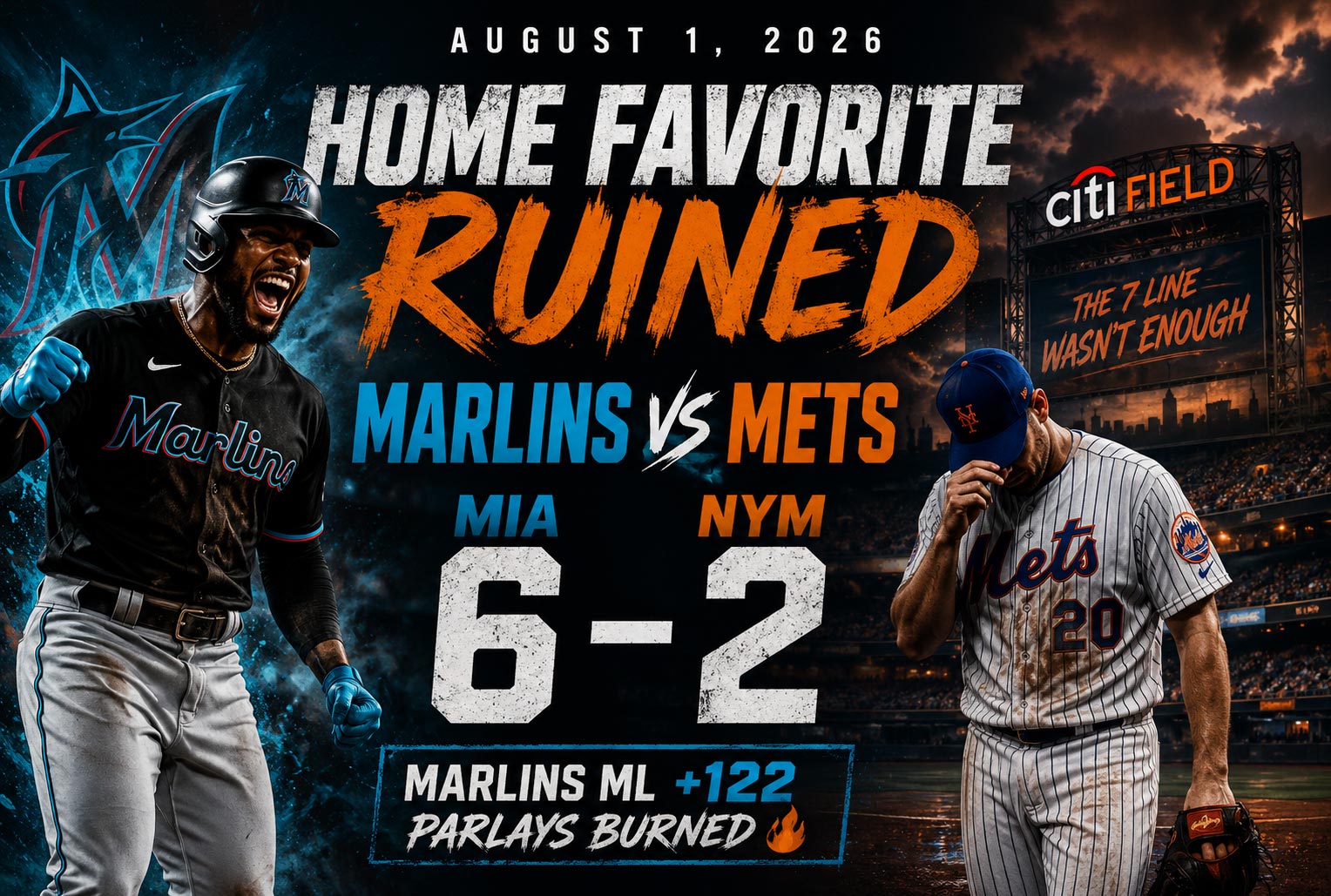
The casino doesn’t need to beat you—you beat yourself. That’s what happened on August 1st, 2026, when every dude in a Mets jersey at Citi Field watched their "easiest bet of the day" turn into a 6-2 humiliation courtesy of the Miami Marlins. The public piled onto New York at -125 like it was free money, dismissing a Miami squad catching +122 as if they were Triple-A scrubs. Meanwhile, sharp money quietly loaded up on the Fish, recognizing what the masses missed: market inefficiency disguised as a "lock." This wasn’t just an upset—it was a masterclass in why fading public sentiment can print cash when you know where to look.
When the Public’s "Lock" Gets Locked Out at Citi
The setup was textbook trap game material, but Joe Public couldn’t resist. Mets at home, favored at -125, with their rotation looking semi-competent for once—what could go wrong? The public handle was lopsided as hell, with somewhere north of 75% of tickets backing New York on the moneyline and run-line parlays stacking up like it was 2015 and the Mets actually mattered.
Here’s the thing about heavy public favorites in baseball: they’re priced for emotion, not expected value. When you’ve got three-quarters of the betting population hammering one side, the books aren’t sweating—they’re salivating. The Mets faithful treated this like a layup, tossing them into SGPs with over bets and player props, creating a beautiful house of cards that Miami gleefully bulldozed.
The result? A 6-2 drubbing that sent Mets backers scrambling to their group chats with the "bad beat" sob stories. Every parlay leg featuring NYM -1.5 went nuclear, and moneyline tickets became expensive toilet paper. This is what happens when you confuse "home favorite" with "actual edge"—you get absolutely cooked by a team the public wrote off before first pitch.
Why Sharp Money Saw Miami’s Upside All Along
Sharp bettors don’t give a damn about narratives or jersey colors—they care about price inefficiency and market overreaction. Miami at +122 was mispriced the second the public started their Mets love fest, and the smart money recognized it immediately. When you see a line move toward the favorite while the percentage of bets stays lopsided, that’s your signal that professional money is quietly taking the other side.
The Marlins’ pitching matchup wasn’t nearly as bad as the casual bettors assumed, and their lineup had been showing signs of life in the previous series. More importantly, the risk-reward calculation was absurdly favorable: you’re getting plus-money on a team that had legitimate win equity in the 40-45% range. That’s textbook positive expected value—the kind of spot where sharps load up while the public chases "safe" favorites that are actually coin flips with terrible juice.
The +1.5 run line was even juicier, typically sitting around -110 or better for Miami backers. You’re essentially getting a two-run cushion on a team that doesn’t need to win outright to cash your ticket—just stay competitive. When the Marlins jumped out early and their pitching held, both the moneyline and run-line crews were counting stacks while Mets fans were rage-tweeting about their five-legger that died in the third inning.
This Citi Field disaster is your reminder that "everyone’s on it" is usually a red flag, not a green light. The public doesn’t lose because they’re stupid—they lose because they chase comfort over value, picking teams based on vibes instead of market inefficiencies. Miami wasn’t the "better" team on paper, but at +122 with inflated public money on the other side, they were absolutely the sharper play. Next time you’re about to slam a home favorite because "it’s obvious," ask yourself: if it’s so obvious, why are the books practically begging you to take it? What’s your take—do you fade the public automatically, or do you need more than just lopsided handle to pull the trigger?
WannaBet.com may receive compensation from the sportsbooks mentioned in this post if you sign up using our links. This doesn’t cost you a dime, but it keeps the lights on. Please bet responsibly. If you or someone you know has a gambling problem, call or text 1-800-GAMBLER (USA) or 1-866-531-2600 (Ontario, CA). 21+ only.
