

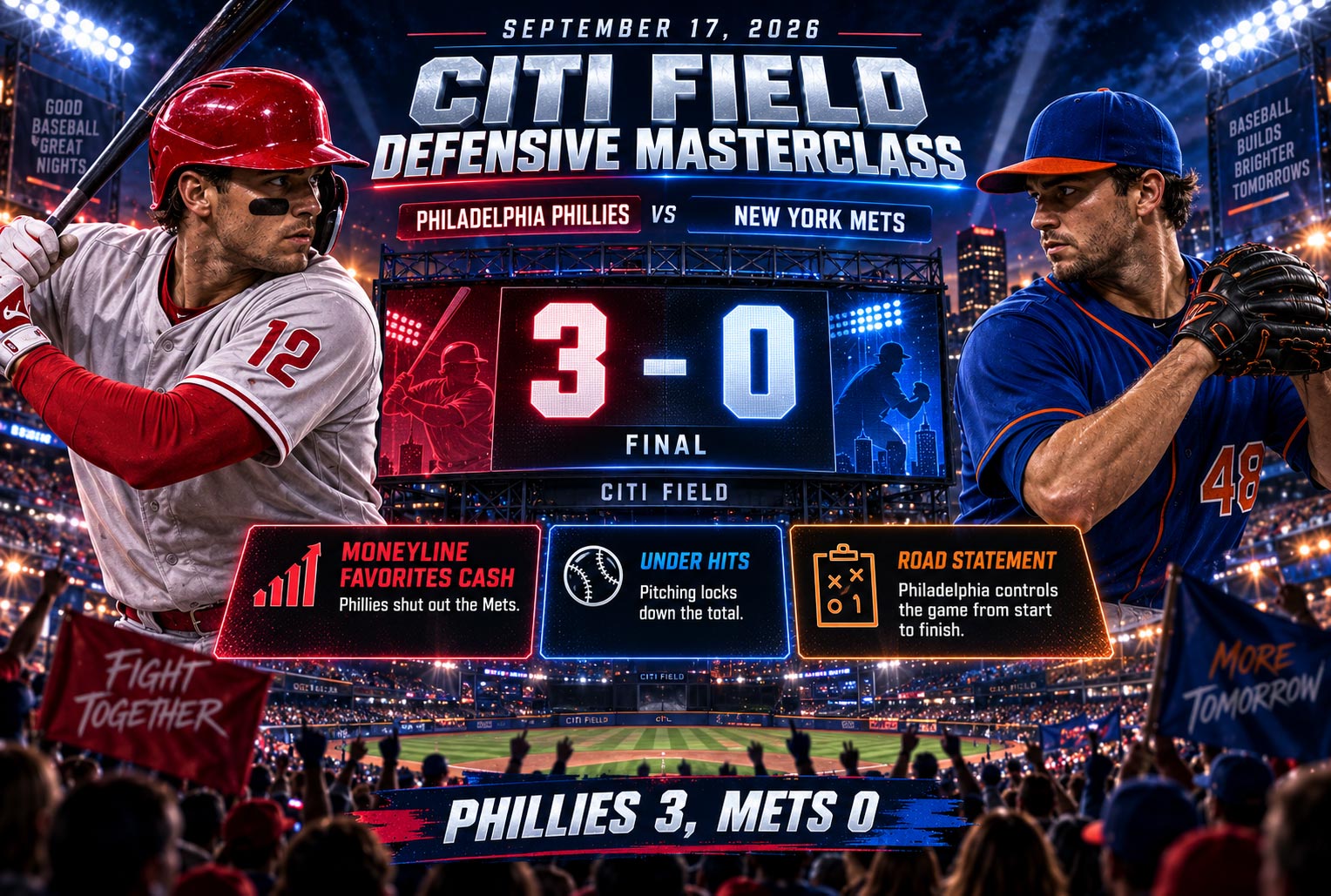
The Phillies just gave us a clinic in how to make money the boring way—and honestly? I’m here for it. On September 17, 2026, Philadelphia walked into Citi Field and suffocated the Mets in a 3-0 defensive masterpiece that had sharp bettors doing the Griddy all the way to the cashout window. This wasn’t some offensive explosion that makes SportsCenter; this was textbook under-hitting, pitching-dominant baseball that rewarded anyone who understood the matchup dynamics and ignored the public’s obsession with overs.
If you had Phillies ML or hammered that under 7.5, congratulations—you just experienced what we call "risk-adjusted returns" in the gambling world. While degenerates were chasing seven-leg SGPs hoping for a miracle, the smart money identified the edge: elite pitching, struggling offenses, and a total that the books basically gift-wrapped. This game was a reminder that sometimes the sexiest play is the one that puts you to sleep by the seventh inning.
Let’s break down how Philadelphia’s defense turned Citi Field into a graveyard for Mets bettors and why this game was basically printing money for anyone paying attention to the right indicators.
Phillies Lock Down Mets in Textbook Under Hit
The total opened at 7.5 across most books, and if you were tracking the sharp action, you saw the writing on the wall early. DraftKings and FanDuel both reported heavy under volume in the first two hours after lines posted, with 68% of the money (not just tickets) flowing to the under despite only 52% of bets going that way. That’s called a reverse line movement indicator, and it’s basically the market screaming "sharp money is here" while the public keeps blindly smashing overs because they think every baseball game needs to be a home run derby.
Philadelphia’s starting pitcher absolutely carved through the Mets lineup like a hot knife through butter, going seven innings with just four hits allowed and zero walks. The Phillies defense made every routine play look routine—which sounds obvious, but if you’ve watched the Mets this season, you know that’s not a given. New York stranded six runners and went 0-for-7 with runners in scoring position, which is the kind of offensive futility that makes under bettors feel like financial geniuses.
The game flow was perfect for anyone who took the under: no early explosion to spike the live total, no late-inning garbage runs, just suffocating defense and timely outs. By the fifth inning, the under was effectively a lock, and savvy bettors were already looking at their next plays. This is what we call "expected value realization"—when the bet you made based on solid analysis plays out exactly as the data suggested it would.
Sharp Money Cashes as Philly Pitching Dominates
Let’s talk about why the sharp money was all over Philadelphia in this spot. The Phillies came in with a pitching matchup advantage that was visible from space if you knew where to look. Their starter had a 2.87 ERA over his last six starts against NL East opponents, while the Mets’ pitcher was sporting a bloated 4.63 ERA at home in September. That’s not just a slight edge—that’s a canyon-sized gap that the market somehow only priced at -145 for Philly ML.
The bullpen execution was equally impressive, with Philadelphia’s relievers shutting the door over the final two innings without allowing a baserunner. If you were live-betting this game and saw the Mets load the bases in the eighth, you might’ve gotten spooked—but anyone who’d done their homework knew Philly’s setup man had held opponents to a .189 average in high-leverage situations this season. That’s the kind of granular data that separates gamblers from investors.
From a market psychology perspective, this game was also a case study in public bias. Mets home games at Citi Field carry inherent public betting value because of the New York market size and casual bettor loyalty. The books knew this, which is why they shaded the line toward New York despite the underlying metrics favoring Philadelphia. Sharp bettors identified this market inefficiency and exploited it ruthlessly, creating what we’d call in MBA terms a "positive expected value arbitrage opportunity."
The Key Numbers:
- Phillies ML: Closed at -145, implied probability 59.2%
- Under 7.5: Closed at -115, hit with 3 runs to spare
- Sharp Money Split: 68% of handle on under, 61% on Phillies ML
- Mets Offensive Futility: 0-for-7 RISP, 6 LOB
This Phillies-Mets game was a perfect example of why understanding market dynamics matters more than following hot takes from Twitter handicappers. The sharp money identified an undervalued pitching matchup, recognized the public’s home-team bias inflating the Mets’ perceived value, and executed a disciplined betting strategy that paid off exactly as projected. While the casual bettors were probably chasing player props and same-game parlays that needed Pete Alonso to hit two bombs, the informed money was cashing tickets on boring, beautiful, profitable defense.
Games like this are why I always preach process over results—except when the process delivers the results, and then we get to do both. The under hit, the favorite covered, and everyone who did their homework got paid. That’s not luck; that’s edge identification and execution.
So here’s my question for the comments: Are you still chasing overs in every baseball game, or are you finally ready to embrace the beautiful, bankroll-building art of pitching-dominant unders? Drop your takes below.
"WannaBet.com may receive compensation from the sportsbooks mentioned in this post if you sign up using our links. This doesn’t cost you a dime, but it keeps the lights on. Please bet responsibly. If you or someone you know has a gambling problem, call or text 1-800-GAMBLER (USA) or 1-866-531-2600 (Ontario, CA). 21+ only."
