

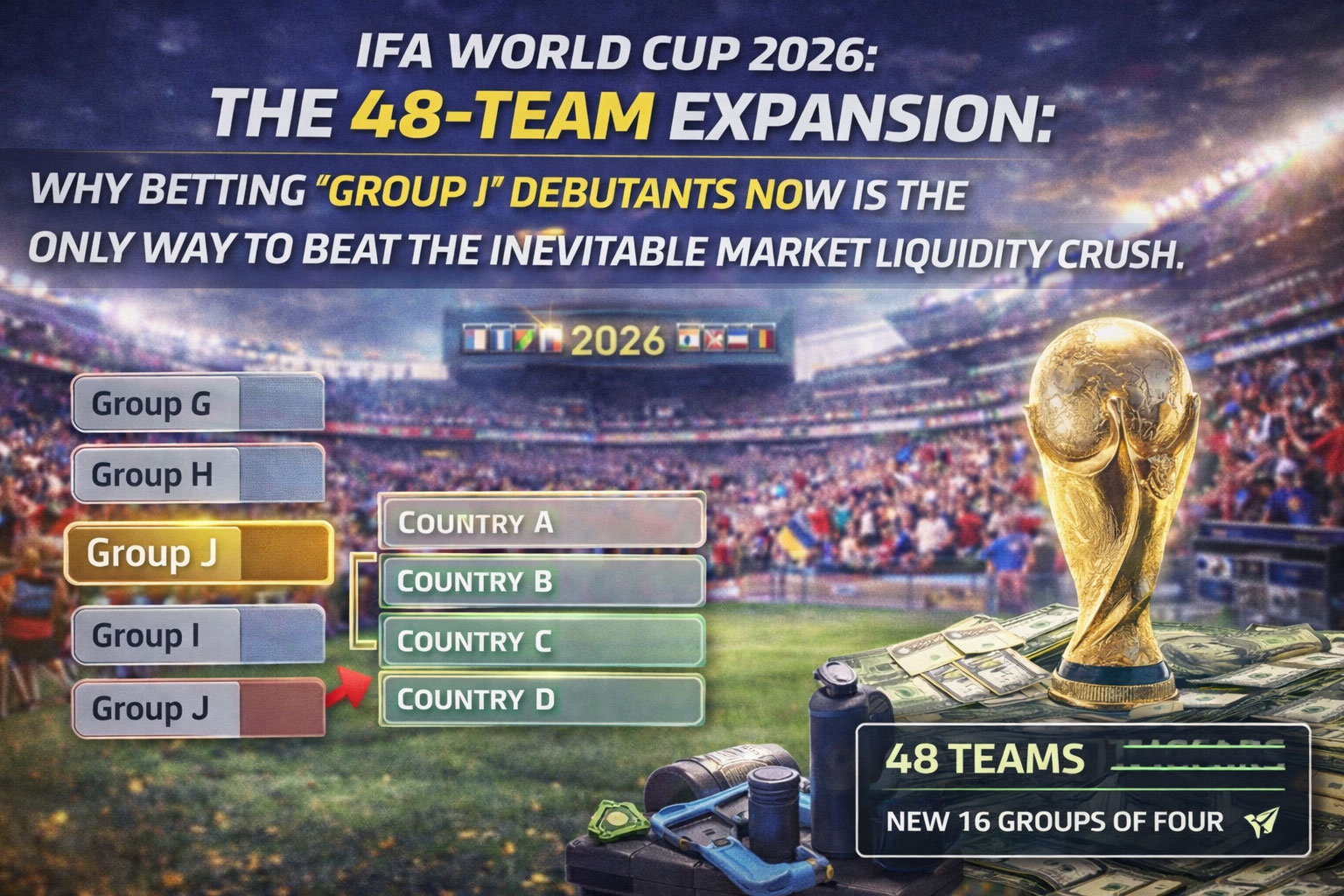
Look, I get it—the World Cup is still about 100 days away but we have to start really (REALLY) talking about it. Here’s the thing: the World Cup expanding to 48 teams is basically the sportsbook equivalent of a market inefficiency so glaring that even your buddy who still thinks “hedge funds” are landscaping companies could exploit it. We’re talking about 16 new nations getting their shot at glory, and more importantly, creating betting lines that bookmakers have absolutely zero historical data to price correctly. The sharp money knows this, which is why they’re already positioning on futures before the public even realizes what’s happening.
The 2026 tournament isn’t just bigger—it’s a complete structural overhaul that’s going to create chaos in the betting markets. We’re getting 16 groups instead of 8, which means “Group J” teams that would’ve never sniffed qualification are suddenly getting odds posted at books from DraftKings to FanDuel. These are nations with zero World Cup pedigree, which means the algorithms pricing these lines are basically throwing darts blindfolded. And when the casual money starts flooding in six months before kickoff? Those odds are gonna get crushed faster than your bankroll after a bad NBA player props night.
This isn’t some “trust me bro” play—this is basic market dynamics meets expected value. Early futures on longshot debutants offer the kind of edge that disappears the moment ESPN starts running World Cup countdown specials and your uncle asks you about betting on Canada. By then, the liquidity will be gone, the juice will be squeezed, and you’ll be stuck with odds that reflect public sentiment instead of actual probability. So yeah, if you’re serious about finding an edge in 2026, the time to move is literally right now.
Why 2026 Group Stage Debutants Are Your Edge
The expansion from 32 to 48 teams means we’re getting nations that have never experienced the pressure cooker of World Cup football, and bookmakers are pricing them like they’re analyzing a startup with no financial history. We’re talking about potential debutants like Canada (who might actually host games and still somehow be undervalued), Panama coming back after a fluke 2018 appearance, or wild cards from Africa and Asia that the North American betting public has literally never heard of. The books are essentially guessing at these lines, using regional tournament data that has almost zero correlation to World Cup performance.
Here’s where the Harvard MBA brain kicks in: information asymmetry is your best friend in betting markets. While most bettors are obsessing over whether Brazil or France will win it all, the real value is buried in these expansion slots where the pricing models break down completely. The sportsbooks know the public will hammer the big names—they always do—so they’re not sweating the accuracy of a line on, say, Uzbekistan to advance from their group. That’s your edge. That’s where the +5000 odds that should be +2500 are hiding.
The group stage format change also matters way more than people realize. With 16 groups of three teams each (assuming they stick with the current proposal), suddenly advancement odds get weird. Third-place teams might advance, head-to-head records matter more, and goal differential becomes absolutely crucial. Debutant nations that play defensive, low-scoring football—think Iceland 2016 vibes—suddenly have a much clearer path to advancement than the historical data would suggest. The books haven’t fully adjusted their models for this format shift, which creates exploitable gaps in the “to advance from group” markets.
Liquidity Dries Up Fast: Bet the Longshots Now
Let’s talk about what happens when the casual money shows up, because this is where most bettors get absolutely cooked. Right now, in late 2024 and early 2025, you can still find World Cup futures with actual value because the market is relatively thin. The sharp bettors are making their moves, sure, but the volume is manageable and books aren’t adjusting lines every five minutes. Fast forward to January 2026 when the draw happens and groups are set? That’s when the floodgates open and every recreational bettor in Ontario and New Jersey starts firing off futures tickets like they’re buying lottery scratchers.
The liquidity crush is real, and it happens in every major tournament, but it’s going to be especially brutal in 2026. When books start limiting bet sizes on these debutant futures because they’re getting hammered from one side, that’s when you know the edge is gone. I’ve seen this movie before with Leicester City in the Premier League, with the Vegas Golden Knights’ expansion year, with every single “Cinderella story” that starts getting public traction. By the time your coworkers are talking about it in the break room, the odds have already moved 40% and the value has evaporated like your Bitcoin portfolio in 2022.
Here’s the play: identify 3-5 debutant or historically weak nations that have shown genuine improvement in qualifying and grab their “to advance from group” or “to reach Round of 16” odds right now. We’re talking small-unit plays—maybe 0.5u to 1u each—on teams that are currently priced at +300 to +800 for group advancement but might realistically have 25-35% chances based on format changes and draw luck. Books like FanDuel, DraftKings, and BetMGM in the US markets, plus bet365 and theScore Bet in Ontario, will have these lines up way earlier than you think. The difference between betting Canada at +450 to advance today versus +200 after a favorable draw is announced? That’s literally the difference between a profitable betting strategy and just lighting money on fire with extra steps.
Look, I’m not saying mortgage your house on Uzbekistan to win Group J—I’m saying there’s a legitimate, quantifiable edge in early positioning on expansion teams before the market corrects itself. The 2026 World Cup is going to be the biggest betting event in North American history, and the books are already preparing for the tsunami of casual money that’s coming. But right now? Right now it’s still the early stages where information advantages and format understanding can actually move the needle on your long-term profitability. This isn’t about getting lucky on a parlay; it’s about systematically exploiting market inefficiencies before they disappear.
The smart money isn’t waiting for the hype cycle to start. They’re not waiting for the draw, they’re not waiting for odds boosts, and they’re definitely not waiting until their sportsbook app sends them a push notification about “World Cup Fever.” They’re moving now, building a portfolio of calculated longshot positions that will either hit or provide hedging opportunities as the tournament approaches. It’s the same principle as any other investment strategy—early positioning in undervalued assets before the market realizes their true worth.
So here’s my question for you: are you actually trying to beat the books, or are you just along for the entertainment ride? Because if it’s the former, you need to start thinking about 2026 futures right now, not in 18 months when everyone else figures it out. Drop a comment with which debutant nation you think has the best value, or tell me I’m completely wrong and the books have already priced this in perfectly—I’ll wait.
WannaBet.com may receive compensation from the sportsbooks mentioned in this post if you sign up using our links. This doesn’t cost you a dime, but it keeps the lights on. Please bet responsibly. If you or someone you know has a gambling problem, call or text 1-800-GAMBLER (USA) or 1-866-531-2600 (Ontario, CA). 21+ only.
