

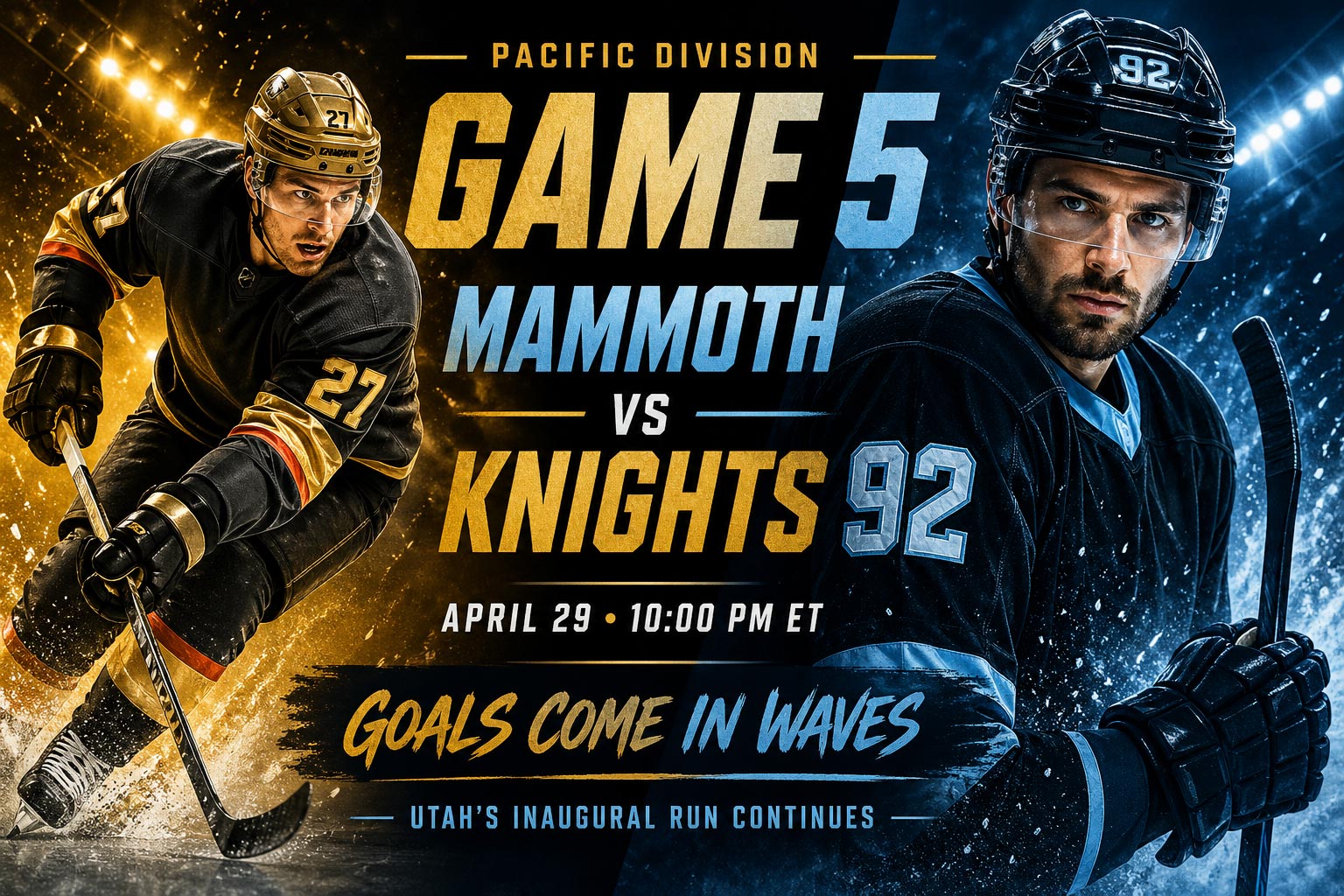
The sharpest money in Vegas isn’t chasing sides in Game 5 between the Golden Knights and Utah Mammoth—they’re loading up on the total. When professional bettors start moving lines on a Wednesday night playoff game, you pay attention or you stay broke. This isn’t your drunk uncle’s "gut feeling" bet; this is calculated, data-driven action that’s making books sweat their overnight risk exposure.
Vegas vs Utah Game 5: Sharp Money Loves This Total
The numbers don’t lie, and right now they’re screaming at anyone willing to listen. Through four games, Vegas and Utah have alternated between absolute barn burners (7-6, 8-5) and defensive slogs (2-1, 3-2). The pattern recognition here is kindergarten-level stuff, but the market inefficiency? That’s where Harvard Business School meets your FanDuel account.
Here’s what’s happening behind the scenes: sharp money hit the Over 6.5 hard enough on Tuesday that most books moved it to 7 by Wednesday morning. We’re talking five-figure bets coming in from known professional groups, the kind of action that makes sportsbooks adjust their risk models in real-time. This isn’t Reddit degenerates chasing last game’s score—this is systematic betting with edge.
The juice tells the whole story. When you see -125 on an Over that opened at -110, that’s not public money inflating the line. That’s sophisticated bettors identifying a market dislocation and exploiting it before the window closes. The books know what’s coming, they’ve adjusted accordingly, and the smart money is still pounding it.
Why Professional Bettors Are Hammering the Over
Let’s break down the expected value calculation that’s driving this sharp action. Both goaltenders have sub-.900 save percentages in this series, which is basically statistical malpractice at the NHL playoff level. Vegas has averaged 3.8 goals per game at home this postseason, while Utah’s checking out defensively after going down 3-1 in the series—classic "variance maximization" strategy when you’re facing elimination.
The market psychology here is textbook. Public bettors see two low-scoring games recently and assume the trend continues—that’s recency bias doing exactly what it does best, which is making people poor. Meanwhile, sharps are looking at underlying metrics: shot quality, expected goals models, and power play opportunities that suggest massive regression to the mean is coming. When the crowd zigs on gut feelings, you zig on data.
Here’s the kicker that sealed it for the professional money: Utah needs offense to extend this series, which means they’re abandoning the defensive structure that kept Games 3 and 4 tight. Vegas knows this, Utah knows Vegas knows this, and now you know it too. It’s game theory 101—when facing elimination, you optimize for upside variance even if it means higher downside risk.
The Plays
Primary Action:
- Over 7 (-115) – 2 units
- Available at DraftKings, FanDuel, BetMGM in NY, NJ, PA, IL, OH, and Ontario
Secondary Consideration:
- First Period Over 2.5 (+120) – 0.5 units
- Both teams have scored in the opening frame in three of four games
Fade Alert:
- Stay away from the side—this game screams coin flip with inflated juice on both moneylines
The Strategy
The risk mitigation play here is simple: you’re not betting on either team to win, you’re betting on market inefficiency. When sharp money moves a total this aggressively 24 hours before puck drop, they’ve identified something the public hasn’t processed yet. That information asymmetry is your edge, and edges don’t stay open long in efficient markets.
Consider the arbitrage opportunity if you got Over 6.5 early—you can now middle this by taking Under 7.5 at plus money on select books. That’s a risk-free shot at hitting both sides if this game lands on exactly 7 goals. It’s not sexy, but it’s mathematically sound, which matters more than sexy when you’re trying to pay rent.
The timing matters too. Sharp action typically comes 24-48 hours before game time when books are most vulnerable to being outsmarted. By waiting until game day, you’re just following the smart money at worse numbers. The pros already got their positions at optimal pricing—you’re paying a premium for the same information.
This is what separating signal from noise looks like in modern sports betting. The public sees two teams, the sharps see a mathematical opportunity. Vegas and Utah might not know they’re about to light up the scoreboard, but the five-figure bettors moving these lines sure as hell do. The only question left is whether you’re betting with the Harvard MBAs or against them—and historically, that’s not really a question at all. Drop your Game 5 plays in the comments, and try to convince me why I’m wrong about this total (spoiler: you can’t).
WannaBet.com may receive compensation from the sportsbooks mentioned in this post if you sign up using our links. This doesn’t cost you a dime, but it keeps the lights on. Please bet responsibly. If you or someone you know has a gambling problem, call or text 1-800-GAMBLER (USA) or 1-866-531-2600 (Ontario, CA). 21+ only.
