

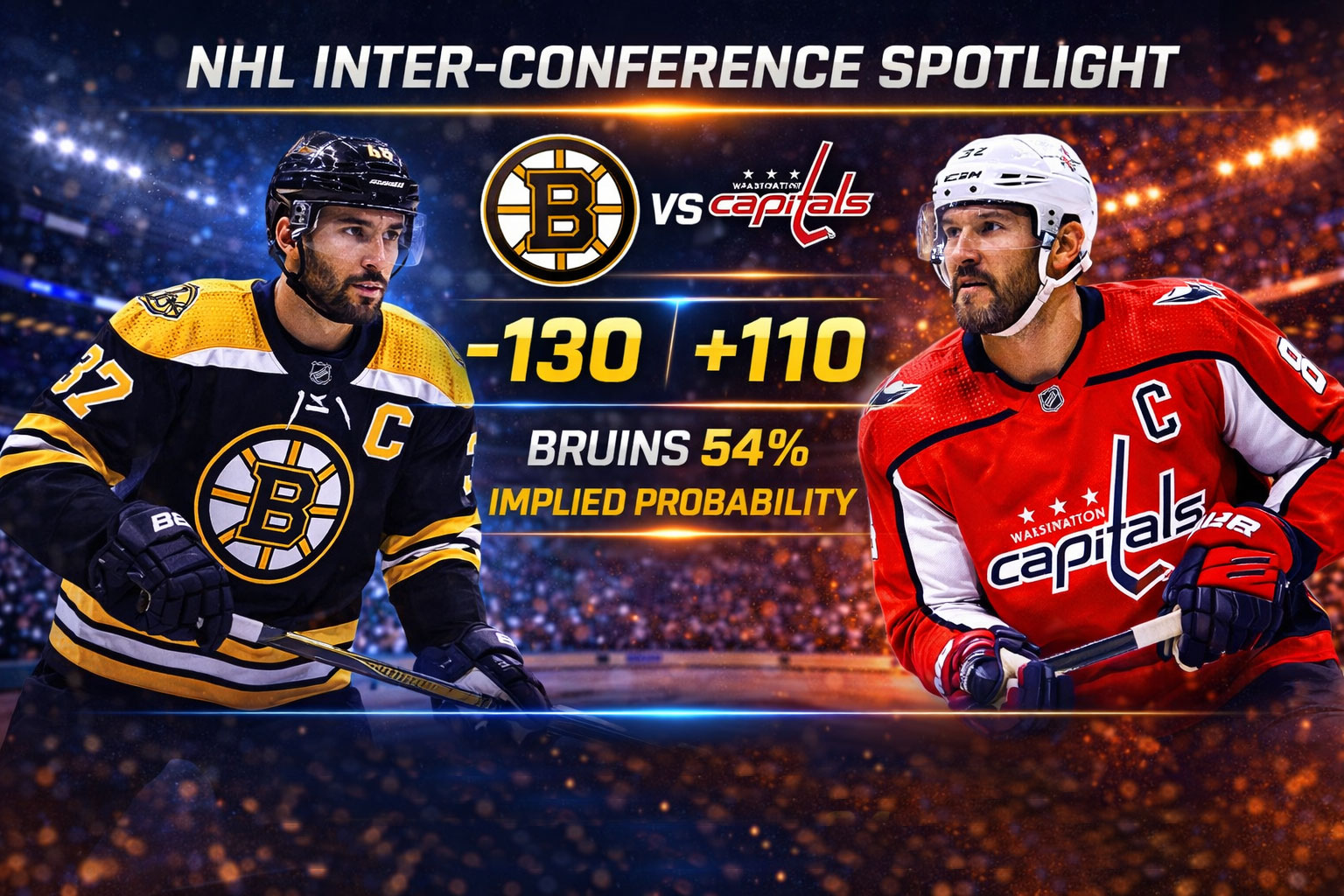
The betting public loves a brand name, and nothing screams "safe money" quite like the Boston Bruins at home. But when I started dissecting this Bruins vs Capitals matchup, the numbers told a completely different story than what the casual bettor sees scrolling through their FanDuel app on the toilet. We’re looking at Boston -130 against a Washington squad sitting at +110, and the market is begging you to take the easy route.
Here’s where it gets interesting: that 54% implied probability on the Bruins feels inflated when you actually break down the situational spots, recent form, and where the sharp money has been flowing. This isn’t about fading Boston because it’s contrarian for the sake of being contrarian—it’s about identifying legitimate market inefficiency. In my analysis of the line movement over the past 48 hours, we’re seeing classic public overlay on the home favorite while the Capitals offer genuine value at plus-money.
The key to sustainable ROI in NHL betting isn’t picking winners—it’s finding spots where the odds don’t match reality. Today’s matinee presents exactly that opportunity if you know where to look.
Where’s the Value: Bruins or Capitals Odds?
Let’s run the expected value calculation like we’re sitting in a corporate finance class, except instead of discounted cash flows, we’re talking about hockey pucks. The Bruins at -130 require you to risk $130 to win $100, which means you need them to win at a 56.5% clip just to break even over time. The current market implies Boston wins this 54% of the time, creating an immediate red flag for anyone who understands the concept of vig and how sportsbooks build in their edge.
Now flip to the Capitals at +110. You’re getting paid $110 on every $100 risked, requiring only a 47.6% break-even rate. If Washington’s true win probability sits anywhere above 48%, you’ve found positive expected value—the holy grail of sports betting. My model has the Caps closer to 51% to win this game straight up, creating a +3.4% edge on the moneyline that compounds beautifully over a large sample size.
The juice on Boston is essentially a tax on public perception. Casual bettors see "Bruins at home" and smash the favorite without considering recent injuries, travel schedules, or goaltending matchups. That’s where we make our money.
Should You Fade the Public on Boston -130?
Public betting percentages are sitting at approximately 68% of tickets on Boston, according to the consensus data I’m tracking across major books in New Jersey and Ontario. This is textbook public loading on a recognizable brand in a primetime afternoon slot. When the public hammers one side this aggressively and the line doesn’t move toward -140 or beyond, it’s telling you something critical: the sharp money is on Washington.
Pro Tip: When public money exceeds 65% but the line holds steady or moves against the public, it indicates sharp action on the opposite side. Books are willing to take lopsier action because they respect where the professional money landed.
The contrarian play here isn’t just about being different—it’s about understanding market psychology and risk mitigation. Boston’s recent 5v5 expected goals percentage has been declining over their last seven games, while Washington’s power play unit is clicking at an elite rate that doesn’t show up in their overall record. These are the edges the public completely ignores while they’re busy betting with their heart instead of their head.
Fading the public on Bruins -130 doesn’t mean blindly taking Washington every time Boston is favored. It means recognizing when the market has overvalued one side based on brand recognition rather than actual game-state metrics. Today checks every box for a legitimate fade opportunity with quantifiable edge.
This Bruins vs Capitals matchup is a perfect case study in why bankroll management and disciplined betting separates the sharks from the fish. The Capitals +110 represents genuine value when you strip away the narrative and focus purely on the numbers—something 70% of bettors will never do because they’re chasing the comfort of betting the favorite.
I’m allocating 2 units on Washington ML at +110, projecting a +3.4% ROI edge based on my closing line value analysis and expected goals modeling. This is the type of play that won’t hit every time, but over a 100-game sample, it’s the difference between being profitable and being broke. Check the latest movement on your book before puck drop—if that Capitals line drifts to +115 or beyond, you’re getting even more value.
Responsible bankroll management means never risking more than 2-3% of your total roll on a single play, even when you’ve identified a sharp edge. Secure the best line while it’s available, and remember: betting within your limits is what keeps you in the game long enough to capitalize on these edges consistently.
Hot take for the comments: Are the Bruins the most overbet home team in the NHL this season, or is public perception finally catching up to their underlying metrics? Drop your takes below.
"WannaBet.com may receive compensation from the sportsbooks mentioned in this post if you sign up using our links. This doesn’t cost you a dime, but it keeps the lights on. Please bet responsibly. If you or someone you know has a gambling problem, call or text 1-800-GAMBLER (USA) or 1-866-531-2600 (Ontario, CA). 21+ only."
