

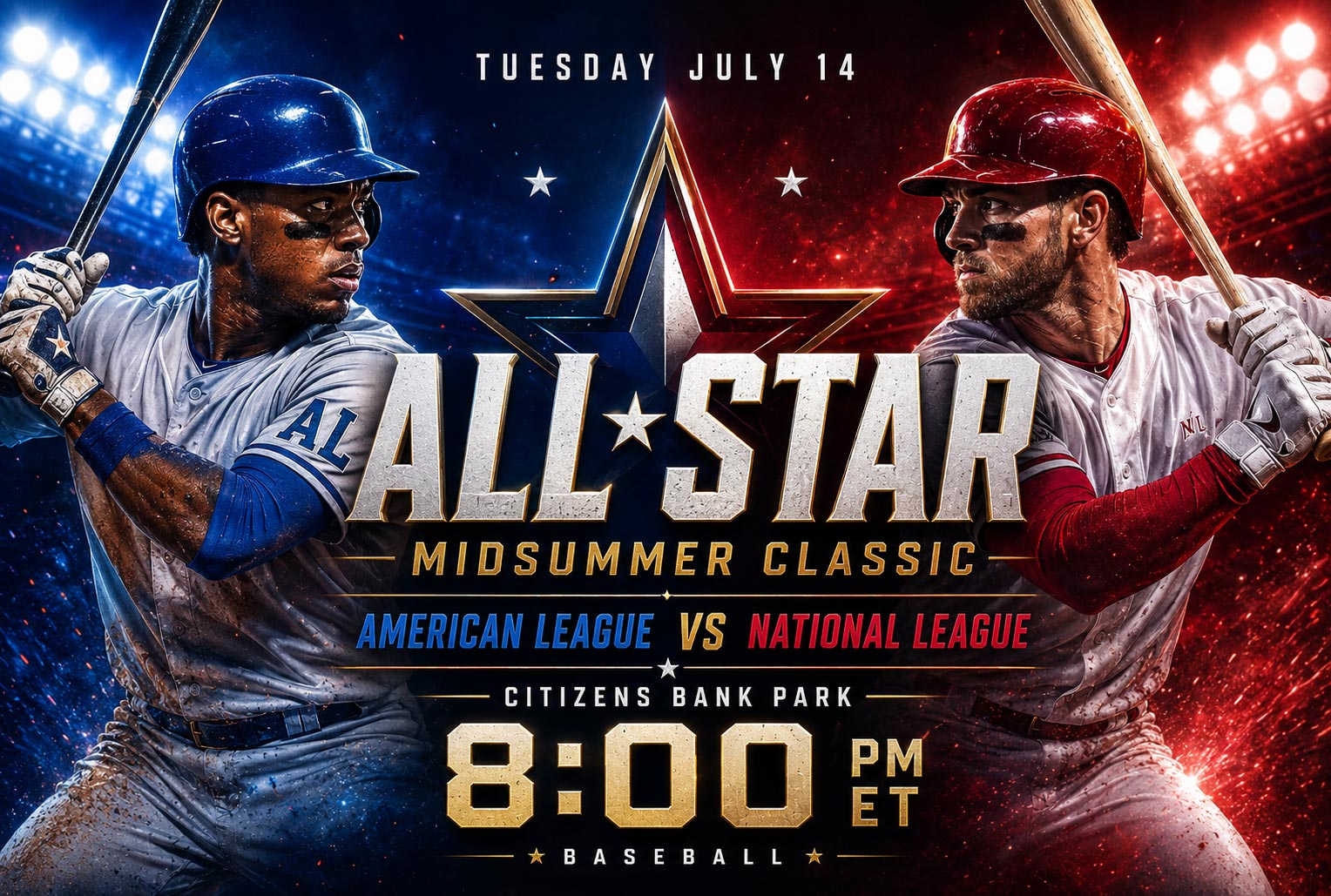
The All-Star Game is basically the Super Bowl of inefficient betting markets. You’ve got casual money flooding in from people who watch seventeen baseball games a year, books setting lines based on name recognition rather than actual game dynamics, and a format that’s changed three times in the last decade. Citizens Bank Park hosts this year’s Midsummer Classic, and while everyone’s arguing about whether Ohtani deserves to start at DH and pitch, the real conversation should be about where the market’s leaving free money on the table. The public treats this like fantasy baseball draft night—they bet their favorite players and move on. We’re going to do the opposite.
2026 All-Star Game Props: Where the Edge Lives
The structural inefficiency of All-Star props comes down to one thing: recency bias meets brand equity. Books know that Aaron Judge will draw 10x the handle of Steven Kwan regardless of matchup dynamics, so they shade the juice accordingly. What they’re not accounting for is that All-Star managers treat this like a networking event—everyone gets their at-bats, starters rarely see more than two plate appearances, and the relievers getting the eighth inning work are often the guys with the worst leverage situations during the regular season.
Here’s the edge: focus on players batting in the 5-7 spots of the lineup who have platoon advantages against the announced starter. The public hammers Judge to go yard at +450, but they’re sleeping on someone like Corbin Carroll getting two at-bats against a righty who he’s historically crushed. Volume matters more than talent in a game where playing time is distributed like participation trophies. Look for "to record a hit" props on high-contact guys who’ll definitely see 2-3 plate appearances rather than swing-for-the-fences types who might get one ceremonial AB.
The run total is another market where the books are pricing in public perception rather than reality. Yes, it’s an exhibition with pitchers throwing 92% fastballs, but the over has hit in just 4 of the last 10 All-Star Games. Managers are still trying to win (thanks, Rob Manfred, for that home-field advantage rule change that nobody liked), which means they’re actually using their best relievers in high-leverage spots. The total will probably open around 7.5, and the public will smash the over because "elite hitters vs. pitchers on short rest." Except these aren’t short-rest situations—these are guys throwing one inning max with five days of rest.
Why MVP Markets Are Mispriced Every Single Year
The All-Star MVP award is voted on by a combination of fans and media immediately after the game ends, which creates a predictable cognitive bias: narrative over numbers. The voters aren’t running statistical regression analysis—they’re asking "who had the moment?" This is why you fade the best players at short odds and hunt for value on guys who can create a story. A walk-off single is worth more than going 2-for-3 with a solo shot in the third inning. A diving catch in the eighth inning of a close game will get more MVP consideration than a leadoff double that nobody remembers.
Historical data backs this up: since 2010, the MVP has come from the winning team in 15 of 16 years (the exception being Mike Trout in 2014 when the AL lost but he went full video-game mode). So your first filter is simple—you need to have a thesis on which league wins, then build your MVP portfolio accordingly. The second filter: late-game impact players. Closers who get the save, position players who drive in the go-ahead run after the seventh inning, and anyone who makes a defensive play that gets replayed seventeen times on Twitter. These are your MVP candidates, not the guy who homered in the second inning while everyone was still finding their seats.
The market consistently overprices starting pitchers for MVP despite them throwing 15-25 pitches max. Since 2000, only three starting pitchers have won MVP, and all three went at least two innings with multiple strikeouts in games decided by one run. Unless you’re getting crazy odds (like +2500 or better), there’s no mathematical edge on starter MVP props. The real value lives in the +1200 to +3000 range on position players hitting 6th-8th in the order who have speed (stolen base attempts create narrative), power (obvious), and play premium defensive positions (catcher, shortstop, center field). These guys get overlooked because they’re not household names, but they’re getting the same number of plate appearances as the superstars at a fraction of the price.
The All-Star Game is the rare betting market where being a hardcore baseball sicko actually hurts you. The sharps who crush regular season totals and run lines often overthink this one because they’re trying to apply normal game theory to an exhibition where half the strategy is "let’s get Elly De La Cruz an at-bat because he’s fun." Strip away the analysis paralysis and focus on the basics: volume of opportunity, late-game leverage situations, and narrative construction. Bet the players who’ll be on the field when the game’s decided, not the guys who’ll be on the bench taking Instagram photos by the seventh inning. What’s your spiciest All-Star take—are we finally going back to the over after years of pitcher dominance, or is this Philly crowd about to witness another 3-2 snoozer?
"WannaBet.com may receive compensation from the sportsbooks mentioned in this post if you sign up using our links. This doesn’t cost you a dime, but it keeps the lights on. Please bet responsibly. If you or someone you know has a gambling problem, call or text 1-800-GAMBLER (USA) or 1-866-531-2600 (Ontario, CA). 21+ only."
