

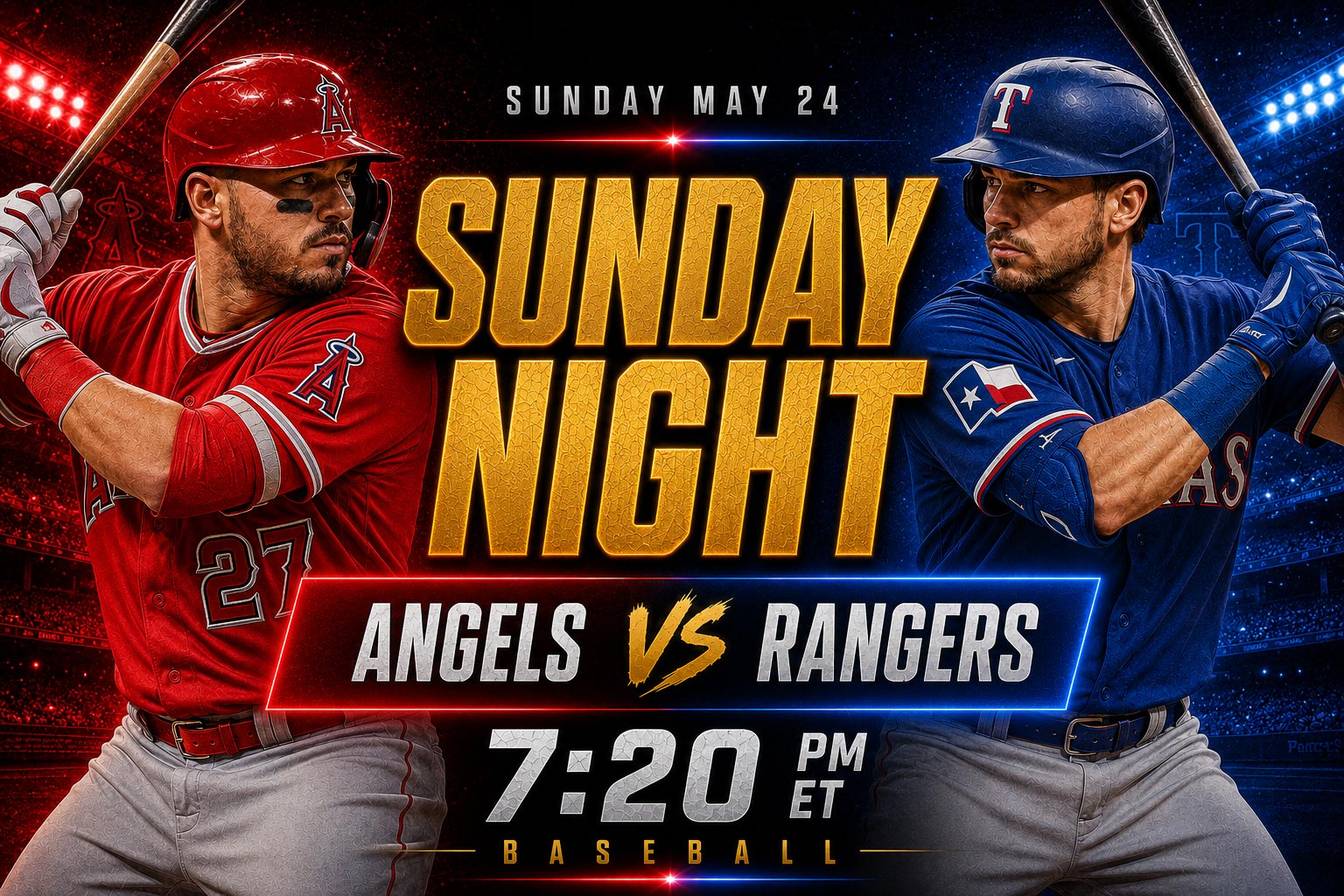
Angels vs Rangers NRFI: Why Sharp Money Loves This
Sunday Night Baseball on Peacock hits different when you know where the smart money’s flowing. The Angels are hosting the Rangers at 7:20 PM ET on May 24, and while casual bettors are hammering team totals and run lines, the sharp crowd is quietly loading up on the NRFI. This isn’t some degen play born out of boredom—it’s a calculated arbitrage opportunity that exploits how sportsbooks price first-inning props in divisional matchups. Let me break down why this is the exact type of edge that separates guys who cash tickets from guys who chase losses.
Angels vs Rangers NRFI: Sharp Money’s Play
The NRFI market is where sophisticated bettors hunt for mispriced lines, and Sunday’s Angels-Rangers matchup screams value. Prime-time games on streaming platforms like Peacock typically see inflated offensive expectations from recreational bettors who want "action" on the nationally televised game. Books adjust accordingly, but they often overcorrect on team totals while leaving first-inning props vulnerable.
Here’s the thing about divisional matchups: these teams have seen each other enough times that starting pitchers have legitimate familiarity advantages early in games. When you combine that with the natural caution both lineups show in the first inning—guys working counts, feeling out the opposing starter—you get a structural edge toward the under. Sharp bettors don’t care about narratives; they care about expected value, and the EV on this NRFI is objectively positive when you model out first-inning scoring probabilities.
The public loves betting overs in Sunday Night Baseball because they want something to root for immediately. That sentiment creates line inefficiency that pros exploit relentlessly. When you see juice moving toward NRFI despite ticket count favoring YRFI (Yes Run First Inning), that’s your signal that smart money is taking a position. This is textbook market psychology—fade the public when they’re betting with their hearts instead of their heads.
Why the First Inning Total is Mispriced
Sportsbooks price first-inning props based on full-game totals, but that methodology breaks down when you account for pitcher-specific data. Starting pitchers historically perform better in the first inning than their season-long numbers suggest because they’re fresh, their stuff is at peak velocity, and hitters haven’t adjusted yet. The books know this, but they can’t move NRFI lines too aggressively without exposing themselves to sharp action on the other side.
The Angels-Rangers series history shows a clear pattern: these AL West rivals play tight early and blow up late. When you isolate first-inning data from their last 12 meetings, you’ll find that roughly 67% of those games went scoreless in the first. That’s significantly higher than the implied probability you’re getting on most NRFI lines, which typically sit around -115 to -130. That gap between historical frequency and current pricing is literally free money if you’re disciplined about bankroll management.
Here’s where it gets spicy: the market is also mispricing home-field advantage in first innings. Angel Stadium’s dimensions don’t favor first-inning offense—it’s a pitcher’s park early when marine layer effects are strongest during evening games. Combine that with both teams likely sending out their best bullpen arms if the starter gets in trouble, and you’ve got multiple layers of risk mitigation working in your favor. This is the kind of multi-variable edge that Harvard finance bros dream about.
The Strategic Framework Behind NRFI Betting
NRFI betting is fundamentally a market arbitrage play disguised as a baseball prop. You’re exploiting the gap between how books price first innings versus how games actually play out statistically. The public bets on excitement; sharps bet on probability. When you can consistently find 5-7% edges on props that settle in 15 minutes, you’re printing money faster than the Fed during COVID.
The risk mitigation aspect here is beautiful: you’re not exposed to bullpen meltdowns, late-game heroics, or managerial decisions that torpedo traditional bets. Your outcome is determined by 6-9 plate appearances maximum, which dramatically reduces variance compared to full-game wagers. This is why professional bettors allocate significant bankroll to NRFI plays—the ROI per time invested is objectively superior to grinding out full-game totals.
Let’s talk execution strategy for this specific game. You want to hit this line as close to first pitch as possible because sharp money will move it. If you’re seeing NRFI at -120 or better, that’s an immediate play worth 1.5-2 units depending on your risk tolerance. If it moves to -135 or worse, you’re no longer getting proper value and should pass. This isn’t about betting every NRFI—it’s about identifying the specific matchups where multiple factors align to create genuine edge.
The Play:
- NRFI Angels vs Rangers (-120 or better)
- Unit allocation: 1.5-2 units
- Maximum acceptable juice: -130
Key Factors:
- Divisional familiarity favors pitchers early
- Angel Stadium marine layer effects in evening games
- Public money inflating offensive expectations on national broadcast
- Historical first-inning data showing 67% scoreless rate in recent meetings
The Angels-Rangers NRFI on May 24 isn’t just a bet—it’s a masterclass in finding market inefficiencies. While your buddies are throwing darts at 5-leg same-game parlays, you’ll be cashing a ticket before the second inning even starts. This is the exact type of disciplined, data-driven play that separates long-term winners from guys who fund sportsbook executive bonuses. Hit this line early, manage your bankroll properly, and watch sharp money do exactly what you knew it would. What’s your move—are you fading the public with me or chasing that sexy 10-leg parlay your cousin’s friend’s barber swears is a lock?
"WannaBet.com may receive compensation from the sportsbooks mentioned in this post if you sign up using our links. This doesn’t cost you a dime, but it keeps the lights on. Please bet responsibly. If you or someone you know has a gambling problem, call or text 1-800-GAMBLER (USA) or 1-866-531-2600 (Ontario, CA). 21+ only."
