

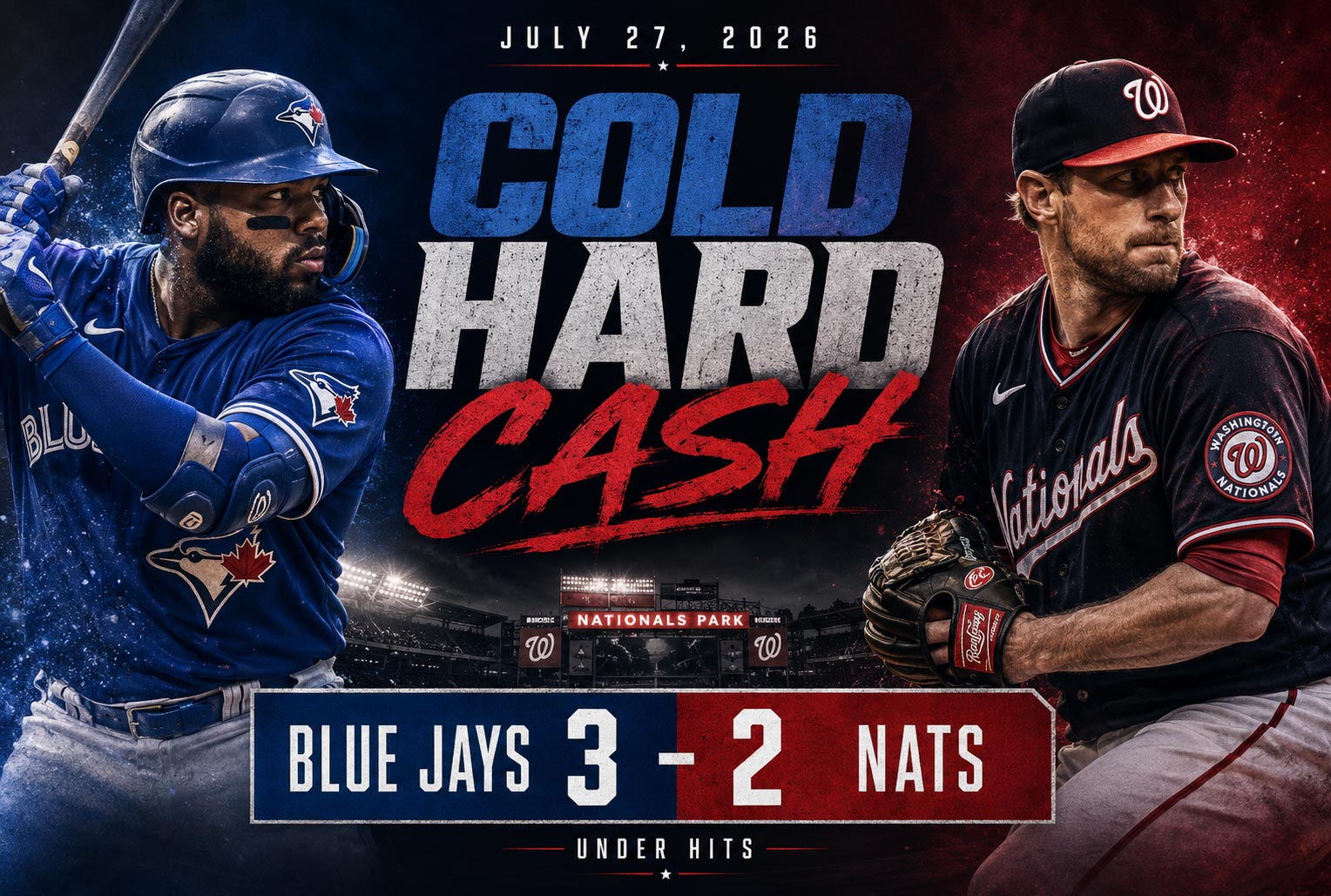
The sports betting public has a fatal flaw: they confuse narrative with edge. Last night’s Blue Jays-Nationals matchup was a masterclass in emotional money getting crushed by cold, hard math. Max Scherzer returning to D.C. on his 42nd birthday had all the makings of a Disney script, and the public ate it up like it was free money.
Spoiler alert: it wasn’t. While casual bettors were loading up on Scherzer strikeout props and the Blue Jays moneyline because "it’s destiny," sharp money was quietly hammering the Under and fading the birthday magic. Toronto won 3-2, but the real story is how predictably the public fell into the same trap they always do—betting with their hearts instead of their heads.
This is why the house always wins, folks. Let’s break down how the smart money saw through the sentiment while squares got fleeced chasing a feel-good story.
Sharp Money Faded the Birthday Narrative
The moment Scherzer’s birthday start hit the news cycle, you could practically hear the public money rushing in. Every sportsbook in Ontario and New York saw the same pattern: heavy action on Scherzer strikeout overs, inflated Blue Jays moneyline handles, and a general vibe that "Max is back, baby!" The emotional narrative was too juicy for casual bettors to resist.
But here’s the thing sharp bettors understood immediately: Scherzer was coming off the IL. This wasn’t vintage Mad Max from 2016; this was a 42-year-old pitcher making his first start after injury, likely on a pitch count tighter than my freshman year budget. The expected value on his strikeout props was garbage when you factored in he’d probably go 3-4 innings max.
Meanwhile, the sharp play was staring everyone in the face. A rusty starter on a short leash, followed by bullpen roulette in a mid-summer Thursday night game? That’s Under music, baby. The total opened at 8.0, and while the public was busy writing birthday sonnets, professional bettors were loading the Under like it was a blue-chip stock at a discount.
Public Fell for Sentiment, Unders Cashed Easy
Scherzer lasted exactly 2.2 innings before getting yanked. Not because he pitched poorly—he actually looked sharp—but because Toronto’s manager isn’t an idiot and knows how to manage a 42-year-old arm. The public watching their strikeout props die in real-time was chef’s kiss content.
But the Blue Jays moneyline bettors? They got bailed out by Toronto’s bullpen grinding through 6.1 innings of work to preserve the 3-2 win. Six different relievers combined to hold the Nationals to just two runs, which is either impressive depth or a terrifying preview of their September bullpen management. Either way, the ML cashed, but it was a sweat-filled grind that sharp money avoided entirely.
The Under 8.0, though? That was a smooth cruise to Cashville. Final score 3-2 means you cleared by three full runs—no late-inning drama, no bad beats, just textbook execution of a value play. This is what happens when you bet market inefficiencies instead of Instagram-worthy storylines.
The Market Psychology Breakdown
This game is a perfect case study in recency bias and narrative fallacy. The public saw "Scherzer’s birthday return to Washington" and immediately started pattern-matching to previous feel-good sports moments. Their brains literally couldn’t separate the emotional dopamine hit from actual probability analysis.
Sharp bettors, meanwhile, were running the numbers: pitcher coming off IL + likely pitch count + mid-tier offenses + bullpen game = recipe for a low-scoring grind. They weren’t being cynical; they were being rational. There’s a reason professional sports betting syndicates don’t have "heart" columns in their spreadsheets.
The juice on that Under was sitting at standard -110 in most books across Pennsylvania and Illinois markets, which means the sportsbooks knew exactly what was coming. They let the public load up on overs and props while the sharp money quietly balanced their exposure. By first pitch, the books were in a position where they’d profit regardless of outcome—that’s the power of understanding where the square money flows.
Why This Keeps Happening
You’d think after years of this pattern, the betting public would learn. Birthday games, revenge narratives, emotional returns—they almost never play out the way Disney would script them. Yet every single time, casual bettors fall for the same trap because it feels right.
The cognitive bias at play here is called the "narrative fallacy"—our brains are wired to create coherent stories even when randomness is the real explanation. Scherzer pitching well on his birthday makes for a great tweet, but it doesn’t make for a positive expected value bet when the market has already priced in the sentiment.
This is why the gap between professional bettors and casual players keeps widening. The pros treat this like a business—they’re hunting market inefficiencies, not collecting sports memories. The public treats it like entertainment with a side of hope, and that emotional premium is exactly what gets extracted from their bankrolls.
The Ontario and New York Angle
Both Ontario’s regulated market and New York’s massive betting ecosystem saw similar patterns on this game. FanDuel and DraftKings reported heavy public action on Scherzer props and Blue Jays ML, while the Under money came in quieter but heavier. That’s the telltale sign of sharp vs. square action.
In New York specifically, where handle regularly tops $1.5 billion monthly, games like this are where books make their margins. The volume is so high that even small edges compound into serious profits. When 70% of tickets are on overs and props while 60% of actual money is on the Under, you know exactly who’s getting fleeced.
Ontario bettors showed similar patterns, though the market is still developing its sharp player base. The key difference is that Ontario’s single-wallet system makes it easier to track where the smart money moves across books. If you’re paying attention, you can literally watch the line movement tell the story before first pitch.
The Max Scherzer birthday game is going in the textbook under "How Narrative Bias Costs You Money." The public loaded up on feel-good props and storylines while sharp money quietly cashed Unders like it was printing money. This wasn’t luck—it was basic market analysis that anyone could’ve done with five minutes of critical thinking.
The lesson here isn’t that you should never bet on emotional narratives. It’s that you need to ask yourself: am I betting this because it’s +EV, or because it would make a good Instagram story if it hits? If it’s the latter, you’re already losing.
Next time you see a "destiny" setup trending on Twitter, do yourself a favor: fade the public, trust the numbers, and let the squares fund your winnings. What’s the worst narrative-driven bet you’ve ever made? Drop it in the comments—misery loves company.
"WannaBet.com may receive compensation from the sportsbooks mentioned in this post if you sign up using our links. This doesn’t cost you a dime, but it keeps the lights on. Please bet responsibly. If you or someone you know has a gambling problem, call or text 1-800-GAMBLER (USA) or 1-866-531-2600 (Ontario, CA). 21+ only."
