

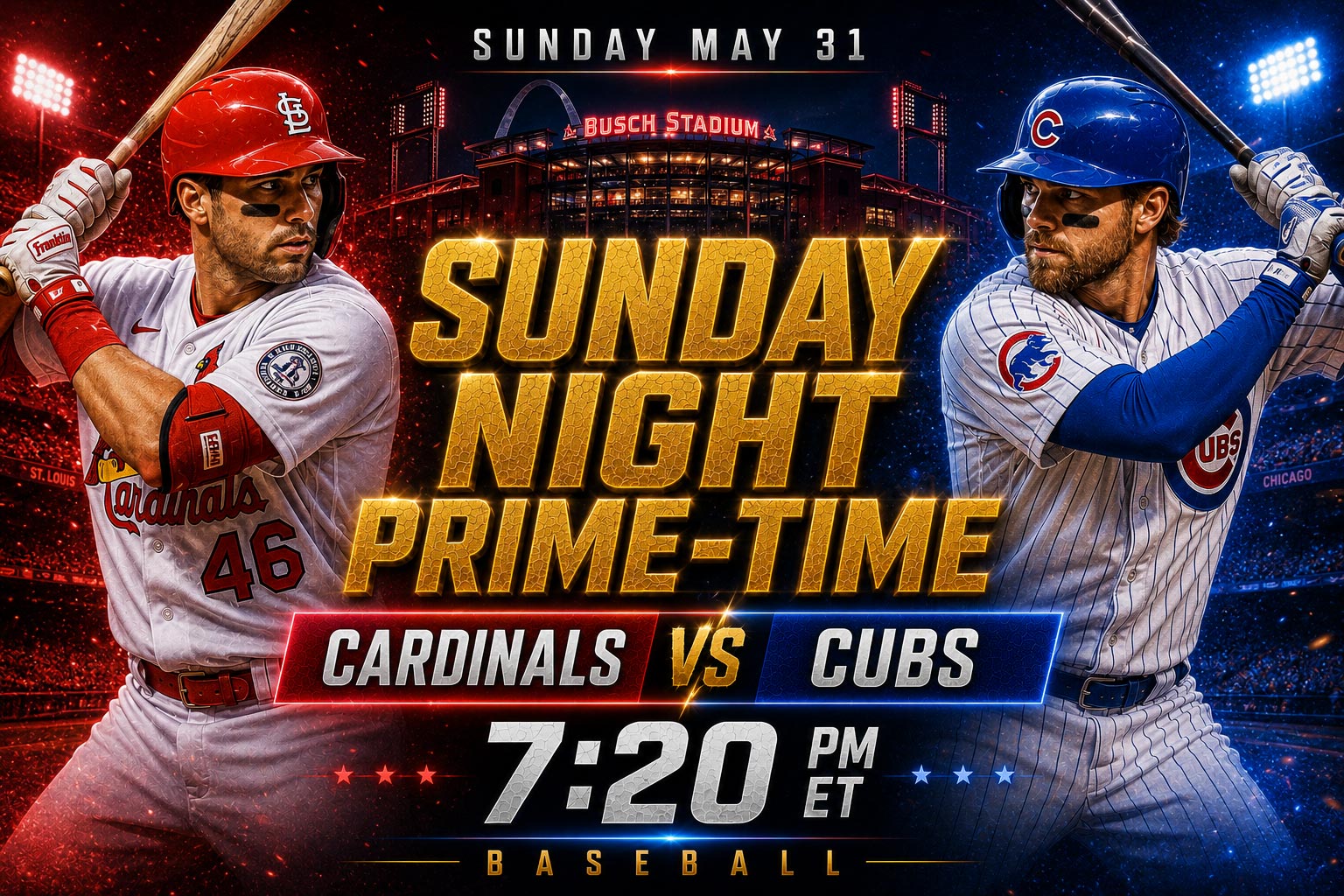
The public is about to load up on Cardinals-Cubs like it’s their retirement account, and honestly? I respect the enthusiasm but not the execution. Sunday Night Baseball under the lights at Busch Stadium means casual bettors are going to hammer every prop that "feels right" without checking if the juice is worth squeezing. This is where sharp money separates from the noise—and where you can actually find some edge if you know where to look.
Cardinals vs Cubs: Finding Value in the Chaos
Division rivalries on national television create the perfect storm for inflated lines and overpriced props. The books know that Cubs-Cardinals draws eyeballs from Chicago to St. Louis, which means recreational money floods in regardless of actual value. When you’ve got NBC and Peacock broadcasting this game to every sports bar in the Midwest, sportsbooks adjust their vig accordingly—they’re not pricing for accuracy, they’re pricing for volume.
Here’s the thing about these primetime NL Central matchups: they’re coin flips disguised as investment opportunities. Both teams are sitting around .500 (let’s be real, they usually are by late May), and the pitching matchup probably features two guys with ERAs that make you wince. The public sees "rivalry game" and thinks it’s an automatic over or a guaranteed slugfest. Meanwhile, the sharp play is recognizing that these games often play tighter than expected because both managers actually give a shit about winning.
The real edge isn’t on the moneyline or the standard run line—it’s in understanding market psychology. When 70% of the public is hammering Cubs +1.5 because "they always show up against St. Louis," that’s when you start looking at Cardinals -1.5 at better odds than you’d get on a random Tuesday afternoon. The books have already adjusted for public bias, which creates reverse line movement opportunities if you’re paying attention.
Why Sunday Night Baseball Props Are Overpriced
Player props on Sunday Night Baseball are a masterclass in market inefficiency—and not in a good way for bettors. The sportsbooks crank up the juice on strikeout props and hit totals because they know casual bettors are building same-game parlays while half-watching the game from their couch. You’re paying a premium for the privilege of betting during primetime, and most people don’t even realize they’re getting fleeced.
Let’s talk about NRFI (No Run First Inning) markets specifically, since the topic details mention they’re getting heavy action. This bet has become the new "sharp guy" flex in group chats, but here’s the reality: books have adjusted. What used to be a legitimate edge two years ago is now priced so efficiently that you’re basically flipping a coin with -120 juice. The public loves NRFI because it settles in 15 minutes and feels like easy money—which is exactly why it’s not easy money anymore.
Strikeout props are even worse on these nationally televised games. Say there’s a pitcher projected for 6.5 Ks—on a random Wednesday game, you might get that at -110/-110. On Sunday Night Baseball? You’re looking at -125 on the over and +105 on the under because the books know which side the public hammers. They’re charging you for convenience and visibility, which is terrible risk-adjusted value when you could find the same pitcher with better odds in a less hyped matchup three days later.
The Plays:
- Cardinals -1.5 (+140) if public money pushes Cubs +1.5 above 65% of bets
- Fade any NRFI priced worse than -115—you’re paying for hype, not edge
- Look at pitcher strikeout unders if the total is inflated by casual over-bettors
The Strategy:
The real move here is patience. Let the public load up their parlays during the 6 PM hour, then check for reverse line movement around 7 PM. If sharp money is coming in late on a side that contradicts public betting percentages, that’s your signal. Don’t chase the action just because it’s Sunday night—chase the value.
What’s your Sunday Night Baseball poison—are you fading the public or riding with the masses?
Cardinals-Cubs on Sunday night is going to generate more betting volume than it deserves based on actual edge opportunities. The smart play is recognizing that primetime baseball creates pricing inefficiencies that favor the books, not the bettors. If you’re going to bet this game, make sure you’re doing it because you found legitimate value, not because you’re bored and it’s the only thing on TV.
WannaBet.com may receive compensation from the sportsbooks mentioned in this post if you sign up using our links. This doesn’t cost you a dime, but it keeps the lights on. Please bet responsibly. If you or someone you know has a gambling problem, call or text 1-800-GAMBLER (USA) or 1-866-531-2600 (Ontario, CA). 21+ only.
