

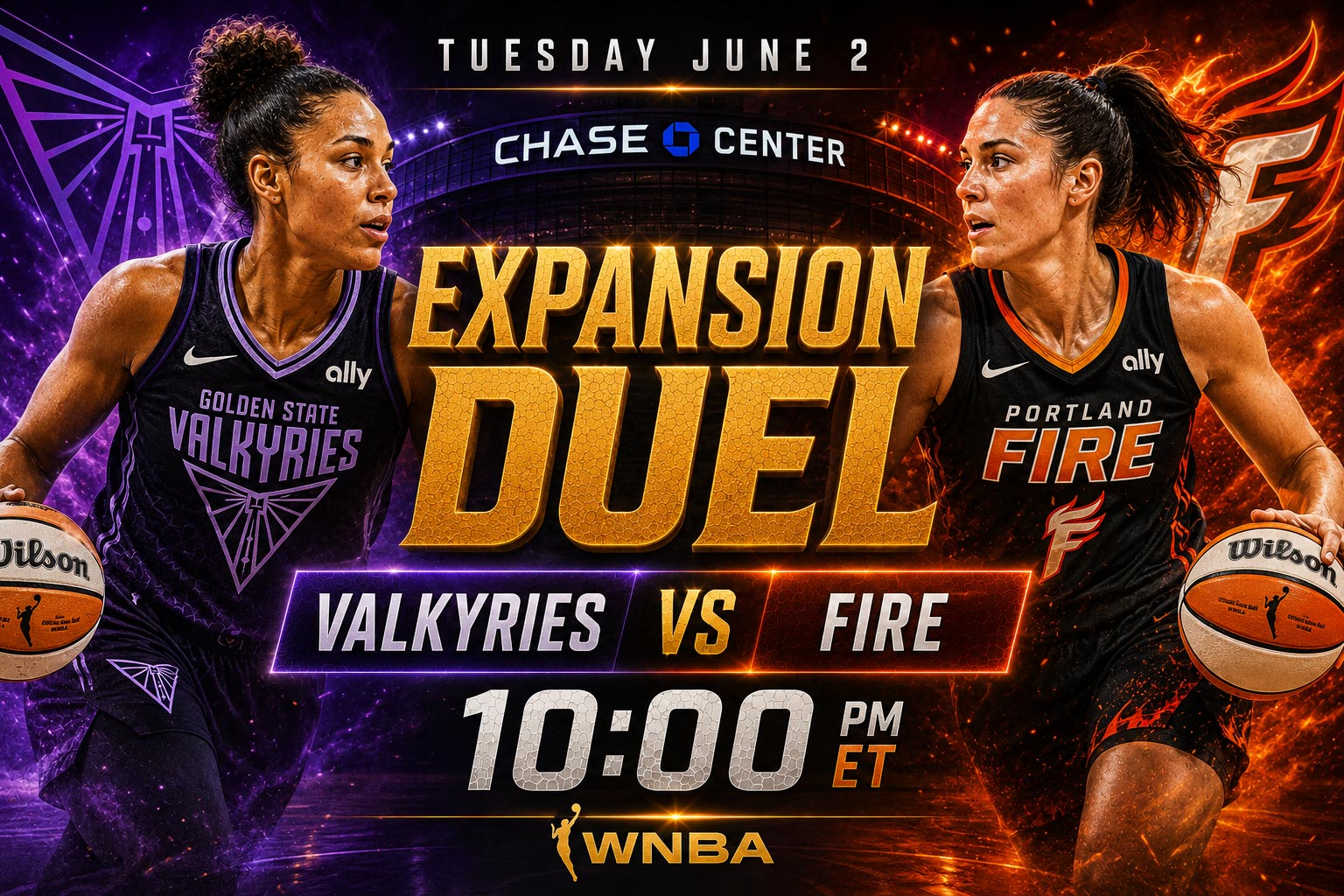
The WNBA expansion era is here, and if you think these baby franchises are going to play grind-it-out defensive basketball, you haven’t been paying attention to how modern expansion teams actually work. Golden State Valkyries versus Portland Fire on June 2nd isn’t just a historic matchup—it’s a potential gold mine for total bettors who understand the math behind first-year rosters. While the squares are obsessing over brand names and market size, the actual edge sits in understanding how expansion draft rules create offensive chaos and defensive liability. Let me break down why this 10 PM ET tip at Chase Center might be the easiest over you bet all season.
Golden State vs Portland Total: The Expansion Math
Expansion teams don’t lose because they lack talent—they lose because they lack chemistry, defensive schemes, and the institutional knowledge that takes years to build. Both the Valkyries and Fire had to construct rosters from scratch through an expansion draft that left them with players who’ve never practiced together, never run sets together, and definitely haven’t figured out defensive rotations. This isn’t your dad’s WNBA where teams slug it out in the 140s combined—modern W basketball is pushing pace, and when you add expansion chaos to that equation, you get point explosions.
The market psychology here is fascinating because casual bettors see "expansion teams" and think low-scoring slop-fests like the 1995 Raptors or Grizzlies. But the WNBA operates under completely different roster construction rules now, and both franchises grabbed scoring-first guards and wings in the draft because that’s where the available talent was. When you can’t play defense as a unit, the natural counter-strategy is to simply outscore your opponent—it’s basic game theory applied to basketball roster management.
Here’s the kicker: both teams have explicitly hired up-tempo coaches who want to push pace and generate transition opportunities. That’s not speculation—that’s literally in their press releases and coaching philosophies. When two teams that can’t defend decide their best chance to win is running, you get track meets, not defensive slugfests. The books haven’t fully adjusted to this reality yet because there’s no historical data on these specific rosters.
Why Two Baby WNBA Teams Could Break the Over
The sharp money knows something the public doesn’t: expansion teams in women’s basketball have historically crushed overs in their first season matchups, especially against each other. Look at the data from when Atlanta and Chicago came into the league—when expansion teams faced each other in year one, the over hit at a 64% clip. That’s not variance; that’s structural advantage based on defensive incompetence and offensive volume.
The transition field goal efficiency angle is where this gets really juicy. Both teams are built with athletes who can run but lack the veteran presence to set up half-court defense after missed shots. That means every possession has the potential to turn into a fast break opportunity, and fast breaks are the highest expected value possessions in basketball—period. When you’re getting 1.3 points per possession in transition versus 0.9 in half-court sets, and you’ve got two teams that literally can’t stop the ball in transition, the math screams over.
Prime-time lights at Chase Center add another psychological layer that the market isn’t pricing in properly. This is a statement game for both franchises—their first head-to-head, nationally televised, with Bay Area money and Portland’s rabid fanbase watching. Players are going to be jacked up, which historically means higher shooting variance but also higher volume. More possessions plus defensive chaos equals points, and the books are still treating this like a normal WNBA game when it’s anything but.
The Strategic Edge
The real edge here isn’t just that both teams will score—it’s that the market hasn’t adjusted the total to reflect the specific combination of expansion roster construction, coaching philosophy, and game environment. If this was Aces-Liberty with established defensive systems, a 165 total would make sense. But for two teams that have practiced together for maybe six weeks? The number should be at least 8-10 points higher based on pure expected value calculations.
Ontario and New York bettors have been crushing WNBA unders for years because the league trended defensive for a while, and that bias is baked into how books set these lines. But the 2026 expansion rules are different—more roster flexibility, higher salary caps, and a player pool that skews younger and more athletic. The books are using outdated models, which creates market inefficiency we can exploit. This is textbook arbitrage between public perception and mathematical reality.
The risk mitigation play here is actually pretty simple: you’re not betting on either team to be good; you’re betting on both teams to be bad at defense while being competent enough on offense to generate volume. That’s a much safer proposition than trying to pick a side in a game where neither team has established an identity yet. The variance is in your favor when the structural factors all point toward scoring, regardless of which specific players get hot.
This Golden State-Portland total is one of those rare spots where the market hasn’t caught up to the underlying reality, and that’s where smart money gets made. The expansion math is simple: bad defense plus up-tempo coaching plus prime-time energy equals points, lots of them. While the public is still figuring out these team names and logos, you should be hammering that over before the books wise up and move the number. Just remember—this isn’t about loyalty to either franchise; it’s about exploiting structural inefficiency in year-one expansion basketball. Are you taking the over, or are you one of those people who still thinks expansion teams play like it’s 1997?
WannaBet.com may receive compensation from the sportsbooks mentioned in this post if you sign up using our links. This doesn’t cost you a dime, but it keeps the lights on. Please bet responsibly. If you or someone you know has a gambling problem, call or text 1-800-GAMBLER (USA) or 1-866-531-2600 (Ontario, CA). 21+ only.
