

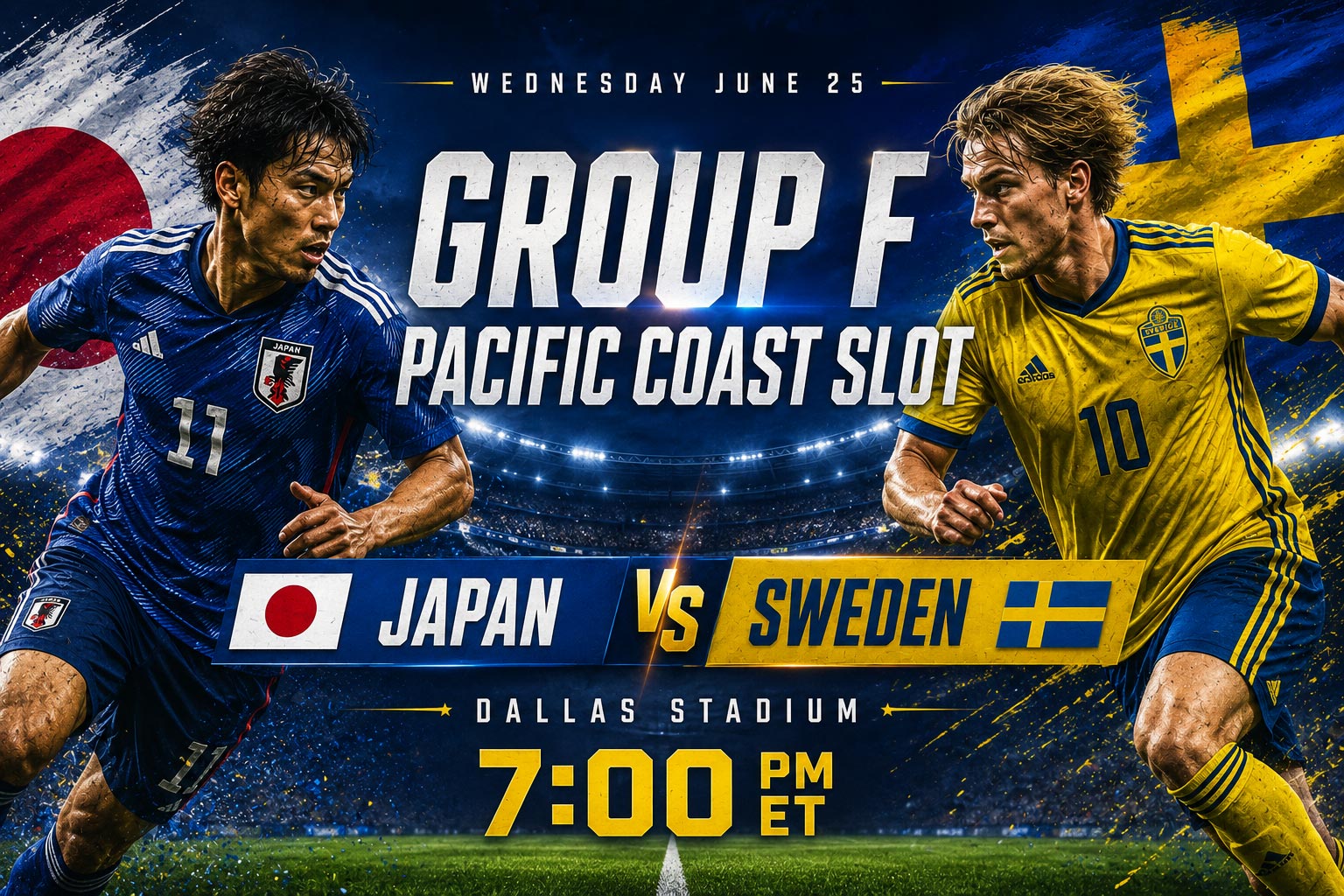
The 2026 World Cup is about to serve up one of those matches that separates the sharks from the fish, and I’m not talking about the full-time result. When Japan and Sweden kick off on June 25th at Dallas Stadium, the real money isn’t in picking a winner—it’s in recognizing that the opening 45 minutes is going to be tighter than your uncle’s grip on his remote during Thanksgiving football. Both squads are masters of the tactical chess match, and if you think either team is coming out guns blazing in a crucial Group F matchup, you’re probably the same person who thought FTX was a solid investment. The first-half draw isn’t just a play here—it’s basically printing money if you understand tournament psychology and how elite international teams approach must-win group stage games.
Japan-Sweden First Half Draw: A Sharp’s Dream
The market inefficiency here is so glaring it might as well be wearing a neon sign. Japan’s entire football philosophy under their current system revolves around controlled possession and patient build-up play—they’re not trying to replicate Brazil’s 1970 highlight reel in the first 20 minutes. Sweden, meanwhile, has built their reputation on defensive organization that would make a Swiss bank vault look sloppy. These aren’t teams that stumble into early goals; they’re methodical, calculated, and about as likely to concede a sloppy first-half goal as I am to stop checking odds during family dinner.
The expected value on this play is absolutely screaming when you consider the tournament context. Group F is shaping up to be a bloodbath, which means both teams need points, but more importantly, they can’t afford to lose points. That risk-averse mentality translates to conservative tactics in the opening half while coaches feel out the opposition and make adjustments. We’ve seen this pattern in literally every World Cup since betting markets became liquid—teams play not to lose before they play to win.
Here’s the kicker that most casual bettors will miss: Dallas Stadium’s climate-controlled environment eliminates the heat factor that typically forces open play in summer tournaments. Both teams will be comfortable, which means they can execute their structured game plans without environmental variables forcing their hand. When you remove chaos from the equation, you get exactly what the sharps want—predictable, boring, beautiful 0-0 soccer through 45 minutes.
Why the Opening 45 Minutes Screams Stalemate
Let’s talk market psychology for a second, because this is where the edge really lives. The betting public loves action—they want goals, excitement, and dopamine hits before halftime so they can post their winning tickets on Twitter. That public bias creates artificial juice on "both teams to score" and "over" plays in the first half, which means books are giving you better value on the draw than the actual probability suggests. It’s basic market arbitrage, except instead of exploiting currency differences, you’re exploiting the fact that degenerates can’t handle watching 0-0 soccer.
Japan’s tactical approach under pressure situations is well-documented: they’ll set up in a compact 4-2-3-1, probe for weaknesses, and rarely commit numbers forward until they’ve identified where the space actually exists. Sweden’s counter-punching style means they’re perfectly content to sit in a mid-block, stay organized, and wait for transition opportunities. When you have two teams whose optimal strategy is patience, you get exactly what we’re betting on—a whole lot of nothing for 45 minutes. This isn’t rocket science; it’s just pattern recognition that the public refuses to acknowledge because it’s not sexy.
The risk mitigation strategy here is beautiful in its simplicity. Even if one team scores early (which, again, is unlikely given both teams’ defensive metrics), the odds of both teams scoring in the first half drops dramatically in knockout-stage-adjacent matches. You’re not betting on a specific scoreline—you’re betting on tournament psychology, tactical conservatism, and the reality that elite international teams don’t gamble in Group F openers. That’s a bet I’ll make every single time, and twice on Sundays.
The Play:
- First Half Draw (Japan vs Sweden) at whatever odds your book is offering—this should be around +200 to +240 depending on jurisdiction
- Risk 2-3 units if you’re properly bankrolled; this is a sharp play, not a lottery ticket
- Available across all major US markets (DraftKings, FanDuel, BetMGM) and Bet365 Ontario
The Strategy:
- Lock this in early before sharps move the line—tournament openers always see value evaporate as match day approaches
- Consider pairing with Under 1.5 First Half Goals as a correlated parlay for enhanced value
- Avoid the trap of "both teams need to win" logic—they need not to lose, which is fundamentally different
At the end of the day, betting on a first-half draw isn’t going to get you featured on ESPN’s highlight reel, but it’s going to pad your bankroll while everyone else is crying about their 6-leg parlay that died because Sweden and Japan had the audacity to play smart, disciplined football. This is the type of play that separates people who treat betting like entertainment from people who treat it like a portfolio diversification strategy that occasionally involves watching soccer at 7 PM on a Thursday. The World Cup is a marathon, not a sprint, and the teams know it—which is exactly why this stalemate has value written all over it. What’s your take—are you riding with the sharps on this one, or are you still chasing that "Japan to win 3-0" pipe dream?
WannaBet.com may receive compensation from the sportsbooks mentioned in this post if you sign up using our links. This doesn’t cost you a dime, but it keeps the lights on. Please bet responsibly. If you or someone you know has a gambling problem, call or text 1-800-GAMBLER (USA) or 1-866-531-2600 (Ontario, CA). 21+ only.
