

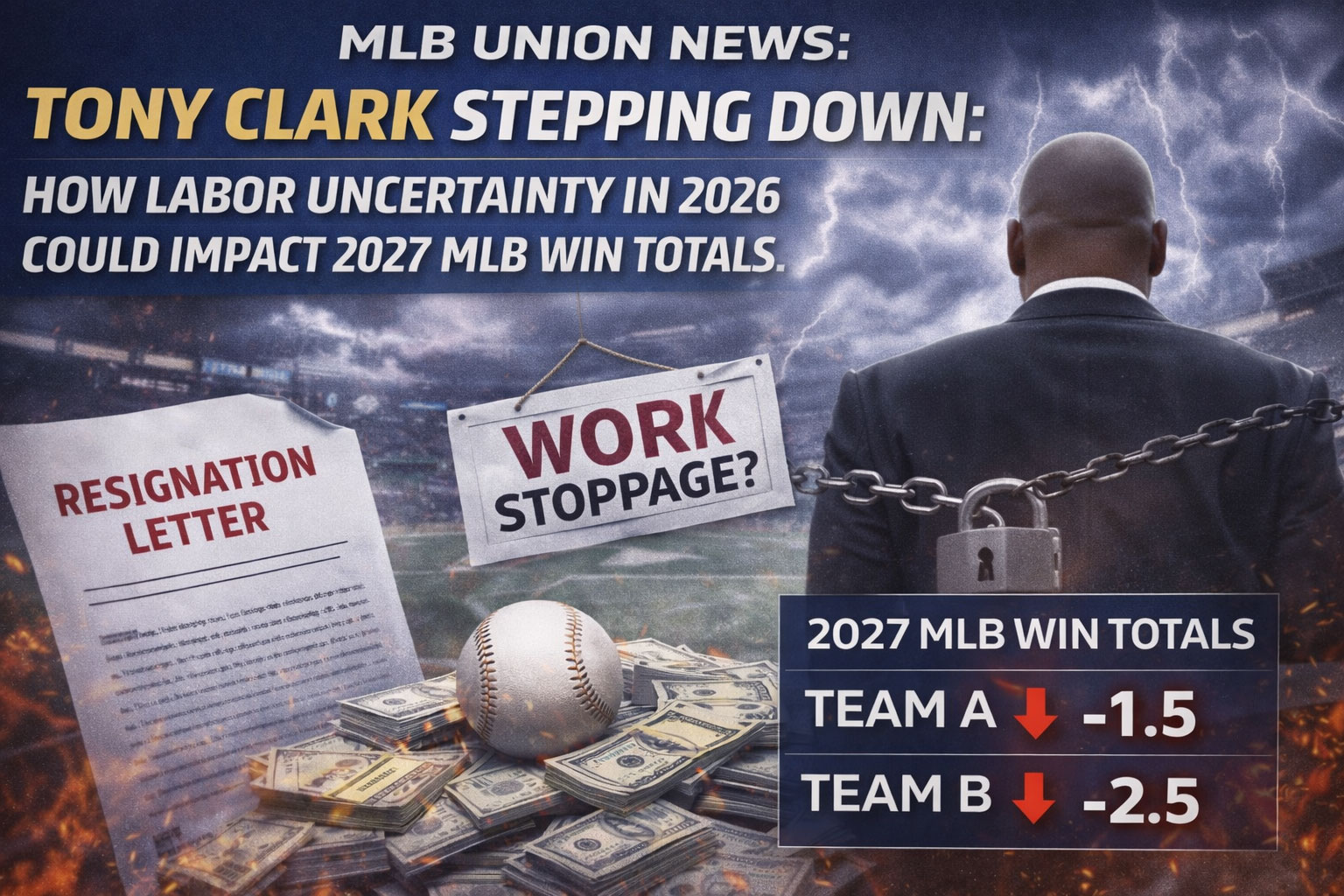
Tony Clark stepping down as MLBPA Executive Director is the kind of sleeper storyline that sharp bettors absolutely need to track. While everyone’s busy arguing about whether the Yankees overpaid for Juan Soto or if the Dodgers are ruining baseball (they’re not, they’re just better at cap management than your favorite team), the real money move is understanding how labor uncertainty heading into 2026 could completely wreck your 2027 win total bets. This isn’t just union drama—it’s a market inefficiency waiting to happen, and if you’re not thinking three steps ahead, you’re basically lighting money on fire.
Tony Clark’s Exit: What It Means for Your Bets
Tony Clark’s tenure as MLBPA head has been… let’s call it "mixed results." The guy negotiated through the 2022 lockout that delayed Opening Day, secured some decent wins for players on pre-arb salaries, but also presided over an era where teams got increasingly comfortable with tanking strategies that make betting unders feel like stealing candy from a baby. His exit creates a leadership vacuum at literally the worst possible time—right before the 2026 CBA negotiations that could reshape the entire competitive landscape of baseball.
Here’s why this matters for your bankroll: new leadership means new negotiating philosophy, and new philosophy means unpredictable outcomes. If the next MLBPA exec comes in hot with aggressive demands on luxury tax thresholds or service time manipulation, we could be looking at another work stoppage. Remember 2022? Books pulled futures off the board entirely, and anyone holding win total tickets got their action refunded at best, tied up in limbo at worst.
The market psychology angle here is crucial. Sportsbooks price 2027 win totals based on roster construction and historical performance, but they’re notoriously bad at pricing in systemic risk like labor disputes. That’s your edge—if you can correctly handicap the probability and severity of 2026 CBA chaos, you can identify which win totals are mispriced based on uncertainty alone. Think of it like buying volatility before earnings reports, except instead of quarterly results, we’re talking about whether there’s even going to be a full season.
2026 CBA Chaos Could Tank 2027 Win Total Value
Let’s game theory this out. If we get a prolonged work stoppage in 2026, the ripple effects on 2027 are massive and completely underpriced in current markets. Shortened spring training means higher injury rates (hello, pitcher UCL tears in April), rushed roster decisions, and teams that typically start hot getting their timing thrown off. The 2022 season saw exactly this—teams like the Guardians who relied on pitching depth got cooked early because arms weren’t stretched out properly.
Now factor in the bargaining issues that are definitely on the table: international draft implementation, expanded playoffs diluting regular season importance, and potential salary floor/ceiling mechanisms that could force competitive balance. If the union pushes hard on a salary floor, suddenly tanking teams in 2026 become forced buyers in 2027, completely changing win total projections. The White Sox going from 40-win basement dwellers to forced 75-win mediocrity because they have to spend? That’s a 10-win swing the books aren’t pricing in yet.
The real degen play here is understanding which franchises are most exposed to CBA uncertainty. Big market teams with deep pockets (Dodgers, Yankees, Mets) can absorb almost any rule changes because they’ll just spend their way out of problems. It’s the mid-market teams—your Brewers, Rays, Guardians—that get absolutely wrecked by uncertainty because their competitive advantage relies on exploiting inefficiencies in the current system. If the CBA changes those rules, their whole model breaks, and suddenly those "sharp" under bets on win totals become way less attractive.
Look, I get it—worrying about 2026 labor negotiations when we’re still figuring out if the Orioles are actually good or just vibes feels premature. But this is exactly the kind of asymmetric information advantage that separates people who bet for fun from people who actually beat the closing line. Tony Clark stepping down is the canary in the coal mine for what could be a complete reshaping of MLB’s competitive landscape, and if you’re not already thinking about how to position your 2027 futures accordingly, you’re playing checkers while everyone else is playing 4D chess. The books will eventually adjust their pricing—your job is to be ahead of that adjustment, not chasing it. So here’s the question: are you fading big-market overs or buying mid-market chaos? Drop your takes below.
WannaBet.com may receive compensation from the sportsbooks mentioned in this post if you sign up using our links. This doesn’t cost you a dime, but it keeps the lights on. Please bet responsibly. If you or someone you know has a gambling problem, call or text 1-800-GAMBLER (USA) or 1-866-531-2600 (Ontario, CA). 21+ only.
