

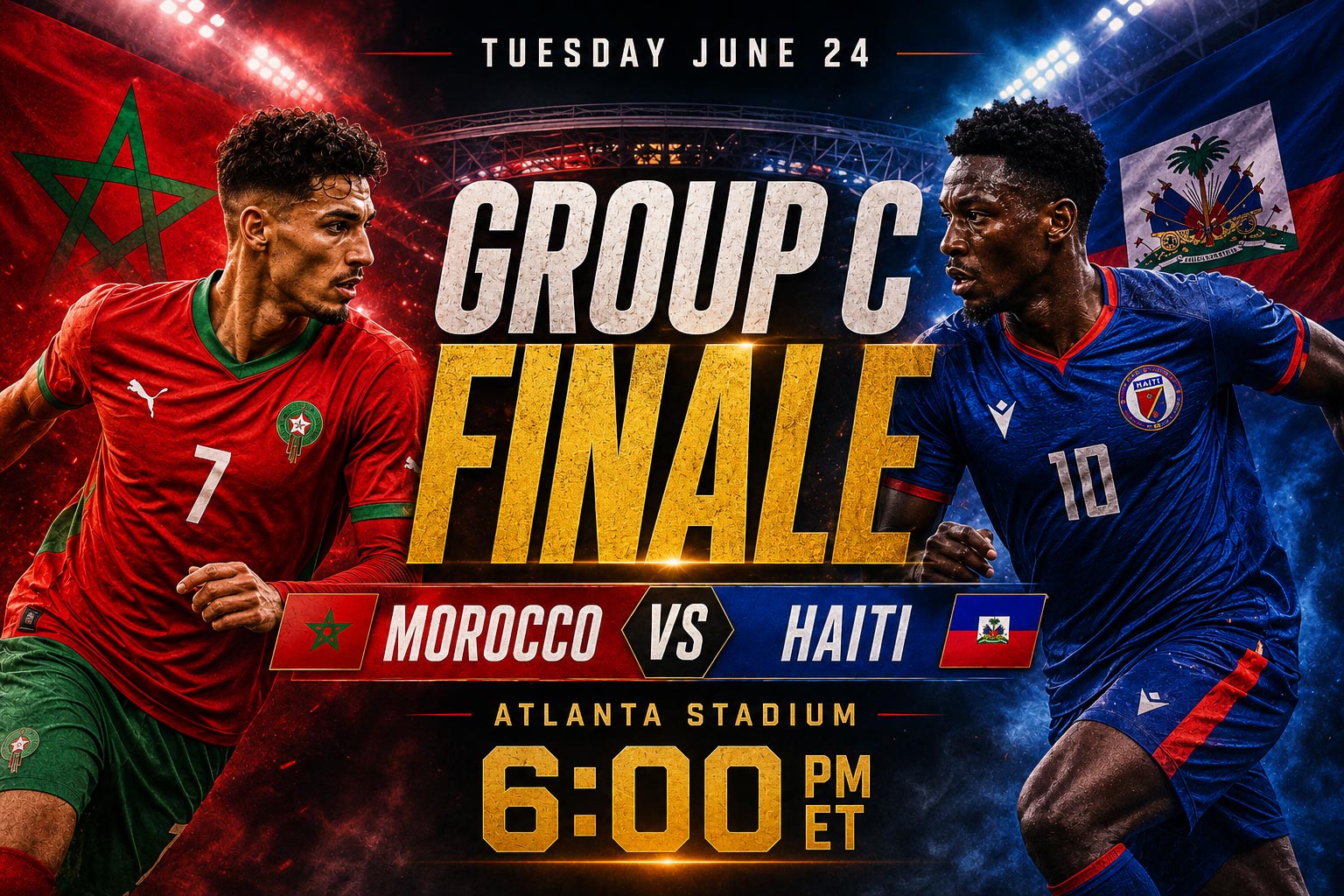
The 2026 World Cup is about to serve us one of those matches where the spread looks so obvious that half of North America is gonna hammer the full game line without thinking twice. Morocco’s rolling into their Group C finale against Haiti as massive favorites, and every casual bettor from the Meadowlands to Toronto is gonna load up on that -2.5 full game number like it’s free money. But here’s the thing about "obvious" plays in tournament soccer—the books aren’t stupid, and they’ve already priced in your entire thought process before you even opened the app.
That’s exactly why the smart money is pivoting to first-half derivatives on this June 24th matchup at Atlanta Stadium. When you’ve got a 6:00 PM ET kickoff with this kind of talent disparity, the market inefficiency isn’t in picking the winner—it’s in isolating when that edge materializes. The sportsbooks in New York, Jersey, and Ontario have juiced the full-game props to death, but they’re leaving exploitable value in the opening 45 minutes if you know where to look.
I’m not here to tell you Morocco won’t win—they absolutely should. What I’m breaking down is how to extract maximum expected value from a lopsided matchup without paying the premium that DraftKings and FanDuel have already baked into their marquee markets. Let’s get into why the first half is where the actual edge lives.
Morocco vs Haiti: Why First Half Is the Play
The fundamental thesis here is market segmentation. When you’re looking at a match where Morocco is favored by multiple goals, the books are essentially charging you a "certainty tax" on full-game outcomes. They know you know Morocco should dominate, so they’ve compressed the odds on everything from the spread to the over to clean sheet props. It’s basic supply and demand—high conviction from the public equals terrible pricing for the bettor.
First-half lines, however, operate under different market dynamics. The general betting public tends to focus on final scores and full-game results because that’s the natural way to consume sports. This creates a pricing inefficiency in derivative markets like first-half spreads and totals, where the books haven’t extracted as much margin because the volume is lower. In tournament soccer especially, teams with superior talent tend to impose their will early, knowing that a lead allows them to manage the game and rotate legs for knockout rounds.
Morocco’s group stage trajectory heading into this finale suggests they’ll be motivated to control possession and tempo from the opening whistle. If they’ve already secured advancement (likely given their squad quality), they’ll still want to maintain rhythm and confidence. Haiti, meanwhile, will be playing for pride but realistically lacks the defensive structure to contain Hakim Ziyech and company for 90 minutes. The question isn’t if Morocco scores—it’s when, and tournament psychology suggests they’ll push early rather than risk a cagey affair.
The Sharp Angle Everyone’s Missing at Kickoff
Here’s where it gets interesting from a game theory perspective. The casual bettor sees Morocco -2.5 full game at -130 on FanDuel and thinks "lock." But what they’re missing is that tournament soccer is inherently conservative once a lead is established. Morocco doesn’t need to run up the score—they need to advance healthy and fresh. That means if they go up 2-0 in the first half, you’re likely seeing tactical substitutions and defensive shape for the final 45.
This creates a statistical arbitrage opportunity in first-half markets. Morocco First Half -0.5 is typically priced around -115 to -125 across major books in New York and Ontario—significantly better juice than the full-game equivalent when you account for game script probability. You’re getting exposure to the period where Morocco’s incentive structure aligns with aggressive play, without paying for the back-half uncertainty where they might cruise. That’s textbook risk mitigation while maintaining upside.
The other angle that’s flying under the radar is First Half Under 1.5 goals as a hedge vehicle. I know that sounds counterintuitive given what I just said, but hear me out. If you’re building a portfolio approach to this match, you can take Morocco -0.5 first half and sprinkle the under as insurance against a slow-developing opener. Haiti’s going to pack it in defensively, and if Morocco takes 35 minutes to break through, you’ve got a realistic scenario where it’s 1-0 at the half. You lose the under but cash the spread, or you middle if it stays 0-0. It’s about creating multiple paths to profitability rather than putting all your chips on one outcome.
The Plays
Primary Edge:
- Morocco First Half -0.5 (-120 or better on DraftKings/FanDuel/BetMGM)
- Target stake: 2-3 units depending on your bankroll management
Advanced Portfolio Construction:
- Morocco First Half Team Total Over 0.5 (-200 range, use as parlay anchor)
- First Half Under 1.5 Total Goals (+115 to +130, small hedge position)
States with Best Odds Shopping:
- New York: Check Caesars vs FanDuel for line variance
- New Jersey: BetRivers often has softer first-half lines
- Ontario: Bet365 typically competitive on World Cup derivatives
The Strategy
The execution here is all about timing and line shopping. Don’t blindly fire this on Tuesday afternoon when the lines first drop. Wait until you see how the Group C table shakes out after the earlier matches. If Morocco has already clinched, you might see the first-half spread soften as the market anticipates rotation—that’s when you pounce harder. If they need goal differential for seeding, the line might tighten, but the game script becomes even more favorable for early aggression.
Bankroll allocation is critical on tournament plays like this. You’re not betting a random MLS regular season match—this is the World Cup with global liquidity and sharp money from every continent. That means the closing lines are going to be efficient, so you need to either get down early with conviction or wait for late steam to identify where the smart money is landing. I’d personally lean toward establishing a position 24-48 hours out, then potentially adding if the number holds or improves.
The psychological edge you have over the public is understanding that soccer betting isn’t about picking winners—it’s about identifying which specific market offers the best risk-adjusted return. Morocco will probably win this match going away, but you’re getting torched on juice if you’re laying -250 on the moneyline or eating -150 on the full-game spread. The first half is where the value lives because it’s where Morocco’s incentives, Haiti’s limitations, and market inefficiency all converge.
So what’s your play—are you riding the first-half spread, or do you think Haiti keeps it tight longer than the market expects? Drop your takes in the comments, because if there’s one thing I learned running a book at Harvard, it’s that groupthink is how you go broke.
WannaBet.com may receive compensation from the sportsbooks mentioned in this post if you sign up using our links. This doesn’t cost you a dime, but it keeps the lights on. Please bet responsibly. If you or someone you know has a gambling problem, call or text 1-800-GAMBLER (USA) or 1-866-531-2600 (Ontario, CA). 21+ only.
