

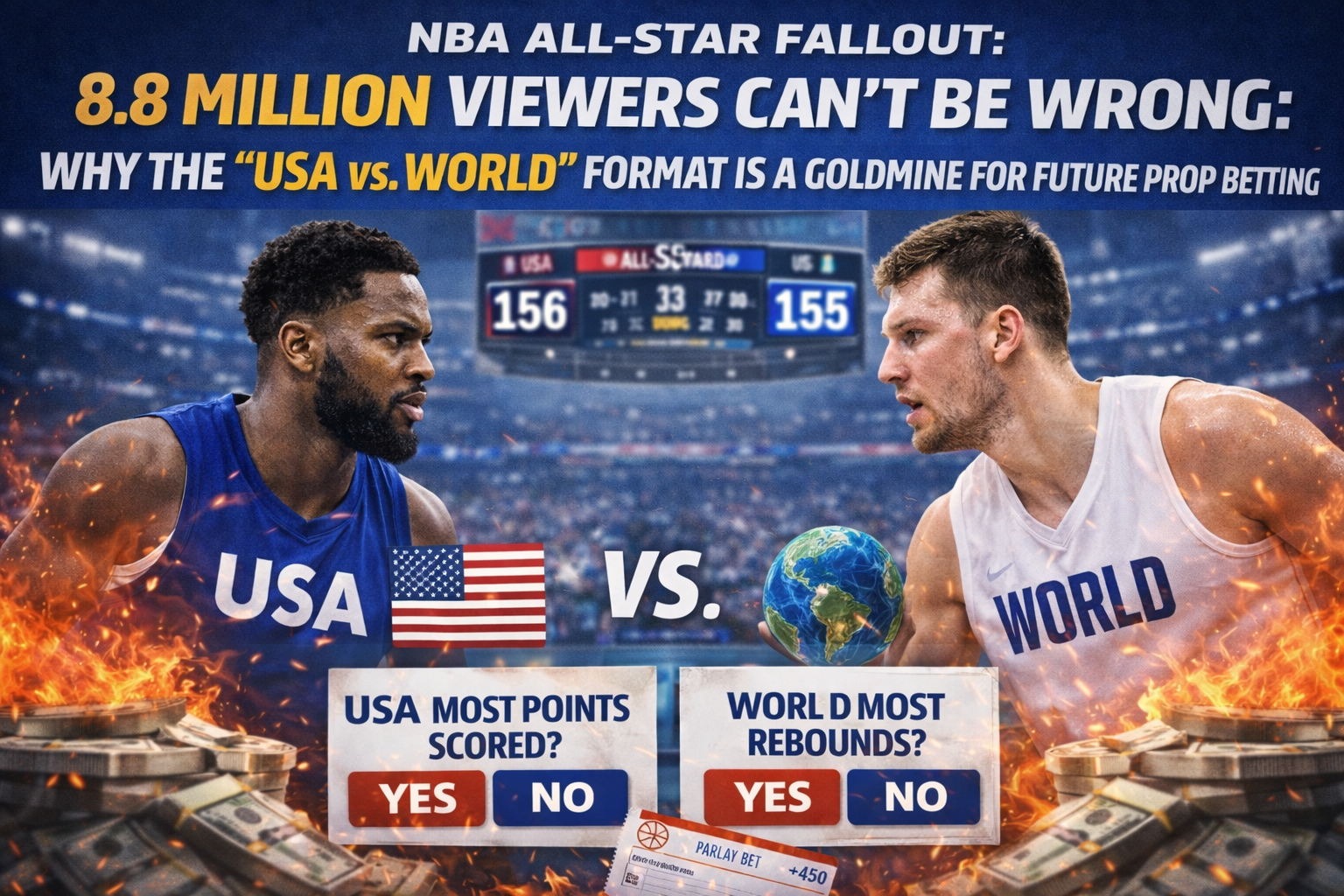
Look, I’m not gonna pretend the NBA All-Star Game has been appointment television since like 2016. But 8.8 million people tuned in to watch this new USA vs. World format, and if you think that’s just casual eyeballs, you’re missing the forest for the trees. This isn’t about whether the game was "competitive" or whatever ESPN talking heads want to debate—this is about market liquidity, baby. When you’ve got nearly 9 million viewers locked in, you’ve got sportsbooks salivating over the prop betting opportunities, and that means edges for people like us who actually understand market psychology.
The old format was dying a slow, painful death—remember when they tried that captain draft thing and it still sucked? But USA vs. World taps into something primal: national pride, which is basically the same psychological trigger that makes World Cup betting so insanely profitable. The sportsbooks know this, the league knows this, and now you know this. Let’s break down why this format change isn’t just good for TV ratings—it’s about to become a prop betting goldmine.
USA vs. World Format: A Prop Bettor’s Dream
The beauty of this format is it creates natural narrative tension that translates directly into betting action. You’ve got Giannis, Luka, Jokic, and SGA repping the World squad against basically Team USA Basketball’s JV squad (no disrespect, but the A-team is saving themselves for the Olympics). This isn’t some random East vs. West exhibition where nobody cares—you’ve got guys actually trying to prove something, which means more predictable effort levels and better EV on player props.
From a market efficiency standpoint, this format is a bettor’s wet dream because it segments the talent pool in predictable ways. Books are gonna set team totals, spreads, and MVP odds based on perceived star power, but here’s the edge: international players have been dominating the NBA for years now, and the public still undervalues them. Look at the last three MVPs—Jokic, Embiid, Giannis—all World team guys. The recency bias alone creates mispriced lines.
The prop menu for this format is going to be absolutely stacked, and I’m talking beyond your standard points/rebounds/assists. Think about it: first team to 25 points, winning margin brackets, nationality-specific props (first Canadian to score, anyone?), and the holy grail—MVP betting with actual stakes attached. When players care even a little bit, the variance decreases, and that’s when sharp money can exploit public perception. The juice might be heavy, but the edges are there if you’re not betting like a degen.
Why 8.8M Viewers Means Sharps Should Pay Attention
Let me hit you with some MBA-brain stuff: viewership equals liquidity, and liquidity equals opportunity. When 8.8 million people watch something, sportsbooks dedicate serious resources to that event—more prop offerings, higher betting limits, and most importantly, more casual money flooding the market. That last part is key because casual bettors bet with their hearts, not their heads, which creates exploitable inefficiencies for anyone doing actual homework.
The Ontario market alone is gonna go absolutely nuclear for this format because Canadians finally have skin in the game with SGA and Jamal Murray balling out for Team World. New York, New Jersey, and Pennsylvania—the big three in terms of handle—are gonna see massive action on both sides, but especially on Team USA because of home country bias. This is basic behavioral economics: people overvalue their own team’s chances, which means Team World spreads and props are gonna be consistently undervalued. Free money? Nah, but an edge? Absolutely.
Here’s where it gets spicy for the 2025 game and beyond: sportsbooks are gonna start offering in-game live betting with this format that’ll make your head spin. We’re talking real-time props on scoring runs, quarter winners, and momentum swaps—all with the kind of volume that makes the lines sharp enough to trust but soft enough to beat. The 8.8 million viewers aren’t just watching; they’re potential customers, and books will roll out the red carpet with promos and boosted odds that create even more value for anyone who knows what they’re doing.
The NBA finally stumbled into something that works both as entertainment and as a betting vehicle, which is the sweet spot every league is desperately chasing. This USA vs. World format isn’t just saving the All-Star Game from total irrelevance—it’s creating a annual prop betting Super Bowl for basketball junkies who know how to find an edge. The viewership numbers prove people care, and when people care, they bet, and when they bet emotionally, we eat.
I’m calling it now: by the 2026 All-Star Game, the prop betting handle on this event is gonna rival some playoff games, especially in markets like Ontario where international players have a massive following. The books will adjust eventually—they always do—but there’s a two-to-three year window here where the lines are gonna be exploitably soft because they’re still figuring out how to price national pride and international star power in an exhibition setting.
So what’s your play gonna be next year? Are you fading Team USA because of value, or are you riding with the Stars and Stripes because you hate money? Drop your hottest All-Star betting take in the comments, because I guarantee someone’s gonna say something unhinged about Luka MVP odds.
WannaBet.com may receive compensation from the sportsbooks mentioned in this post if you sign up using our links. This doesn’t cost you a dime, but it keeps the lights on. Please bet responsibly. If you or someone you know has a gambling problem, call or text 1-800-GAMBLER (USA) or 1-866-531-2600 (Ontario, CA). 21+ only.
