

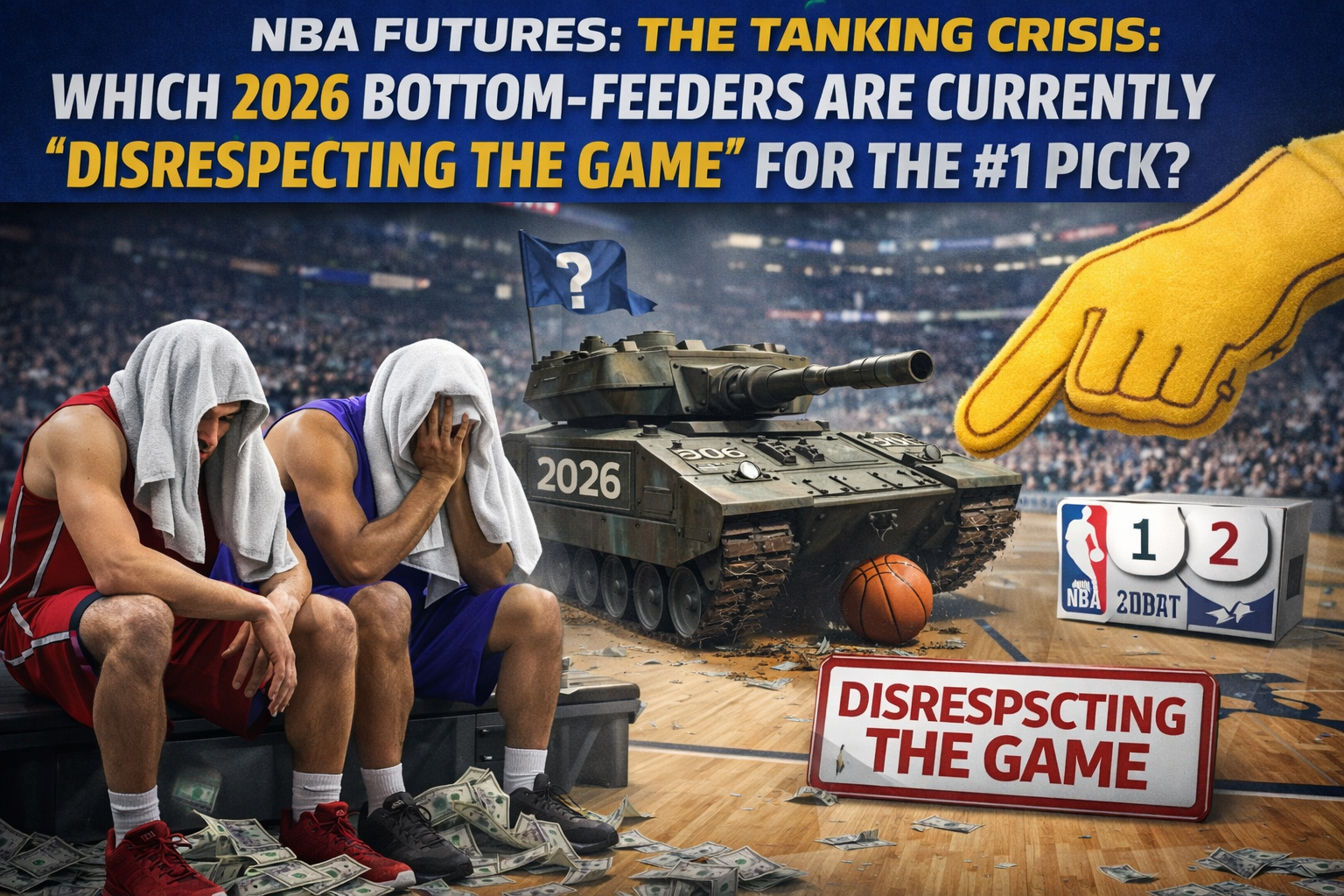
Alright, degens, let’s talk about the most profitable market nobody’s watching yet: NBA tanking futures. We’re still in the 2024-25 season, but the smart money is already eyeing 2026 draft positioning like it’s a distressed asset play. The league keeps tweaking the lottery odds to discourage tanking, but these bottom-feeder franchises are treating the regular season like a negative EV proposition—and honestly, they’re not wrong. If you understand the expected value of strategic losing, you can absolutely print money on win totals, draft position props, and futures before the books wake up. Let’s break down which franchises are currently "asset accumulating" their way to Cooper Flagg 2.0, and how we can exploit the hell out of it.
The Race to the Bottom: Who’s Tanking Hardest?
The Portland Trail Blazers are running a masterclass in organizational tank warfare right now, and it’s genuinely beautiful to watch from a process standpoint. They’ve got the classic rebuild markers: young core with upside (but not enough to win meaningful games), a coach who talks about "development" every presser, and a front office that traded every win-now asset for picks like they’re running a hedge fund. Their roster construction screams "we’re optimizing for 2026 lottery positioning," and the market hasn’t fully priced this in yet. Books in New York and Ontario still have their win total at 24.5 for next season, which is borderline disrespectful—smash that under like it owes you money.
The Washington Wizards are the other franchise that’s fully embraced the tank-to-championship pipeline, and their commitment to losing is honestly inspiring. They’re not even pretending anymore—their veteran signings are purely salary floor compliance, and their rotation decisions look like they’re being made by a random number generator. This is what we call "revealed preference" in game theory: when actions speak louder than PR statements. The Wizards are positioning themselves for a 2-3 year rebuild arc, meaning 2026 is peak tank season for them. The edge here is betting their under early before casual bettors catch on and the juice shifts.
The Detroit Pistons deserve an honorable mention because they’ve been tanking so long they’ve basically institutionalized it into their organizational DNA. They’re like the value trap stock that keeps promising a turnaround but never delivers—which makes them perfect for consistent under bets. Their front office keeps drafting "projects" instead of ready-now talent, which signals they’re playing the long game (read: they’re fine with losing). For 2026 specifically, if they don’t make a significant veteran acquisition by the 2025 trade deadline, you know what time it is. Load up on their season unders and fade them in any "race to X wins" props the books offer.
Breaking Down the Expected Value of Losing
Here’s where the MBA brain kicks in: tanking is literally just an arbitrage opportunity between short-term losses and long-term asset appreciation. These franchises are eating 50-60 loss seasons because the expected value of a top-3 pick is worth approximately $150-200M in future franchise value, according to some consulting decks I’ve seen. That’s not even accounting for the merchandising and ticket sales bump from landing a generational talent. The flat lottery odds (introduced in 2019) mean the three worst teams each have a 14% chance at #1, so there’s diminishing returns to being THE worst versus just being bottom-3. This creates a beautiful inefficiency: teams tank hard enough to guarantee bottom-3, but not so obviously that the league investigates them.
From a betting perspective, this means we should be targeting teams in that 15-22 win range for 2025-26, not the absolute dregs. The truly terrible teams (sub-15 wins) often have their lines overadjusted by the market because casual bettors love piling on obvious dumpster fires. But the "stealth tanks"—teams that look competitive on paper but have zero veteran leadership or defensive schemes—those are your alpha generators. Think of it like finding undervalued options: you want the teams whose tank trajectory isn’t fully priced in yet. Pennsylvania and Illinois books have been slower to adjust these lines historically, so if you’re in those markets, you’ve got a slight edge on timing.
The other angle here is coaching futures and front office moves as leading indicators. When a team hires a "developmental" coach (translation: young guy who won’t complain about losing) or promotes from within their analytics department, that’s a red flag that they’re prioritizing process over wins. Same with trading for "future considerations" or second-round picks—that’s just cap management with extra steps. If you see these moves during the 2025 offseason, immediately check the win totals for those teams because books are slow to react to organizational signals. This is literally free money if you’re paying attention to the right RSS feeds and beat reporters.
Look, the NBA has a structural tanking problem because the incentive structure rewards losing in ways that no flat lottery odds can fully fix. As bettors, our job isn’t to moralize about "competitive integrity"—it’s to find market inefficiencies and exploit them before they close. The 2026 tank race is already underway, and the smart money is positioning now while the lines are still soft. Keep an eye on roster construction moves this summer, fade teams that trade veterans for picks, and remember that organizational behavior is more predictive than talent on paper. The books will eventually adjust, but right now there’s a 6-8 month window where you can absolutely crush these futures and season totals. Who are you targeting for the 2026 tank crown? Drop your picks in the comments—I need to know if I’m missing any obvious plays here.
WannaBet.com may receive compensation from the sportsbooks mentioned in this post if you sign up using our links. This doesn’t cost you a dime, but it keeps the lights on. Please bet responsibly. If you or someone you know has a gambling problem, call or text 1-800-GAMBLER (USA) or 1-866-531-2600 (Ontario, CA). 21+ only.
