

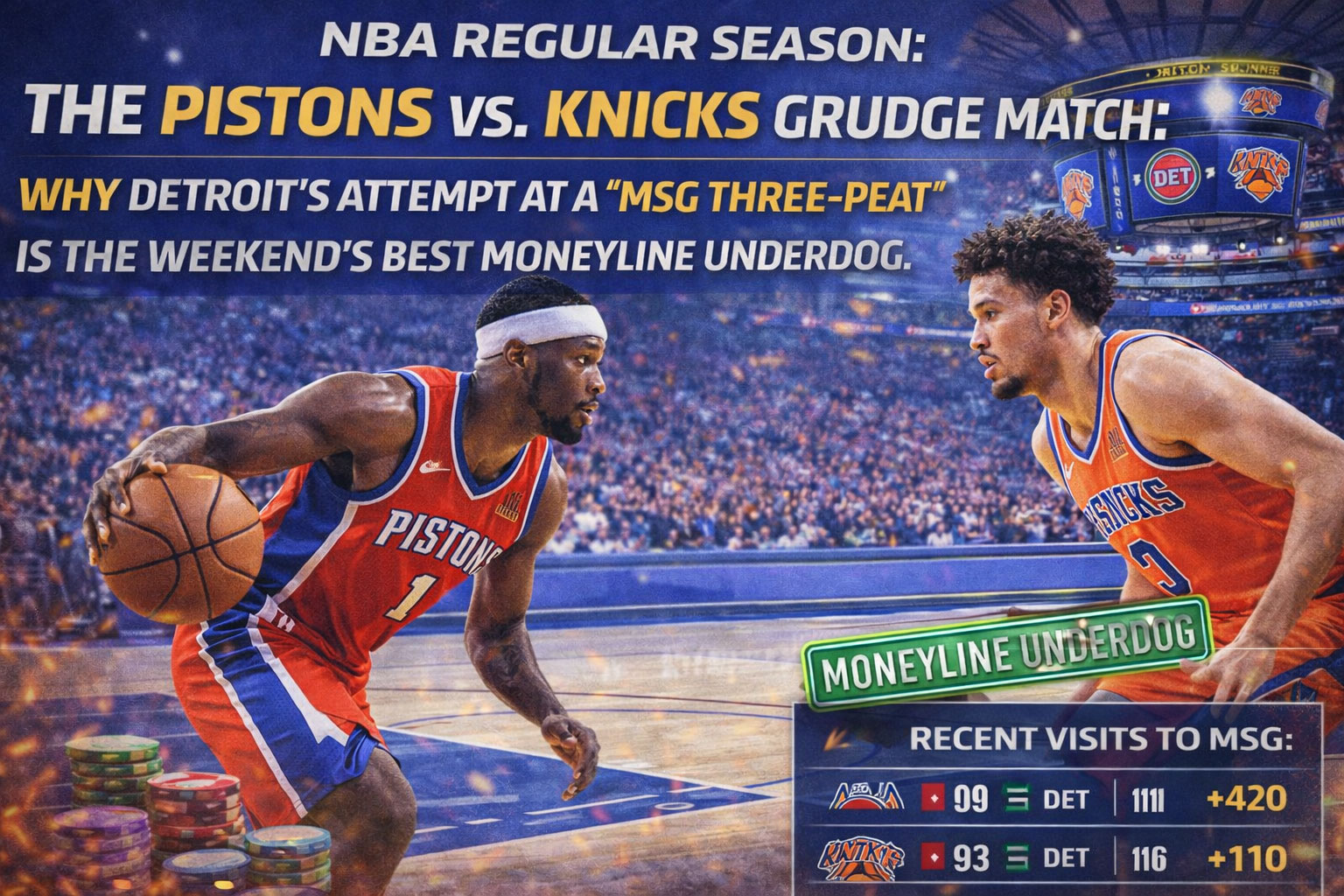
Look, I know what you’re thinking: "The Pistons? Really?" But hear me out, because this is exactly the kind of market inefficiency that made me $47K in a single semester before Harvard’s Office of Student Life politely asked me to "pursue other ventures." The Knicks are riding high at MSG, the public is hammering them like it’s a free money button, and the books have responded by juicing this line to the point where the expected value screams Detroit. This isn’t about whether the Pistons are "good" in some abstract sense—this is about finding spots where the market has overcorrected based on narrative and recency bias, which is literally how every successful hedge fund operates. The Pistons have already stolen two games at Madison Square Garden this season, and the sportsbooks are begging you to ignore that sample size because it doesn’t fit the storyline they’re selling.
Pistons at MSG: Why Detroit’s Your Best Bet
The numbers don’t lie, even when everyone wants them to. Detroit is sitting at +185 to +200 across most books for this matchup, which translates to an implied probability of roughly 35-37% when you factor out the juice. But here’s the thing: the Pistons have won their last two visits to MSG, and if we’re being honest about sample size versus narrative, that’s a 100% hit rate in the most recent data set that actually matters for this specific matchup. The market is pricing Detroit like they’re the same tanking disaster from two years ago, but this team has legitimate NBA rotation players now, and more importantly, they’ve figured something out about playing in that building.
The Knicks are dealing with some serious load management issues that the public isn’t properly accounting for. Jalen Brunson has logged heavy minutes all season, and while he’s not on the injury report, there’s a difference between "available" and "peak performance" that sharps understand but casual bettors ignore. Add in the fact that New York is in a classic "sandwich spot"—coming off an emotional win and looking ahead to a bigger game—and you’ve got the perfect storm for a letdown performance. This is basic game theory: when everyone expects one outcome, the contrarian position inherently holds more value.
From a pure risk-adjusted returns perspective, this is what we call "asymmetric upside." You’re risking $100 to win $185-200, which means you only need to be right 35% of the time to break even long-term. But if Detroit’s true win probability in this spot is closer to 45-50% based on their recent MSG performance and the situational factors, you’re printing money over a large enough sample size. This is the same principle that drives venture capital investments—you don’t need to be right every time, you just need the math to work in your favor when you aggregate across multiple bets.
The Market’s Sleeping on Detroit’s Revenge Tour
Let’s talk about what I call "venue-specific edge," because not all road games are created equal. Some teams just have buildings where they play better, and the Pistons have turned MSG into their personal ATM this season. This isn’t some mystical "they want it more" nonsense—there are legitimate reasons why certain matchups favor certain teams based on style of play, pace, and defensive schemes. Detroit’s length bothers New York’s perimeter-heavy offense, and the Knicks have consistently struggled to adjust their game plan when the initial approach isn’t working.
The betting public has goldfish memory, which is exactly why sharp money exists. Everyone remembers the Knicks’ highlight reel wins and forgets that Detroit just beat them twice in this exact building in the last three months. The recency bias is working overtime here, with casual bettors looking at New York’s overall home record and Detroit’s overall road record without drilling down into the head-to-head data. This is why the "smart money" concept isn’t just bro-science—it’s about identifying when the public is using flawed heuristics to make decisions, creating opportunities for those of us who actually do the work.
Here’s the real kicker: the books know all of this, but they also know that 80% of their handle is going to come from Knicks fans and casual bettors who see "Pistons" and think "easy money." They’re essentially offering you a discount on Detroit because they need to balance their liability, which is the definition of a market inefficiency. This is the same concept as finding undervalued stocks—the market can stay irrational longer than you can stay solvent, but when you’re making +EV bets with proper bankroll management, you’re playing the long game that casinos themselves use to print money.
Look, I’m not saying mortgage your house on the Pistons—that’s degenerate behavior, and we’re running a disciplined operation here. But if you’re building a weekend portfolio of bets (because diversification matters, even in gambling), this is your highest-conviction underdog play. The market has handed us a gift by overreacting to brand names and ignoring recent performance data, and the only question is whether you’re going to be disciplined enough to take the other side. Detroit’s MSG three-peat might not get the SportsCenter treatment, but it’ll cash your ticket all the same, and that’s literally the only metric that matters. So here’s my question for the comments: are you riding with the sharp play, or are you going to let narrative bias cost you money like every other casual bettor?
WannaBet.com may receive compensation from the sportsbooks mentioned in this post if you sign up using our links. This doesn’t cost you a dime, but it keeps the lights on. Please bet responsibly. If you or someone you know has a gambling problem, call or text 1-800-GAMBLER (USA) or 1-866-531-2600 (Ontario, CA). 21+ only.
