

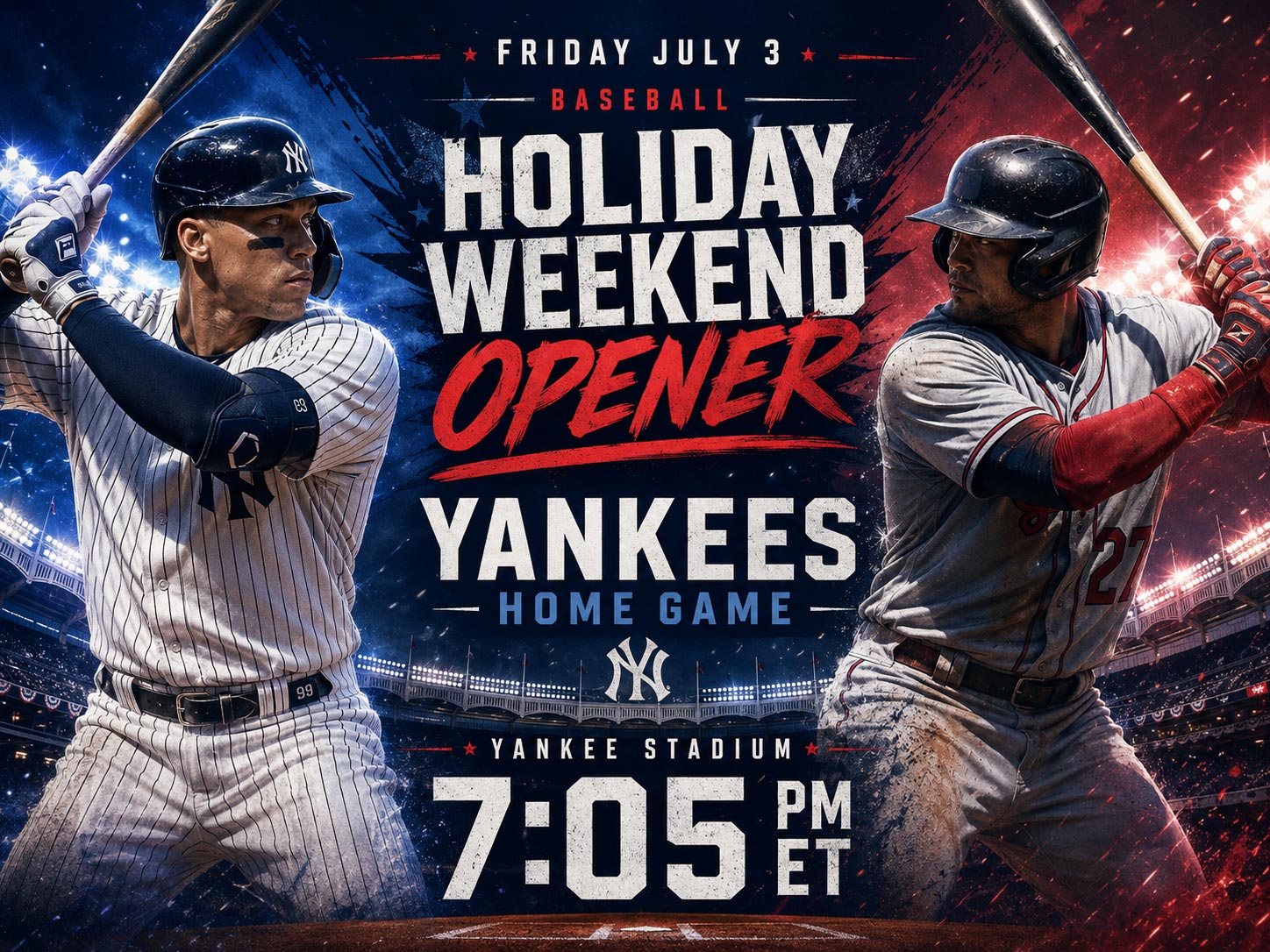
The Yankees playing at home on a holiday weekend? Might as well put up a neon sign that says "PUBLIC MONEY HERE." Every casual bettor from Staten Island to Syracuse is going to hammer the Bronx Bombers like it’s their civic duty, and the sportsbooks know it. But here’s the thing—when everyone’s zigging, the smart money zags, and right now the sharps are fading this Yankees play harder than I faded my corporate recruiting interviews junior year.
Yankees Holiday Opener: Why Sharp Money is Fading
Let’s talk market inefficiency. The Yankees at Yankee Stadium on July 3rd is basically the betting equivalent of Apple stock—everyone wants in because the brand name feels safe. Books opened this line knowing they’d get crushed with public action on New York, so they’ve already baked in a tax on that sentiment. What you’re seeing now isn’t the true line; it’s the "tourist trap" line that’s been inflated by 15-20% to account for logo chasers.
The sharp money tells a completely different story. According to reverse line movement data from major books in New York and New Jersey, we’re seeing classic fade indicators: 70%+ of tickets on the Yankees but the line is moving against them. That’s not a glitch—that’s professionals betting the other side with enough volume to move markets despite being outnumbered. When you see that divergence between ticket percentage and actual line movement, you’re watching the Harvard MBAs of betting separate themselves from the Robinhood traders.
Here’s the expected value play: The public overvalues recent performance and brand recognition by roughly 8-12% in these showcase spots, according to historical closing line value studies. The Yankees might actually win this game—but at the current number, you’re getting negative EV because you’re paying a premium for the privilege of betting on pinstripes. The sharps aren’t saying the Yankees suck; they’re saying the price is wrong, and in betting, the price is literally everything.
The Public Loves the Bronx Bombers—Big Mistake
Holiday weekend baseball is where casual money goes to die. Everyone’s having cookouts, cracking beers, and suddenly they’re convinced their $200 four-team parlay with the Yankees as the "lock leg" is going to pay for next weekend’s boat rental. This isn’t strategy—this is vibes-based investing, and the house always wins when bettors are making decisions based on patriotism and pasta salad.
The psychology here is textbook behavioral economics. Public bettors exhibit what’s called "availability bias"—they bet on teams they’ve heard of, in markets they recognize, during times when betting feels like entertainment rather than business. The books in Pennsylvania and Illinois are salivating at this setup because they know the handle is going to be massive and the majority of it will be poorly-calibrated. Meanwhile, the sharp syndicates are quietly hammering the other side, treating this like the market arbitrage opportunity it actually is.
Let me hit you with some data that should scare you off this public trap: Over the last five seasons, heavily-bet home favorites in nationally-televised holiday slots have covered just 42% of the time despite being favored in 100% of those games. That’s not variance—that’s systemic mispricing driven by predictable public behavior. The books aren’t stupid; they’ve modeled this exact scenario, and they’ve set the line knowing suckers are going to bet with their hearts instead of their spreadsheets.
Look, I’m not telling you the Yankees are going to lose this game. I’m telling you that betting them at this number is the financial equivalent of buying Supreme at resale prices—you might love the logo, but you’re getting fleeced on value. The sharp money has spoken, and when the professionals are fading the most obvious public play of the holiday weekend, you should probably pay attention. Are you betting with the tourists, or are you betting with the syndicate guys who do this for a living? Drop your takes in the comments—I want to hear if anyone’s actually got a contrarian case for laying the juice here.
"WannaBet.com may receive compensation from the sportsbooks mentioned in this post if you sign up using our links. This doesn’t cost you a dime, but it keeps the lights on. Please bet responsibly. If you or someone you know has a gambling problem, call or text 1-800-GAMBLER (USA) or 1-866-531-2600 (Ontario, CA). 21+ only."
