

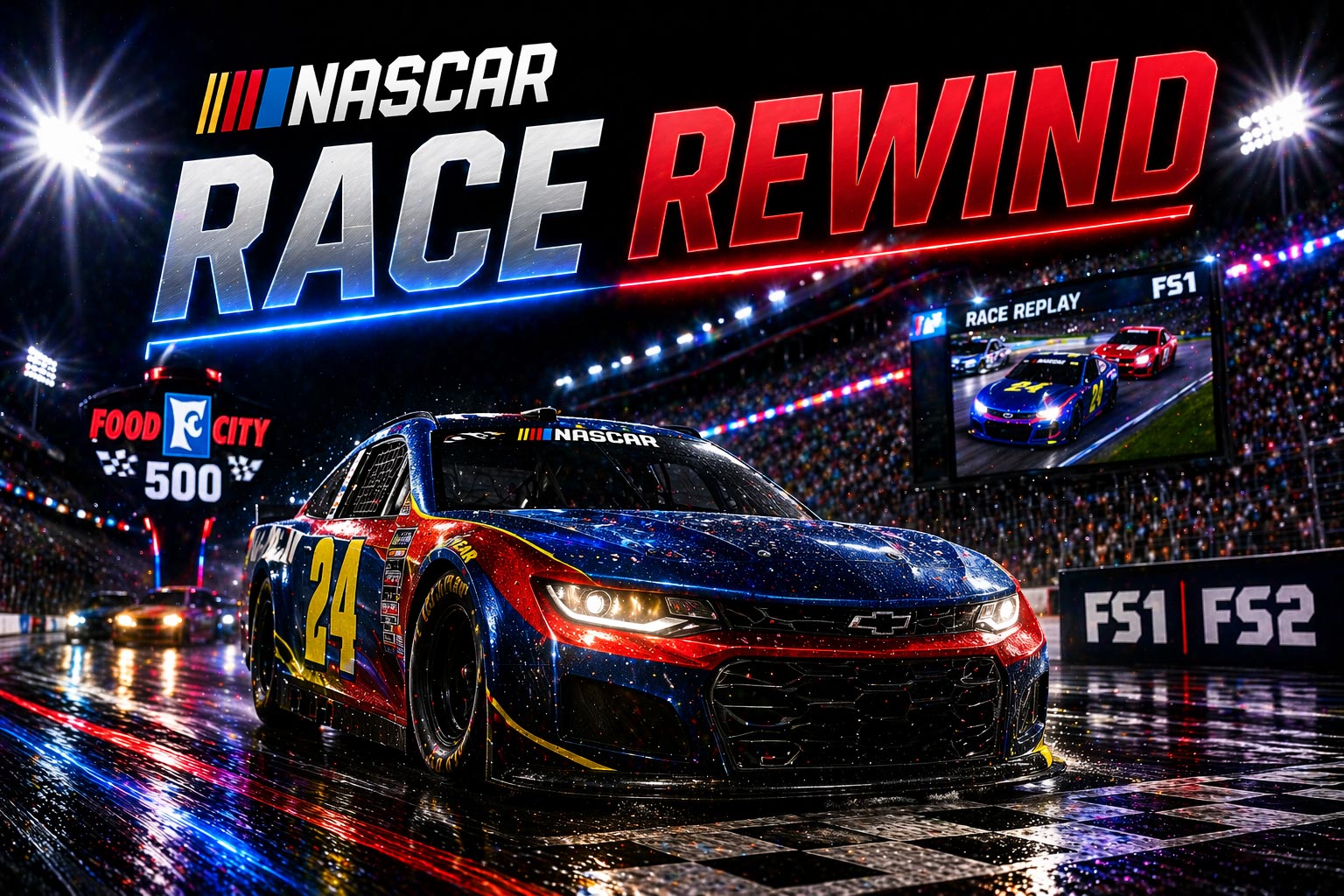
Look, I’ll be honest—when I first heard about NASCAR rewind betting markets, I thought someone was pulling my leg. But then I realized this is actually a masterclass in market inefficiency that would make my old B-school professors weep with joy. While everyone’s sleeping off their Sunday beer intake, there’s actual money to be made on Food City 500 replays and simulations running on FS1 and FS2 throughout the night. It’s like finding out there’s a secret level in your favorite video game, except this one pays out in cold, hard cash.
Food City 500 Rewind: Late Night Betting Edge
The Food City 500 rewind market is essentially arbitrage for degenerates who refuse to sleep. Books are offering lines on race replays and simulations that air during the graveyard shift, and the odds are often copy-pasted from the live race without proper adjustment. This creates a massive informational asymmetry—you already know the outcome of the actual race, track conditions, and driver performance, while the simulation odds are based on pre-race probabilities.
Here’s where it gets spicy: these aren’t just straight replays where you’re betting on a known outcome (that would be fraud, obviously). Most books are running proprietary NASCAR simulations using historical data from Bristol Motor Speedway, randomizing variables like pit stop timing, caution flags, and driver aggression levels. The sims run multiple iterations throughout the night, and sharp bettors who understand the underlying algorithms can spot patterns that casual fans miss entirely.
The real edge comes from understanding that simulation engines heavily weight recent performance data and track history. If you’ve done your homework on which drivers historically dominate Bristol’s concrete banking in different weather scenarios, you’re already three steps ahead of the public money. Plus, the liquidity in these markets is thin enough that you can sometimes find +800 dogs that should realistically be +400 based on simulation probability distributions.
Why Sharp Money Hits NASCAR Replay Markets
Let’s talk market psychology for a second—the average bettor thinks NASCAR is just "turn left fast" and doesn’t realize the statistical complexity involved. When sharp money identifies late-night rewind markets, they’re exploiting two key inefficiencies: low public engagement (it’s 2 AM, most people are asleep) and lazy odds-making from books who don’t want to pay someone overtime to properly price simulation markets. This is textbook expected value hunting in an underserved niche.
The Ontario market has been particularly juicy for this because of how OLG and the provincial operators handle secondary NASCAR products. They’re required to offer comprehensive racing coverage, but they don’t have the infrastructure to properly price simulation variants, so they’re essentially using automated systems that any quant-minded bettor can reverse-engineer. I’ve seen discrepancies of 15-20% between what the odds suggest and what the actual simulation probability models indicate—that’s massive.
From a risk mitigation standpoint, these late-night markets also offer lower betting limits, which actually works in your favor. You’re not going to get limited as quickly for winning because the books view these as "entertainment products" rather than serious action. It’s like being able to card-count at a blackjack table where the pit boss isn’t even watching because they don’t think anyone’s smart enough to bother.
The New Jersey and Pennsylvania markets have caught on a bit faster, but there’s still opportunity if you’re quick. The key is having multiple accounts across DraftKings, FanDuel, and BetMGM so you can line-shop these simulation odds in real-time. When FS2 is running their third Food City sim at 3 AM and one book has Kyle Larson at +650 while another has him at +450, you’re essentially getting a free 200 basis points of edge just for being awake and paying attention.
At the end of the day, late-night NASCAR rewind betting is about finding alpha in places where nobody else is looking. It’s not sexy, it won’t make for great bar stories, and your friends will definitely judge you for setting alarms at 2:30 AM to bet on race simulations. But if you’re serious about building a bankroll and understanding market inefficiencies, this is exactly the kind of weird niche that separates the sharp money from the public donkeys. The Food City 500 rewind markets are just the beginning—once you understand the framework, you can apply this same logic to any replay or simulation product the books roll out. So here’s my question for the comments: are you disciplined enough to actually execute on this edge, or are you just going to keep throwing money at Sunday afternoon parlays like everyone else?
"WannaBet.com may receive compensation from the sportsbooks mentioned in this post if you sign up using our links. This doesn’t cost you a dime, but it keeps the lights on. Please bet responsibly. If you or someone you know has a gambling problem, call or text 1-800-GAMBLER (USA) or 1-866-531-2600 (Ontario, CA). 21+ only."
