

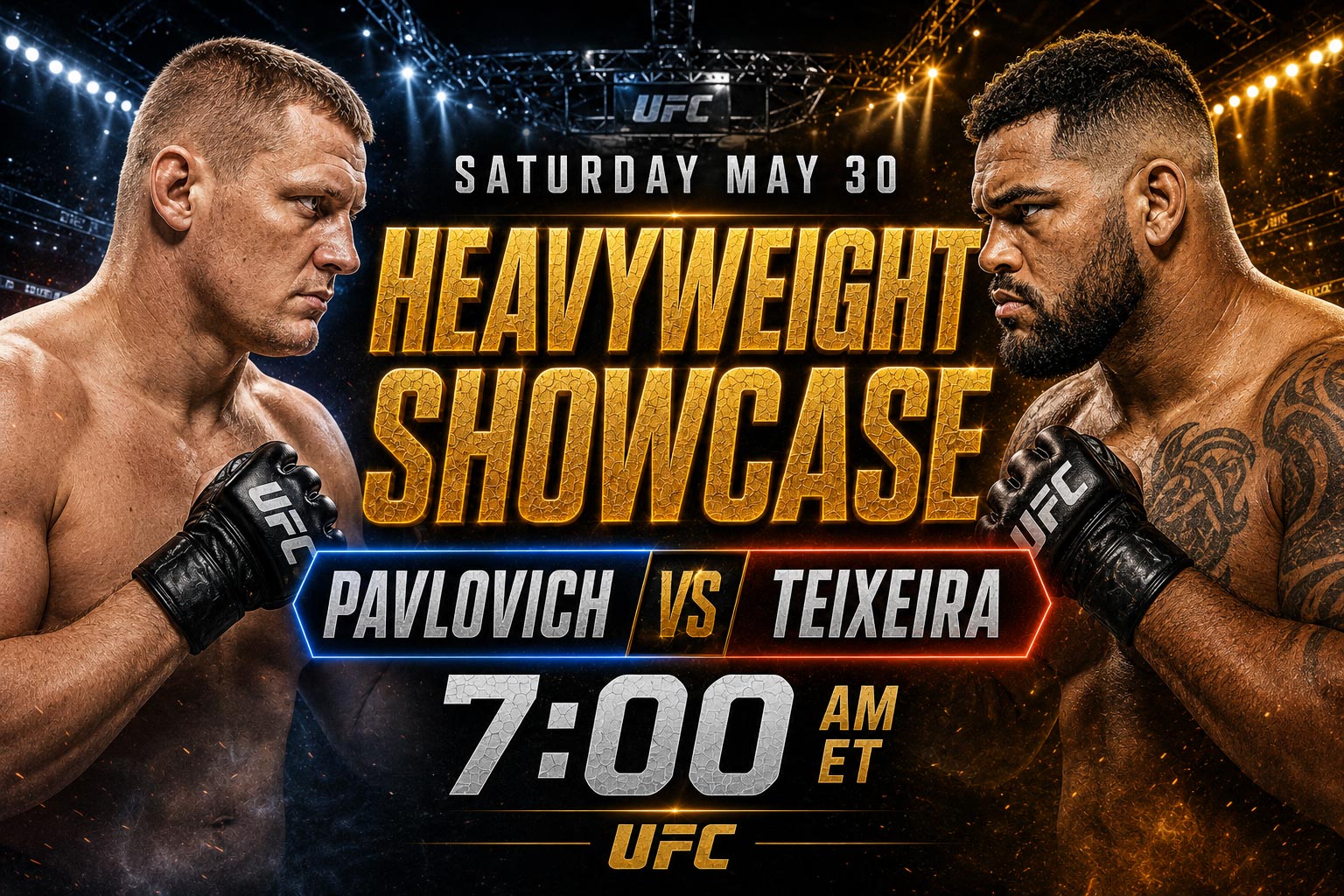
The books are practically begging you to hammer the Under 1.5 rounds for Pavlovich-Teixeira. Two absolute units with combined knockout power that could level a small building, odds that scream "easy money," and your entire group chat already planning what they’re gonna do with their winnings. But here’s the thing about bets that feel like locks—they’re usually the ones that empty your bankroll faster than your ex emptied your Netflix queue. The sportsbooks aren’t running charities, and when they’re pricing something at a heavy premium, they’ve already done the math that most casual bettors skip. Let’s break down why this "can’t-miss" prop is actually the textbook definition of a sucker bet.
Why Pavlovich vs Teixeira Under Is a Sucker Bet
The public loves a good knockout narrative, and the books know it. When you’ve got two heavyweights with highlight-reel finishes, the casual money floods toward the Under like it’s a Black Friday sale at Best Buy. The oddsmakers aren’t idiots—they’ve already baked that public sentiment into the line, which means you’re getting terrible value even if you’re technically right about the fight ending early.
Here’s where the market psychology gets interesting. The books have effectively created a perception trap by pricing the Under at such heavy juice that it becomes a focal point of the betting card. Everyone’s talking about it, every podcast is hyping it, and suddenly you’ve got a self-fulfilling prophecy of bad bets. This is classic behavioral economics—when something feels obvious, it’s usually because you’re being herded into position.
The real kicker? Even if this fight does end in a knockout, you’re paying such a premium that your expected value is absolute garbage. You might win the bet, sure, but you’re getting paid like you predicted the sun would rise tomorrow. That’s not sharp betting—that’s paying top dollar for a coin flip with extra steps.
The Math Behind Fading the Knockout Hype
Let’s run the actual numbers here, because feelings don’t pay out. Say the Under 1.5 is priced at -250 (which is conservative for a fight like this). That means you need to hit at a 71.4% clip just to break even over time. Now ask yourself: are you really that confident this fight ends in the first round and a half? Because historically, even the heaviest hitters in heavyweight divisions don’t finish fights that quickly with that kind of consistency.
The concept of implied probability versus actual probability is where sharp bettors make their money. The books are implying this fight has a 71%+ chance of ending early, but when you dig into the tape and the data, that number starts looking inflated as hell. Pavlovich’s knockout rate is impressive, but Teixeira’s chin hasn’t been tested enough at this level to assume he’s getting slept in 90 seconds. You’re essentially betting on a perfect storm scenario at odds that don’t compensate for the risk.
Here’s the arbitrage angle nobody’s talking about: the Over 1.5 rounds is probably offering insane value right now because all the public money is hammering the Under. If you can find plus-money on the Over (and you probably can), you’re getting paid handsomely for a scenario that’s way more likely than the market suggests. That’s how you find edges—by zagging when everyone else zigs, especially when the herd is being this obvious about it.
Look, I’m not saying this fight goes the distance or that we’re watching a five-round chess match. These guys absolutely could trade leather and someone could be taking a nap before the commentary team finishes their opening takes. But betting isn’t about what could happen—it’s about finding spots where the odds don’t match reality. The Under 1.5 is priced like a certainty when it’s actually just a possibility with good marketing. Save your bankroll for plays where you’re getting compensated for your risk, not ones where you’re paying a premium to join the crowd. What’s your read—are you still smashing that Under or are you seeing the trap now?
WannaBet.com may receive compensation from the sportsbooks mentioned in this post if you sign up using our links. This doesn’t cost you a dime, but it keeps the lights on. Please bet responsibly. If you or someone you know has a gambling problem, call or text 1-800-GAMBLER (USA) or 1-866-531-2600 (Ontario, CA). 21+ only.
