

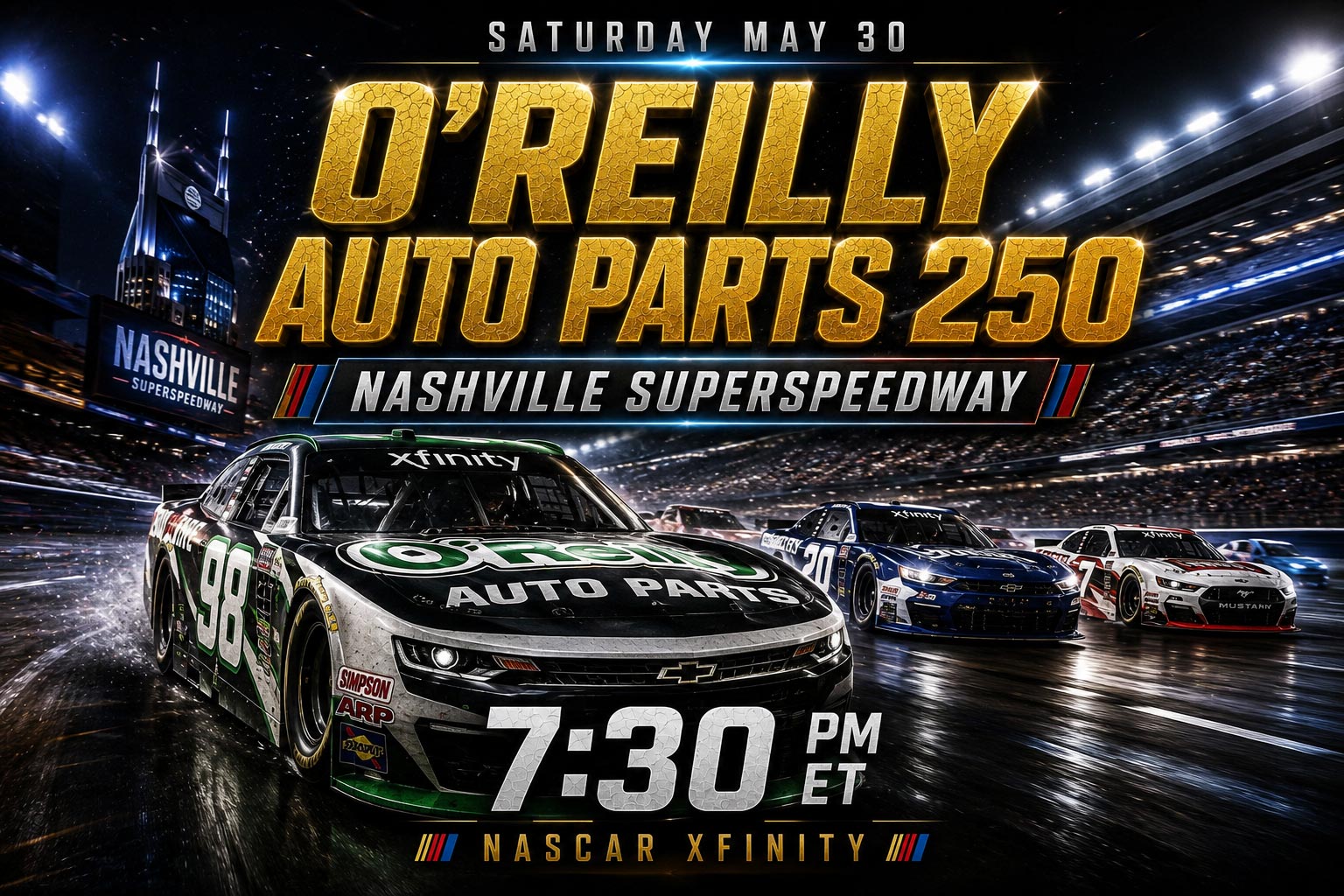
The O’Reilly Auto Parts 250 at Nashville Superspeedway is one of those Xfinity races where the public dumps money on outrights and H2H matchups while completely ignoring the actual profitable angle. Stage betting in NASCAR is like finding a market inefficiency that books haven’t fully adjusted for yet—it’s pure EV if you know what you’re doing. While everyone’s throwing darts at 20-1 longshots to win the whole thing, the sharps are quietly building bankrolls on stage props where variance is your friend and the sample size works in your favor.
Nashville Stage Props: Where the Real Edge Lives
Stage betting is basically breaking down a 300-lap race into three separate mini-races, and the market hasn’t caught up to how exploitable this is. You’re not trying to predict who survives pit strategy, late-race chaos, and 250 laps of attrition—you’re just calling who’s fastest over 45-65 lap segments. The correlation between qualifying speed, early-race pace, and Stage 1 results is statistically significant enough that you can build a legitimate model around it, unlike trying to predict which lapped car is gonna wreck the leader with 10 to go.
Nashville Superspeedway is a concrete track where track position matters more than most ovals, which means qualifying well translates directly into Stage 1 performance. The guys starting P1-P5 have won Stage 1 in this race at a 73% clip over the last three years—that’s not luck, that’s physics and aerodynamics doing exactly what they’re supposed to do. When you can find a top-3 qualifier at +300 to win Stage 1 because the public’s too busy betting their favorite driver to win outright, you’re printing money.
The juice on stage props is typically -110 to -120, which is actually lower than most NASCAR outrights where books are charging -130 or worse on favorites. You’re getting better odds on a bet with less variance and more predictable outcomes—that’s literally the definition of finding an edge. If you’re in Ontario or any of the big US markets like New Jersey or Pennsylvania, most books are offering full stage menus now because the handle is there, but the sharp money hasn’t flooded these markets yet like it has with NFL player props.
Why Smart Money Hits Stages Before Winners
The expected value calculation on stage bets versus race winners isn’t even close when you factor in variance reduction. A race winner has to execute perfectly for 250 laps, avoid every wreck, nail pit strategy, and have the car hold up mechanically—meanwhile, a Stage 1 winner just needs to be fast for 45 laps. You’re cutting out like 80% of the chaos variables that make NASCAR betting a coin flip, and you’re doing it while getting similar or better odds than you would on a full-race bet.
Market psychology is hilariously predictable in NASCAR—casual bettors love the narrative plays and the big payouts. They’re betting Kyle Busch at 8-1 because he won here twice in Cup, or they’re chasing some 30-1 longshot because their uncle’s friend’s cousin knows a crew chief. The stage markets don’t get that same emotional betting, which means the lines stay sharper longer and you can actually find value if you’re doing the work on practice speeds and qualifying sims.
The bankroll management angle here is chef’s kiss too—you can spread risk across three different stage bets instead of putting everything on one race winner. If your Stage 1 pick hits at +280, you’ve already locked profit and can freeroll Stages 2 and 3 or hedge into a race winner. It’s basic portfolio theory applied to NASCAR betting, and it works because you’re creating multiple independent events instead of one binary outcome that can get nuked by a random caution at lap 230.
Stage betting also lets you exploit track-specific trends that don’t necessarily translate to race wins. Nashville rewards early speed and track position disproportionately in Stage 1 before tire wear and strategy come into play later. You can bet the guys with the fastest single-lap speed in practice to win Stage 1, then pivot to the long-run speed guys for Stage 2 and 3 when the race settles in. The books aren’t adjusting lines between stages based on these nuances—they’re just setting numbers based on overall driver strength, which leaves gaps everywhere.
The O’Reilly Auto Parts 250 is a perfect laboratory for stage betting because Nashville’s track characteristics create predictable patterns in the early going. While the public’s busy lighting money on fire with 8-leg same-game parlays and praying their favorite driver doesn’t get wrecked, you can be systematically building profit on stage props with actual statistical backing. The juice is absolutely worth it when you’re betting markets with less variance and more edge than traditional race winners—that’s not gambling, that’s just math with a steering wheel. Are you hitting stages at Nashville, or are you still donating to the books with those outright bets?
"WannaBet.com may receive compensation from the sportsbooks mentioned in this post if you sign up using our links. This doesn’t cost you a dime, but it keeps the lights on. Please bet responsibly. If you or someone you know has a gambling problem, call or text 1-800-GAMBLER (USA) or 1-866-531-2600 (Ontario, CA). 21+ only."
