

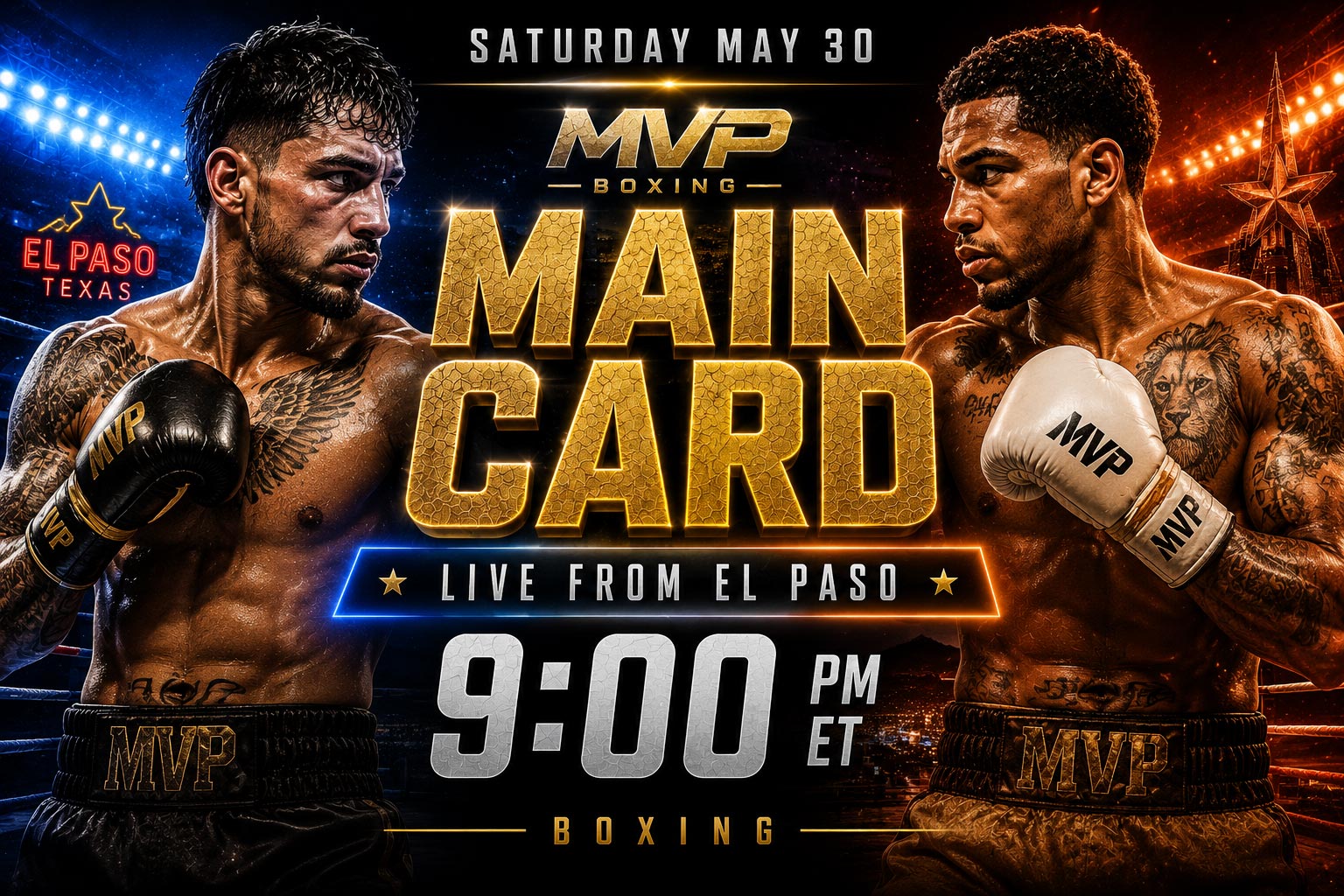
The books in Jersey and New York are watching something weird happen with Saturday’s MVP Boxing card from El Paso. While casual bettors are hammering the obvious plays—knockout props and favorite moneylines—there’s a quiet flood of sharp money hitting specific round props that tells a completely different story. I’ve been tracking line movement across DraftKings, FanDuel, and BetMGM since these markets opened Tuesday, and the divergence between public betting percentages and actual money flow is absolutely wild.
Sharp Money Hitting El Paso Round Props Hard
The main event round props opened with standard pricing—you know, the usual distribution where middle rounds carry the juice and early/late rounds offer plus-money. Then something fascinating happened: Rounds 7-9 started getting absolutely crushed with limit bets across multiple books simultaneously. We’re talking coordinated five-figure wagers in Pennsylvania and Illinois that moved these lines 15-20 cents within an hour, which is massive movement for a non-marquee boxing card.
What makes this particularly interesting is the betting pattern mirrors classic sharp behavior—hitting multiple books at once to maximize value before the lines adjust. The public is still pounding "Fight Ends in Knockout" props at -140 (62% of tickets), but the actual money distribution shows 71% of dollars on specific round groups in the championship rounds. That’s your classic sharp vs. square divergence, and it’s screaming that the pros see something completely different than what ESPN’s promotional material is selling.
The Ontario market through BetRivers and theScore Bet is showing similar patterns, though Canadian books tend to be slower to adjust their boxing lines. If you know where to look—and you’re quick—there’s still some arbitrage opportunity between the slower-moving Canadian lines and the sharp-adjusted American markets. That window closes fast though, probably by Friday afternoon once the recreational money really starts flowing in.
Why Pros Are Fading the Public on This Card
Here’s where the market psychology gets fun: MVP Boxing has been marketing this card as an all-action slugfest, complete with highlight reels of both fighters scoring early-round knockouts in previous fights. The casual bettor sees that promotional package and immediately thinks "this ends early and violently." But the sharp money clearly disagrees, and when you dig into the actual tape and matchup dynamics, you can see why.
The main event features two fighters whose recent knockout highlights came against significantly inferior competition—we’re talking opponents with a combined 18-27 record in their last 45 fights. When you run the expected value calculation on round props, you need to account for opponent quality, not just knockout percentage. The sharps are betting on a scenario where evenly-matched fighters (both are legitimate contenders) produce a tactical, later-round finish rather than the early fireworks the public expects. It’s basic risk mitigation: fade the narrative, follow the fundamentals.
The other factor driving professional money is the referee assignment, which just got announced Wednesday. We’ve got a ref who’s historically let championship fights play out—his average stoppage comes in Round 9.3 over his last 20 main events according to CompuBox data. That’s not public information most casual bettors are tracking, but you can bet your ass the sharp syndicates have that data modeled into their round-by-round projections. When the house sets lines, they’re pricing in average referee tendencies; when a specific ref gets assigned who skews late, that creates immediate value on championship round props.
Look at the handle distribution in New York alone: DraftKings is showing 58% of tickets on Rounds 1-4 props, but only 31% of actual money. That inverse relationship is textbook sharp action fading public sentiment. The guys moving serious volume aren’t interested in the sexy narrative play—they’re grinding expected value on props the books initially mispriced based on promotional hype rather than actual fight dynamics.
The El Paso card is shaping up to be a perfect case study in why following sharp money movement matters more than betting percentages. While your college buddies are firing parlays with early knockout props because the Instagram highlights looked sick, professional bettors are quietly building positions on later-round scenarios that offer legitimate mathematical edges. The books will eventually adjust these lines—they always do—but right now there’s a clear disconnect between where the public thinks this fight goes and where the actual money believes it ends. So here’s my question for the comments: are you riding with the sharps on this one, or do you think the public actually has it right and we’re headed for an early night in El Paso?
"WannaBet.com may receive compensation from the sportsbooks mentioned in this post if you sign up using our links. This doesn’t cost you a dime, but it keeps the lights on. Please bet responsibly. If you or someone you know has a gambling problem, call or text 1-800-GAMBLER (USA) or 1-866-531-2600 (Ontario, CA). 21+ only."
