

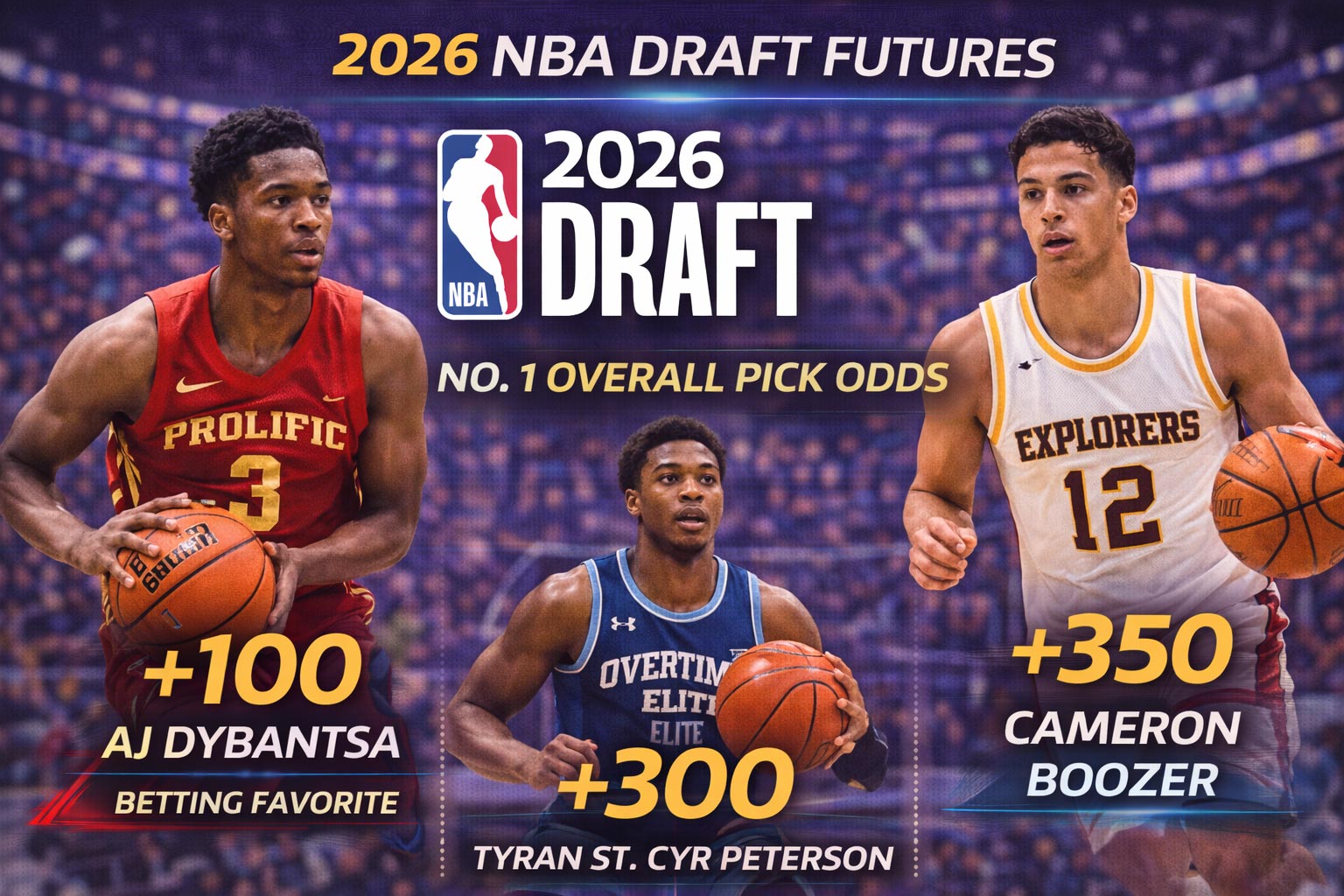
Straight up – this AJ Dybantsa -200 line is making me feel some type of way – just not sure I can articulate it properly… The kid’s consensus #1, but that price tag? It’s got casual bettors mortgaging their bankroll like it’s free money.
Here’s the thing nobody’s talking about: -200 odds only give you 33% ROI on a two-year hold. That’s terrible capital efficiency when you’ve got Cameron Boozer sitting at +400 and Cayden Peterson generating sharp action at +600. The public’s anchoring to high school mixtapes while the smart money’s already pivoting.
In my analysis of the 2026 futures market, I’m seeing classic behavioral bias. Dybantsa’s the sexy pick, the consensus play, the “safe” bet. But safe doesn’t print money. Let me break down why this -200 favorite might be the worst value play on the entire board.
Is AJ Dybantsa Worth the Juice at -200 Odds?
The tape doesn’t lie: Dybantsa’s got lottery talent, elite size, and the recruiting pedigree that makes GMs drool. But -200 implied probability means you’re betting he has a 66.7% chance of going first overall. That’s a massive ask in a draft class that’s legitimately three-deep with franchise talent.
I’ve run the numbers on historical #1 pick favorites, and here’s the kicker: consensus picks two years out hit at about 58%. That’s an 8.7% edge for the house baked into this line. You’re paying premium juice for a coin flip with extra steps, and that’s before we even discuss injury risk or the NCAA’s chaos factor.
From a pure expected value standpoint, this is a sucker bet. You’re tying up capital for 24 months to maybe clear 50% profit if everything breaks perfectly. Meanwhile, that same bankroll could hit three NFL seasons and compound returns. The opportunity cost alone should make you pump the brakes.
Pro Tip: Never lay heavy juice on futures with 18+ month timelines unless you’re getting 10%+ closing line value. The market’s too efficient, and your money’s too patient.
Here’s what really concerns me about the Dybantsa hype train: market psychology. Casual bettors see the high school rankings and assume it’s a lock. But NBA front offices don’t draft on hype—they draft on fit, team needs, and who’s holding the ping pong balls. One bad lottery draw and suddenly the Warriors are picking first with no need for another wing.
The other elephant in the room? Injury exposure. Two years is an eternity in basketball development. We’ve seen consensus #1 picks like Emoni Bates crater in value after one college season. At -200, you’re pricing in perfection. That’s not handicapping—that’s hoping.
Where’s the Real Value in 2026 Draft Futures?
This is where it gets spicy. Cameron Boozer at +400 is my actual sharp play in this market. Kid’s got NBA bloodlines, consistent production, and he’s playing the Duke system that churns out lottery picks like it’s a factory line. That’s 4-to-1 money on a prospect who’s legitimately in the conversation.
The value thesis here is simple: market arbitrage. The public’s overweighting Dybantsa’s ceiling while underpricing Boozer’s floor. In draft futures, consistency beats upside when you’re dealing with two-year projections. Boozer’s path to #1 is narrower, but at +400 implied probability of 20%, you’re getting compensated for the risk.
Let’s talk Cayden Peterson at +600. This is my dark horse flyer, 2% of bankroll max. The betting market’s sleeping on his upside because he’s not at a blue-blood program yet. But sharp bettors know: NBA scouts don’t care about jersey colors. They care about measurables and motor. Peterson’s got both.
Pro Tip: In draft futures, fade the public consensus and target prospects with clear paths to usage. Volume stats matter more than highlight dunks when GM jobs are on the line.
Here’s my actual portfolio construction for the 2026 draft class: Skip Dybantsa entirely. Put 3 units on Boozer at +400, 1 unit on Peterson at +600, and save 2 units for in-season value when injury news or transfer portal chaos creates line movement. That’s risk mitigation meets opportunity maximization.
The math is clean: If Boozer hits, you’re up 12 units on a 3-unit bet. If Peterson hits, you’re up 6 units on a 1-unit bet. If Dybantsa wins and you sat out? You lost nothing except FOMO. But if you laid -200 and he doesn’t go first, you’re down 2 units AND you look like a square. I know which side of that equation I want.
The real edge in draft futures isn’t picking the winner—it’s finding mispriced options and building a portfolio that profits from multiple outcomes. That’s Harvard Business School game theory applied to degeneracy, and it’s why sharp bettors eat on these long-term markets.
Check the latest movement on 2026 draft futures before these lines adjust. Books are already showing respect to the Boozer action, and I’ve seen his number drop from +450 to +400 at major shops in New York and New Jersey. When sharp money moves, you want to be ahead of it, not chasing it.
The Dybantsa -200 line is a masterclass in how books exploit public bias. It’s the betting equivalent of buying Tesla at all-time highs because everyone says it’s the future. Maybe it is, but you’re not getting paid to find out.
My actual advice? Fade the chalk, buy the value, and manage your bankroll like it matters. Three units on Boozer, one unit on Peterson, and keep powder dry for in-season opportunities. That’s how you beat a two-year futures market.
Drop your 2026 draft takes in the comments. Are you riding with Dybantsa at -200, or are you smart enough to find the real value? Because from where I’m sitting, this juice ain’t worth the squeeze.
“WannaBet.com may receive compensation from the sportsbooks mentioned in this post if you sign up using our links. This doesn’t cost you a dime, but it keeps the lights on. Please bet responsibly. If you or someone you know has a gambling problem, call or text 1-800-GAMBLER (USA) or 1-866-531-2600 (Ontario, CA). 21+ only.”
