

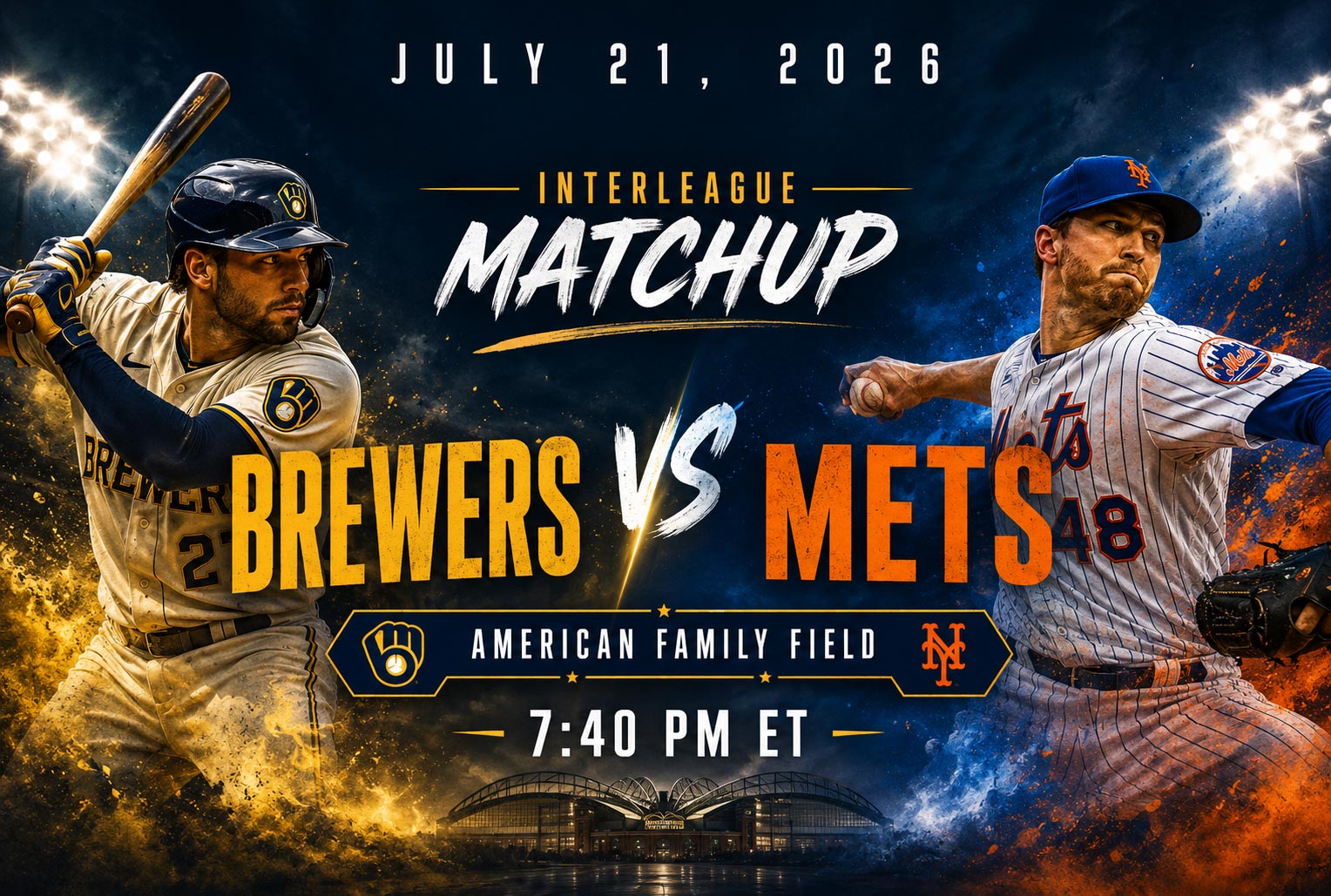
Tuesday night baseball hits different when you’re watching your live bet crater in real-time. The Brewers-Mets matchup at American Family Field looked like a textbook under play through three innings—classic pitcher’s duel vibes, minimal traffic on the bases, exactly what the sharp money ordered. Then the fourth inning happened, and suddenly everyone who hammered the live under was watching their bankroll evaporate faster than my GPA during finals week sophomore year.
Brewers vs Mets Live Betting Absolutely Nuked
The opening total sat at 8.5, which honestly felt generous given the pitching matchup and weather conditions in Milwaukee. Early money crushed the under, dropping it to 8 by first pitch, and live bettors doubled down when it hit 7.5 after a scoreless third inning. Books were practically begging people to take the over at that point, which should’ve been the first red flag—when DraftKings is that confident, your "lock" is probably about to get bodied.
Fourth inning rolls around and the Mets decide to channel their inner 2019 Astros, stringing together five consecutive hits like they’re playing The Show on rookie difficulty. Francisco Lindor goes oppo, Pete Alonso muscles one to right-center, and suddenly we’re looking at a five-spot on the board before most people finished their second beer. The live total rockets back up to 10.5, and anyone who took under 7.5 is already doing the math on how much Ramen they’ll be eating this week.
But here’s where it gets truly disgusting: the Brewers immediately answer back with a three-run bomb from Christian Yelich, and now we’ve got an 8-3 game with five innings still to play. The total that sharp bettors confidently smashed at 7.5 is suddenly looking like the worst read since someone greenlit the Cats movie. This wasn’t just a bad beat—this was a systematic dismantling of everyone who thought they were smarter than the market.
Why Sharp Money Got Torched on This Total
The fundamental problem here was recency bias masquerading as sharp analysis. Both teams had gone under in their previous three games, and everyone convinced themselves they’d identified a pattern instead of, you know, just witnessing variance. Bettors saw low-scoring games and extrapolated a trend without considering the underlying metrics—classic availability heuristic doing its thing, making recent data feel more significant than it actually is.
Here’s what the "sharp" crowd missed: Milwaukee’s bullpen was running on fumes after a 12-inning marathon the night before, and the Mets’ lineup had been crushing fastballs at a top-five clip over the previous two weeks. The data was right there on FanGraphs and Baseball Savant, but everyone was too busy congratulating themselves on their "disciplined" under play to actually dig into the numbers. When you’re betting on feel instead of fundamentals, you’re not sharp—you’re just gambling with extra steps.
The live betting algorithm at major books like FanDuel and BetMGM clearly saw something the public didn’t, which is why they were so aggressive with their under pricing. When you can get under 7.5 in a game with a posted total of 8.5 after only three innings of scoreless baseball, the book is essentially screaming "WE THINK THIS GOES OVER" directly into your face. If you ignore that signal because you think you’re smarter than the combined computational power of a multi-billion dollar sportsbook operation, you deserve to get cooked.
The risk-reward calculation on that live under was fundamentally broken from jump. You’re laying -120 or worse to save half a run on a total that’s already depressed, in a league where scoring variance is massive and bullpens are increasingly unreliable. The expected value on that bet was negative before a single pitch was thrown in the fourth, but people were so married to their pre-game thesis that they couldn’t adjust when new information became available. That’s not sharp betting—that’s ego preservation dressed up as conviction, and it’s exactly why most bettors end up broke by August.
The Brewers-Mets disaster is a masterclass in why live betting requires constant market reassessment rather than stubborn position defense. When the book is offering you a number that seems too good to be true, it usually is—they’ve got more data, better models, and zero emotional attachment to being "right" about their pre-game read. Next time you’re tempted to hammer a live under because the first few innings went your way, maybe ask yourself why the sportsbook is so eager to take your action. What’s your worst live betting beat this season? Drop it in the comments so we can all feel better about our collective degeneracy.
"WannaBet.com may receive compensation from the sportsbooks mentioned in this post if you sign up using our links. This doesn’t cost you a dime, but it keeps the lights on. Please bet responsibly. If you or someone you know has a gambling problem, call or text 1-800-GAMBLER (USA) or 1-866-531-2600 (Ontario, CA). 21+ only."
