

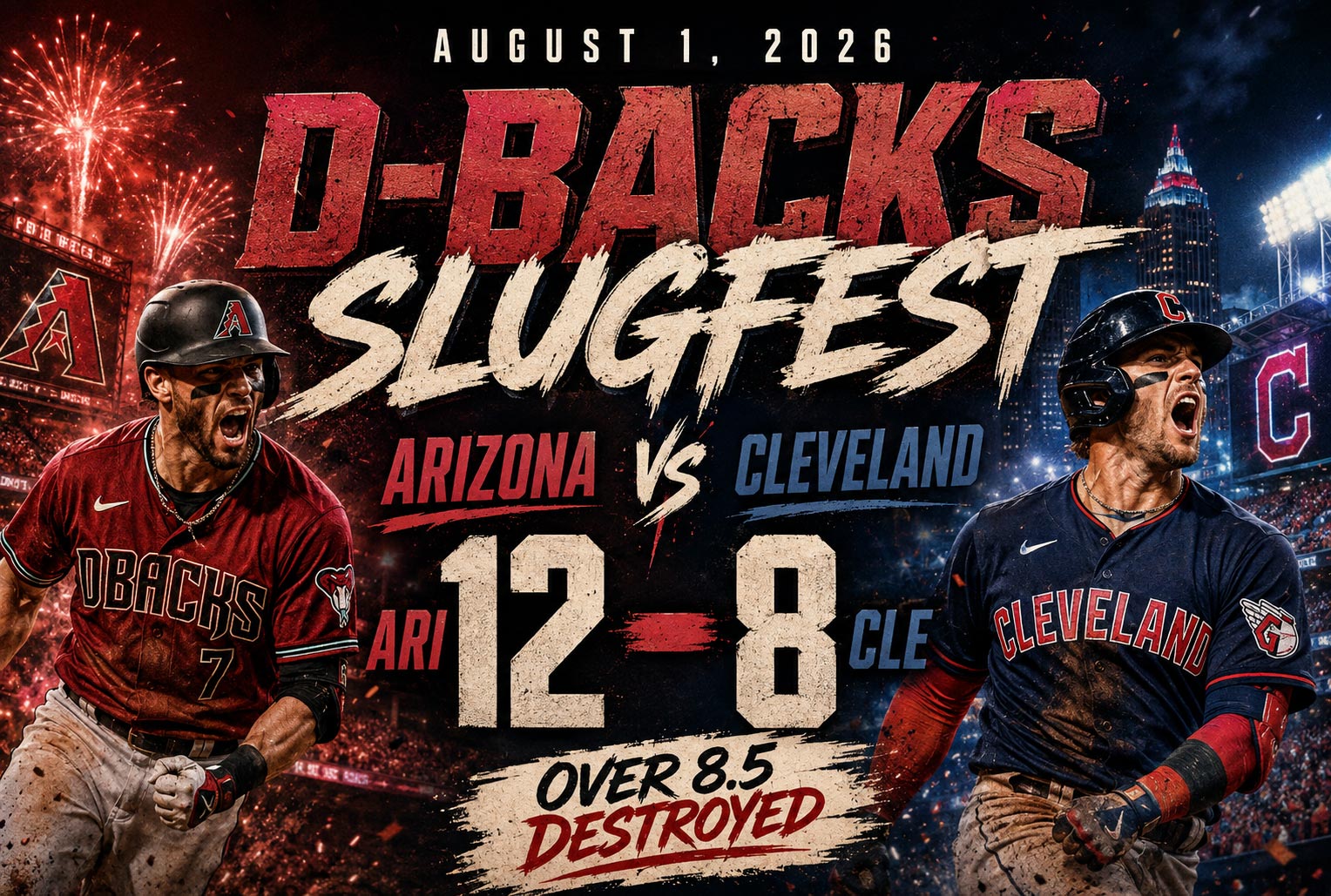
The Arizona Diamondbacks turned Progressive Field into their personal batting cage on August 1st, dropping a dozen runs on Cleveland in a 12–8 slugfest that had Over bettors popping champagne before the seventh-inning stretch. The Guardians opened as heavy home favorites at -182 with a total sitting at a quaint 8.5 runs—a number that got absolutely demolished by the third time through the order. If you took the Over, you were cashing tickets while most of the country was still finishing lunch.
D-Backs Drop 12 Runs in Cleveland Run Festival
Arizona came into Cleveland as +150 underdogs, and honestly, the market had every reason to fade them. The Guardians’ home field advantage plus their pitching staff’s recent run of solid performances made that -182 price tag feel justified. But baseball’s a funny game—sometimes the narrative writes itself, and sometimes it gets crumpled up and thrown in the trash.
The D-Backs offense decided that 8.5 total was more of a suggestion than a hard cap. By the time we hit the middle innings, Arizona was putting up crooked numbers like they were auditioning for a home run derby. Their lineup went through Cleveland’s bullpen like a hot knife through butter, and suddenly that modest total looked absolutely laughable in hindsight.
Here’s the thing about low totals in baseball: they’re pricing in pitcher dominance and defensive efficiency. When either of those variables breaks down—especially the bullpen depth—you get chaos. Cleveland’s relief corps couldn’t locate the strike zone with GPS, and Arizona made them pay for every mistake pitch they threw middle-middle.
The Market Psychology Behind This Beatdown
The 8.5 total was textbook recency bias at work. Both teams had been in pitcher-friendly games recently, and the oddsmakers were anchoring to recent results rather than looking at underlying metrics. Sharp bettors know that totals are often the last line to adjust because books are more worried about side action—that’s where the casual money lives.
Progressive Field isn’t exactly Coors Field, but it’s not a pitcher’s park either. The wind patterns and summer heat can turn routine fly balls into souvenirs real quick. When you’ve got two lineups capable of doing damage and the total’s sitting in the 8s, that’s what we call a market inefficiency—the books are basically begging you to take the Over.
The real edge here was understanding bullpen fatigue and matchup data. Cleveland’s relief arms had been overworked coming into this series, and Arizona’s righties absolutely feast on certain arm angles. If you’re doing the homework—looking at bullpen usage rates, rest days, and platoon splits—this Over was screaming value before first pitch.
Total Bettors Celebrate as Arizona Buries Over
The Over hit before most people finished their dinner plans. Twenty combined runs against an 8.5 total is the kind of cover that makes you feel like a genius, even if you just got lucky. But here’s the reality: good handicapping creates its own luck by identifying spots where variance works in your favor.
Live betting this game was an absolute goldmine if you had the stomach for it. Every time Cleveland scratched back to make it interesting, the live total would creep back up, giving you multiple opportunities to hammer the Over at better numbers. That’s the beauty of high-scoring games—the volatility creates additional edges for bettors who can read the flow.
The real winners here were the degenerates who parlayed Arizona ML with the Over. That combo was probably paying out somewhere around +600 or better depending on when you got down. Those are the kind of lottery tickets that turn $50 into a weekend in Vegas, and honestly, that’s what makes this shit fun.
Risk Management Lessons from Cleveland
Even when you win big, there’s lessons to extract. The D-Backs were +150 dogs, which means the market still gave Cleveland a 62% implied probability to win. Taking underdogs straight up is a negative EV play long-term unless you’ve got a legitimate edge—which most casual bettors don’t have.
The smarter play here was always the Over, potentially with a small sprinkle on Arizona ML if you really loved the matchup. That’s basic portfolio theory applied to sports betting: allocate your bankroll based on confidence level and expected value. Don’t blow your whole roll on a dog just because the payout looks sexy.
Bankroll management saved more betting accounts than any hot streak ever built. If you’re putting more than 3-5% of your roll on any single play, you’re not investing—you’re gambling. There’s a difference, and the house is counting on you not knowing which one you’re doing.
What This Means for Arizona Going Forward
The D-Backs just announced to the league that their offense isn’t dead. Twelve runs on the road against a competitive team is a statement game, the kind that can shift momentum for weeks. From a betting perspective, this means their team totals are going to adjust upward, which kills some of the value we might have had.
Market overreaction is real though. Books will probably overcorrect on Arizona totals for their next few games, creating potential Under opportunities. The public has the memory of a goldfish—one big offensive game and suddenly everyone thinks the D-Backs are the ’27 Yankees.
The contrarian play is usually waiting for the market to overreact, then fading the public perception. If Arizona’s total jumps to 5+ runs in their next game against a quality starter, that’s when you look at the Under. Let the square money chase yesterday’s results while you’re playing chess.
The Betting Takeaways
This game is a perfect case study in why totals offer more value than sides for educated bettors. The variance is higher, but so is the edge when you can identify market inefficiencies. Cleveland’s bullpen issues were there in the data if you knew where to look.
Always check bullpen usage rates and recent workload before betting totals. Tired relievers make mistakes, and mistakes become runs. That’s not gambling—that’s just reading a spreadsheet and understanding human fatigue patterns.
The other lesson? Don’t be afraid to bet against the narrative. Cleveland at home as favorites made sense on paper, but paper doesn’t hit curveballs. Sometimes the best plays are the ones that make you slightly uncomfortable at the ticket window.
The D-Backs’ 12-8 demolition of Cleveland was a masterclass in why you can’t just blindly trust opening lines. The 8.5 total was disrespected by 11.5 runs, and anyone who did their homework on bullpen metrics and park factors was printing money by the fifth inning. The real question now is whether books overcorrect on Arizona’s totals, creating fade opportunities for sharp action. Drop a comment if you rode the Over or if you’re still kicking yourself for taking Cleveland at -182—misery loves company, and so does my comment section.
WannaBet.com may receive compensation from the sportsbooks mentioned in this post if you sign up using our links. This doesn’t cost you a dime, but it keeps the lights on. Please bet responsibly. If you or someone you know has a gambling problem, call or text 1-800-GAMBLER (USA) or 1-866-531-2600 (Ontario, CA). 21+ only.
