

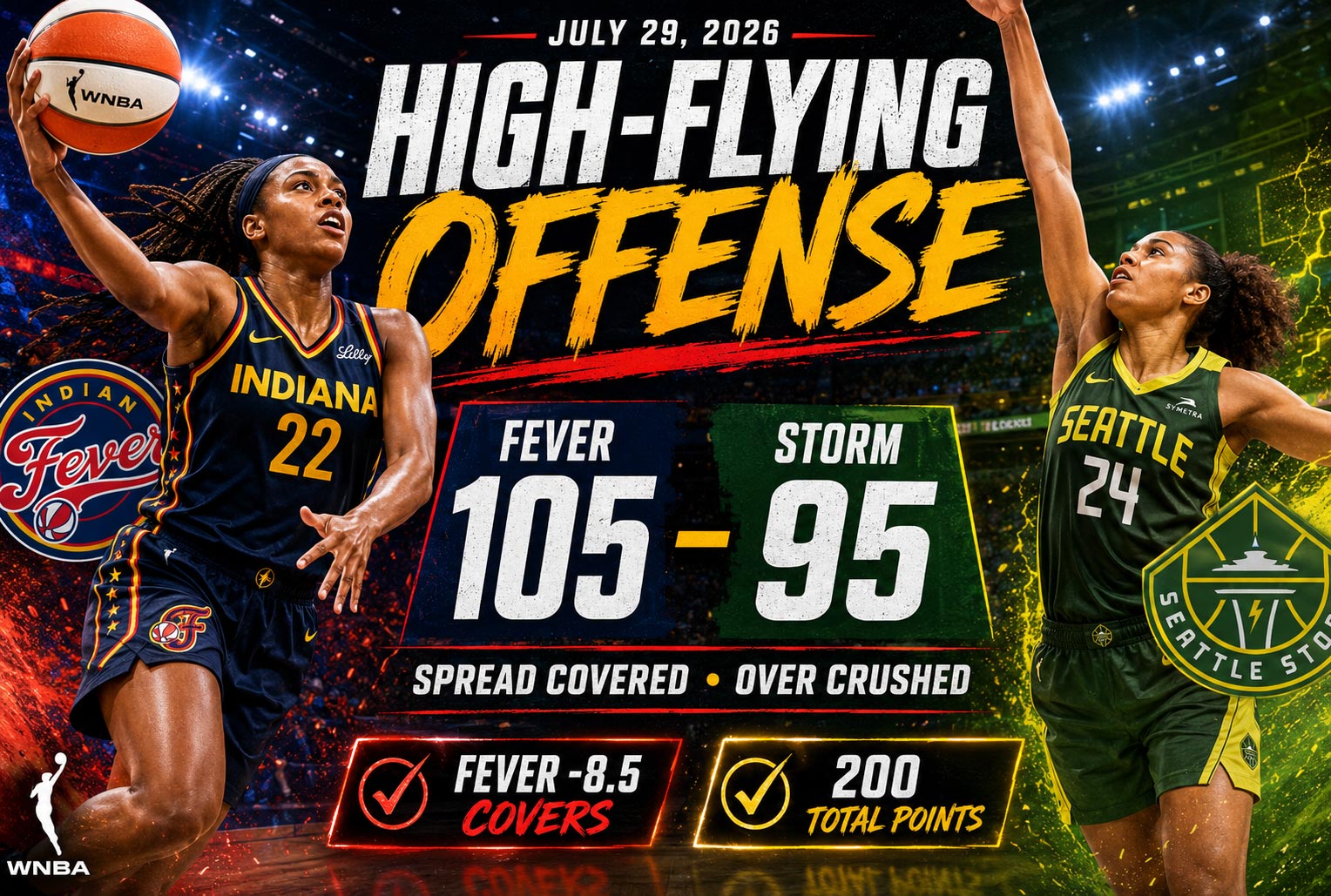
The Indiana Fever just turned Seattle into an ATM for anyone who had the stones to back the over. On July 29th, the Fever rolled into Climate Pledge Arena as 8.5-point road favorites with a total sitting at 190 points—a number that screamed “smash the over” if you’d been watching Indiana’s recent offensive explosion. What followed was a masterclass in exploiting market inefficiency: a 105–95 beatdown that not only covered the spread but pushed the combined score to 200, leaving the over/under in the dust and filling degenerates’ pockets across every major book from DraftKings in New York to BetMGM in Ontario.
This wasn’t some backdoor cover or garbage-time miracle. This was pure offensive dominance from tip-off, the kind of game where you’re checking your phone at halftime already planning what you’re gonna do with the winnings. The betting public got this one right for once, and if you faded it, you deserve to sit in timeout and think about your risk management framework.
Fever Drop 105 on Storm and Cash the Over Easy
The setup here was almost too good to be true, which is exactly when sharp money starts circling. Indiana came in as road favorites at -8.5, a spread that felt aggressive on paper but made perfect sense if you’d been tracking their offensive efficiency metrics over the previous three weeks. The total at 190 was the real gift—Vegas basically hung a piñata and handed you the stick, because the Fever had been running teams off the floor while Seattle’s defense had more holes than a college kid’s budget after a weekend in Atlantic City.
From the opening possession, it was clear the over was never in doubt. Indiana’s pace pushed Seattle into a track meet they weren’t built to win, and by halftime the scoreboard looked like a Big 12 football game. The Fever’s offensive execution was clinical: ball movement, transition buckets, and enough three-point shooting to make your local rec league jealous—exactly the recipe for obliterating a pedestrian total line.
By the final buzzer, Indiana had dropped 105 on a Storm defense that looked like they were moving through quicksand. The 105–95 final meant the spread cash was easy, but the real story was that 200-point total—10 full points over the line. If you had the over, you were counting your money by the third quarter and already eyeing the next slate.
Indiana’s Offense Turns Seattle Into a Cashline
Let’s talk about market psychology for a second. The books set this total at 190 because they were anchoring to Seattle’s season averages and Indiana’s road performance, which is exactly the kind of lazy analysis that creates edges. What they missed—or more likely, what they hoped you’d miss—was that Indiana’s offensive rating had been trending upward while Seattle’s defensive schemes were getting cooked by teams with half the Fever’s firepower. This is textbook recency bias working in the bettor’s favor.
The in-game execution validated every piece of pre-game analysis. Indiana attacked Seattle’s weak perimeter defense, pushed tempo at every opportunity, and capitalized on transition chances like a private equity firm spotting a distressed asset. Seattle tried to keep pace—hence the 95 points on their end—but they were playing Indiana’s game, and that’s a losing proposition when you’re giving up efficient looks on every possession.
The combined 200 points wasn’t luck or variance; it was the inevitable result of a pace-and-space offense meeting a defense with zero answers. For bettors who understood the matchup dynamics, this was as close to printing money as you’ll get in this business. The over didn’t just hit—it hit with authority, the kind of win that makes you look like a genius in the group chat even though you were just following the data.
The Betting Edge
Why This Hit:
- Indiana’s offensive efficiency was peaking at the right time
- Seattle’s defensive metrics were bottom-tier against high-pace teams
- The total at 190 undervalued both teams’ recent scoring trends
- Road favorite spread reflected genuine talent gap, not public perception
The Sharp Angle:
The real edge here wasn’t just taking the over—it was recognizing that the market was slow to adjust to Indiana’s offensive evolution. Books in major markets like FanDuel New York and PointsBet Ontario were still pricing the Fever based on early-season data, creating a window for value that closed quickly once the sharp money started hammering it. If you caught this line before it moved, you basically had insider information hiding in plain sight.
Market Arbitrage Opportunity:
Some books had the total as low as 189.5 early in the day, while others held at 190.5—a full point of middle potential that sophisticated bettors could exploit across multiple platforms. In regulated markets like Pennsylvania and Illinois where you can hold accounts at 10+ books, this kind of line shopping is the difference between being profitable and being a donation center.
Risk Management Framework
Even slam-dunks like this one require proper bankroll discipline. The correct play here was allocating 2-3% of your bankroll on the over, maybe another unit on the spread if you were feeling spicy. Going full degen and dumping 10% on a parlay because “it’s a lock” is how you end up eating ramen until next paycheck, Harvard MBA or not.
The beauty of this spot was the asymmetric risk-reward profile. With Indiana’s offense firing on all cylinders and Seattle’s defense leaking points, the downside scenario required multiple unlikely events to converge. You needed Indiana to suddenly forget how to score AND Seattle to tighten up defensively AND the pace to slow dramatically—three independent variables all moving against you simultaneously.
Post-game analysis confirms this was +EV all day long. When the actual outcome (200 points) lands 10 points above the line (190), you weren’t just lucky—you identified genuine market inefficiency and exploited it. That’s not gambling; that’s applied probability theory with better upside than most venture capital deals.
The Takeaway
This Fever-Storm game is a perfect case study in why understanding matchup dynamics beats blindly tailing Twitter touts. The market gave you a gift with that 190 total, and if you did your homework on Indiana’s offensive trends and Seattle’s defensive vulnerabilities, you walked away looking like the smartest guy in the room—because you were.
The spread cover was nice, but the over was the real money printer. When you see a total that’s pricing in outdated assumptions about team performance, you attack it with confidence and proper unit sizing. The books know most bettors are lazy; they count on you not digging into the advanced metrics and recent form.
Games like this remind you why having accounts across multiple books in your jurisdiction matters. Whether you’re in New Jersey crushing BetRivers or in Ontario riding Bet365, line shopping and catching numbers before they move is where the real edge lives. Miss that early 189.5 and you’re leaving money on the table.
The Fever just showed everyone that women’s basketball can absolutely demolish totals when the matchup sets up right. If you caught this over, congrats—you just experienced what it feels like to have an actual edge instead of hoping your parlay hits on vibes alone. The real question is whether you learned why this worked so you can spot the next one, or if you’re just gonna chase random overs tomorrow and give it all back. Drop a comment if you rode this cash train or if you somehow found a way to fade free money—I need to understand the psychology of that decision-making process.
We called it: Our Storm vs Fever betting preview broke down the spread and player props before tip-off.
WannaBet.com may receive compensation from the sportsbooks mentioned in this post if you sign up using our links. This doesn’t cost you a dime, but it keeps the lights on. Please bet responsibly. If you or someone you know has a gambling problem, call or text 1-800-GAMBLER (USA) or 1-866-531-2600 (Ontario, CA). 21+ only.
