

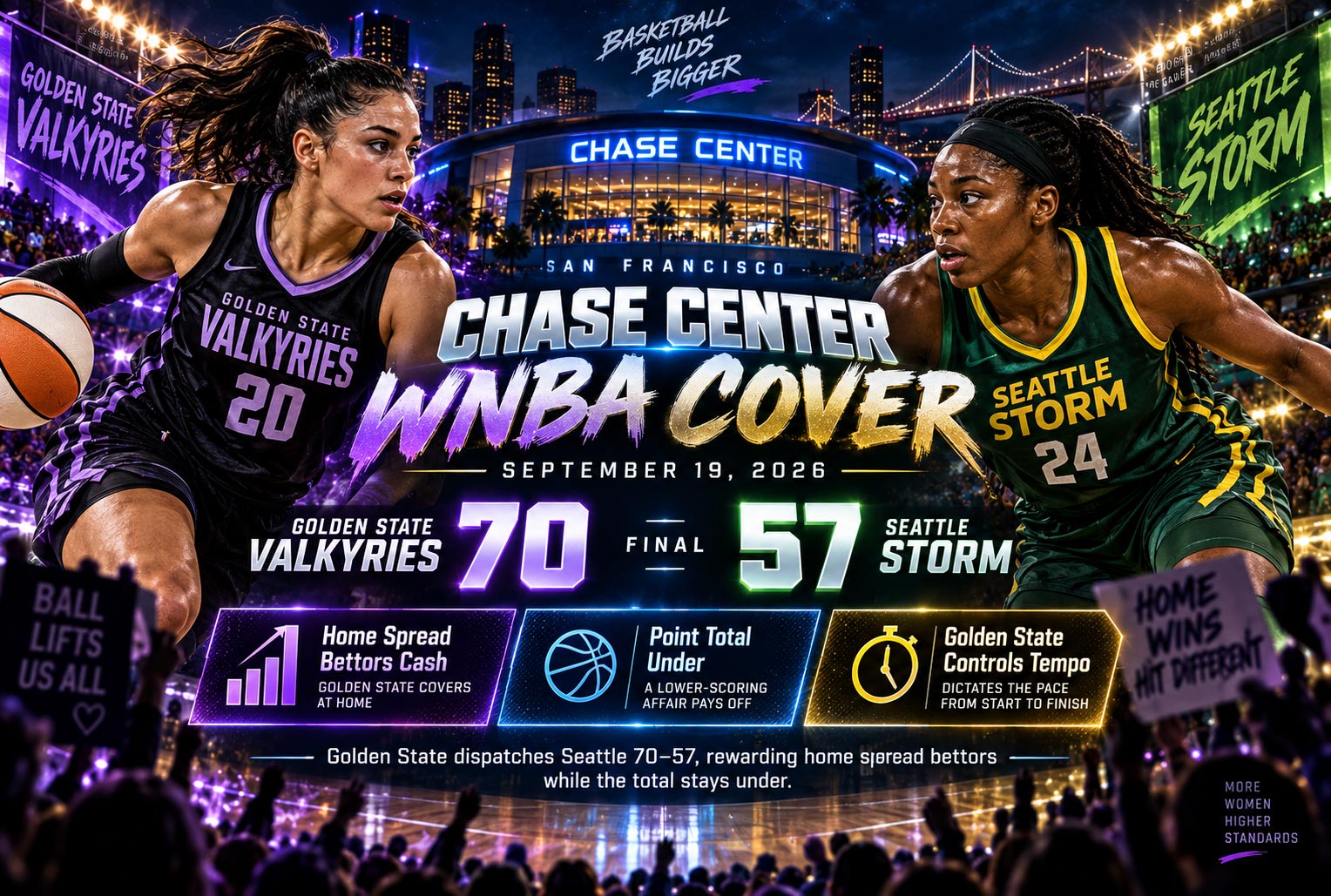
The Golden State Valkyries just gave us a masterclass in how to cover a spread without breaking a sweat—or scoring 80 points. On September 19, 2026, the Valkyries took down the Seattle Storm 70-57 at Chase Center, rewarding home spread bettors while putting the under on a silver platter. If you had Golden State laying the points, congrats—you just witnessed defensive intensity translate directly into your bankroll. This wasn’t pretty basketball, but it was profitable basketball, and that’s literally the only thing that matters when you’re trying to pay rent.
Seattle came into the Bay Area looking like they forgot their offensive playbook on the team bus. The Storm shot a ghastly percentage from the field and looked completely out of sync against Golden State’s suffocating defense. For anyone who’s been tracking Seattle’s road struggles this season, this wasn’t exactly a shock—but the magnitude of the offensive collapse? That was something special in all the wrong ways.
Valkyries Cash Home Tickets in Defensive Grind
Golden State covered the spread by playing textbook defensive basketball and letting Seattle self-destruct on the other end. The Valkyries didn’t need to drop 90 points or run up the score—they just needed to execute their defensive scheme and trust that Seattle’s offense would continue its road-game implosion. From a risk mitigation perspective, this is exactly the type of bet you want: a home team with defensive identity against a road team that can’t buy a bucket. The market priced this right, but sharp bettors who understood Seattle’s offensive volatility on the road had a clear edge.
The spread coverage wasn’t some backdoor situation or garbage-time miracle—Golden State controlled this game wire-to-wire. They built a comfortable lead in the second quarter and never let Seattle sniff a comeback. When you’re betting spreads, this is the dream scenario: no stress, no sweating the final possession, just a comfortable cover that was never really in doubt. The Valkyries’ defense forced contested shots all night, limited second-chance opportunities, and made Seattle work for every single point.
Chase Center bettors got exactly what they paid for: a dominant home performance that validated the line. The implied probability suggested Golden State should win by double digits, and they delivered with a 13-point victory. This is what separating signal from noise looks like—identifying when a line accurately reflects the matchup dynamics and having the conviction to back it. The public might chase offensive firepower, but the smart money knows that defense travels better than offense, especially in the WNBA where defensive intensity can completely neutralize elite scorers.
Seattle’s Offense No-Shows in Bay Area Beatdown
Seattle’s offensive performance was so bad it should come with a refund policy. The Storm shot under 35% from the field and looked completely lost against Golden State’s defensive rotations. This wasn’t just a cold shooting night—this was a systematic breakdown of offensive execution. Their ball movement was stagnant, their shot selection was questionable, and their star players couldn’t generate any rhythm. If you had the under or faded Seattle’s team total, you were probably celebrating by halftime.
The Storm’s road woes have been a consistent theme this season, and this game was the ultimate confirmation. There’s a massive gap between their home and away offensive efficiency, and Golden State exploited it mercilessly. Seattle’s inability to adjust to different defensive schemes on the road is a legitimate market inefficiency that bettors should be tracking. When a team shows this kind of split between home and road performance, it creates predictable betting opportunities—especially when the public overvalues their overall season numbers without context.
The under cashed with room to spare, finishing 17 points below the closing total. This game had all the hallmarks of an under play from the jump: strong defensive team at home, opponent with road offensive struggles, and a total that seemed slightly inflated based on season averages. The expected value on this under was significant for anyone who did the homework. Seattle’s offensive rating on the road this season suggested regression to the mean was inevitable, and Golden State’s defensive metrics at home pointed to a grind-it-out affair.
This game was a perfect example of how defensive matchups can create exploitable betting edges when the market doesn’t fully account for situational factors. Golden State covered because they did what good home teams do—they imposed their will defensively and forced a struggling road team into uncomfortable offensive possessions. Seattle’s offensive no-show wasn’t an anomaly; it was a continuation of their road struggles that sharp bettors have been capitalizing on all season. The under was the cherry on top for anyone who recognized that defensive intensity and poor offensive execution create low-scoring environments.
The real question: Are we overvaluing Seattle’s offensive talent and undervaluing their road dysfunction? Because this spread and total felt like free money for anyone paying attention to the splits. Drop your thoughts in the comments—are you riding Golden State home spreads for the rest of the season, or is this the game that finally wakes Seattle up?
"WannaBet.com may receive compensation from the sportsbooks mentioned in this post if you sign up using our links. This doesn’t cost you a dime, but it keeps the lights on. Please bet responsibly. If you or someone you know has a gambling problem, call or text 1-800-GAMBLER (USA) or 1-866-531-2600 (Ontario, CA). 21+ only."
