

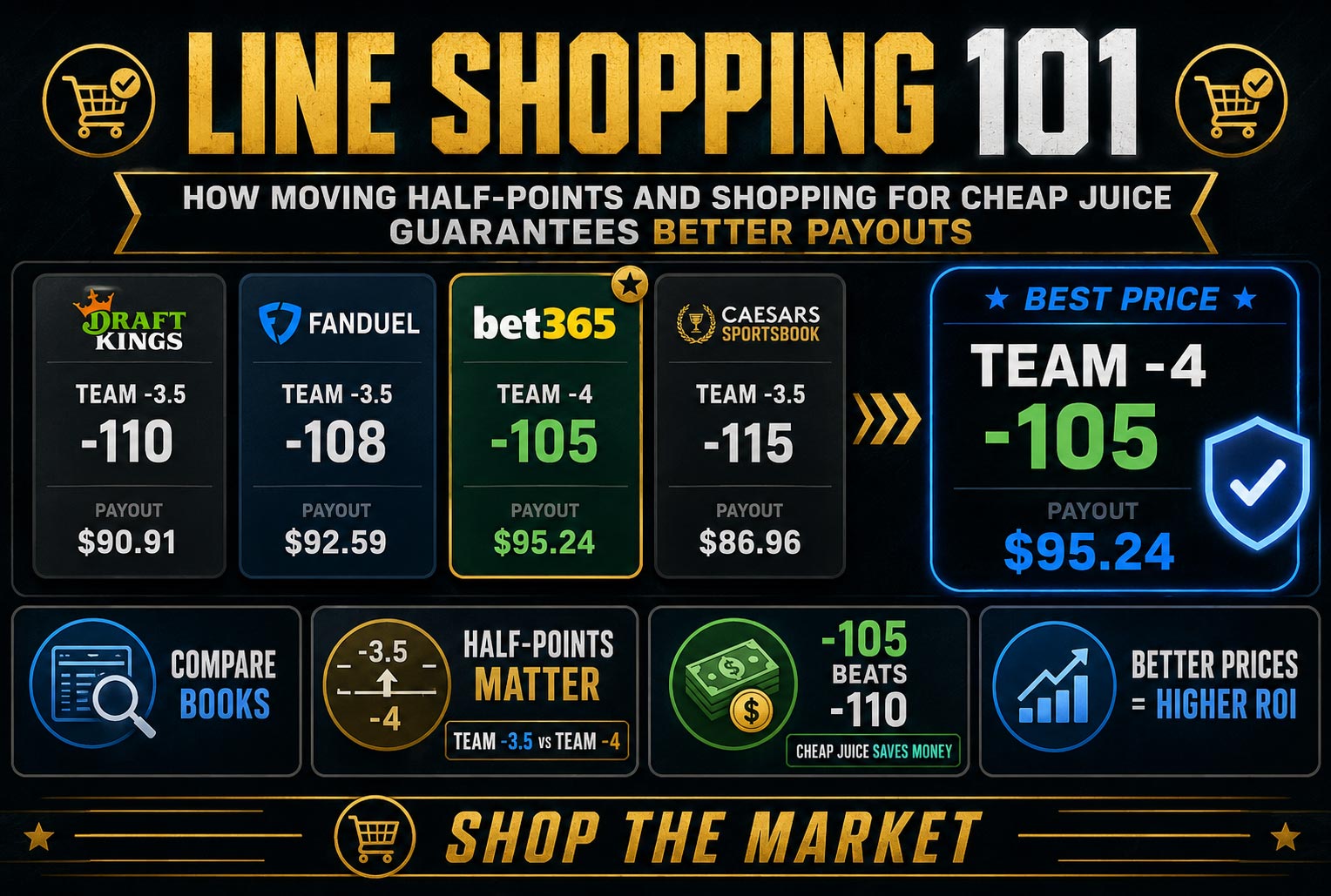
You wouldn’t buy the first car you see on the lot without checking three other dealerships, right? Yet somehow, bettors park their entire bankroll at one sportsbook because they’re chasing some bullshit "VIP status" that gets them a $25 free bet on their birthday. I’m about to explain why that’s the equivalent of leaving money on the table every single weekend. The difference between hitting -110 and -105 on the same bet might seem trivial until you realize it’s the gap between a profitable season and wondering why your bankroll looks like my GPA freshman year. Let’s break down why loyalty in sports betting is for suckers and why line shopping is the only edge that actually matters.
Why Loyalty Programs Are a Sucker’s Bet
Here’s the dirty secret about sportsbook loyalty programs: they’re designed to make you feel special while systematically extracting more value from your wallet. That "points multiplier" or "exclusive bonus" is just psychological sleight of hand to keep you from doing the one thing that actually threatens their bottom line—comparing their lines to the competition. The expected value of those rewards points is laughably negative when you calculate what you’re sacrificing in worse odds and inflated juice.
Let me put this in MBA terms: loyalty programs are a customer retention strategy built on information asymmetry. They’re banking on you not knowing that FanDuel has the Knicks at -4.5 (-110) while DraftKings has them at -4 (-108) on the same night. That half-point and two cents of juice might get you a whopping 50 bonus points at your "preferred book," but it could cost you the actual bet when New York wins by exactly 4. The math doesn’t lie—those points are worth maybe 0.5% back while you’re bleeding 2-3% on inferior lines.
The sportsbooks in New York, New Jersey, and Ontario are running the same playbook as airlines and credit cards: create an artificial ecosystem where you feel invested in staying put. They’ll shower you with tier status and birthday bonuses that sound impressive until you realize you could’ve made an extra $500 this season just by taking ten seconds to check Caesars, BetMGM, and PointsBet before placing your NFL bets. The house edge is already working against you—why would you voluntarily increase it for some gamification dopamine hit?
The Math Behind Multi-Book Arbitrage
Let’s get into the actual numbers because this is where it gets fun. Say you’re betting $100 per game across an NFL season (17 weeks, maybe 3 games per week, so 51 bets total). At standard -110 juice, you need to hit 52.4% just to break even. But if you’re line shopping and consistently getting -105 instead of -110, your breakeven drops to 51.2%. That 1.2% difference is massive over a large sample—it’s literally the difference between being a losing bettor and a winning one.
Here’s where the arbitrage opportunity gets real: different books shade their lines based on public action, regional bias, and risk management. In Illinois, where Bears fans hammer every Chicago spread, you’ll often find better value fading them on books that aren’t getting crushed by local money. Meanwhile in Ontario, Raptors and Leafs lines get absolutely destroyed on the Canadian books, creating opportunities to grab plus-value on the other side at US-facing sportsbooks. This isn’t theoretical—I’m talking about finding Raptors +6.5 on one book when the consensus is +6, turning potential losses into pushes and pushes into wins.
The compounding effect is where this gets stupid profitable. Let’s say you’re a props guy who loves NBA player overs. Ja Morant points over/under might be 26.5 on DraftKings but 25.5 on FanDuel. If you’re taking the over, that full point is gold—it hits about 8-10% more often over a season. Multiply that across 200+ prop bets and you’re looking at 16-20 additional wins just from shopping. That’s not luck or "finding an edge" in your handicapping—that’s pure mathematical advantage from doing the bare minimum of checking multiple apps before you bet.
The smartest bettors I knew at Harvard (and trust me, there were plenty of us running numbers on everything from March Madness to Formula 1) all had one thing in common: they treated sportsbooks like commodities, not relationships. You’re not marrying DraftKings—you’re extracting the best price from a marketplace that’s actively trying to separate you from your money. Open accounts at every legal book in your state or province, fund them all with enough to make real bets, and spend the extra 90 seconds finding the best number. Your future self, counting profits instead of wondering where it all went wrong, will thank you. So here’s my question: what’s the worst beat you’ve taken that would’ve been a win with half a point difference?
Keep reading: See exactly what you’re shopping against in our guide to the vig and implied probability, then learn why beating the number is everything with closing line value.
WannaBet.com may receive compensation from the sportsbooks mentioned in this post if you sign up using our links. This doesn’t cost you a dime, but it keeps the lights on. Please bet responsibly. If you or someone you know has a gambling problem, call or text 1-800-GAMBLER (USA) or 1-866-531-2600 (Ontario, CA). 21+ only.

7 comments on "Why Line Shopping Beats Loyalty Every Single Time"