

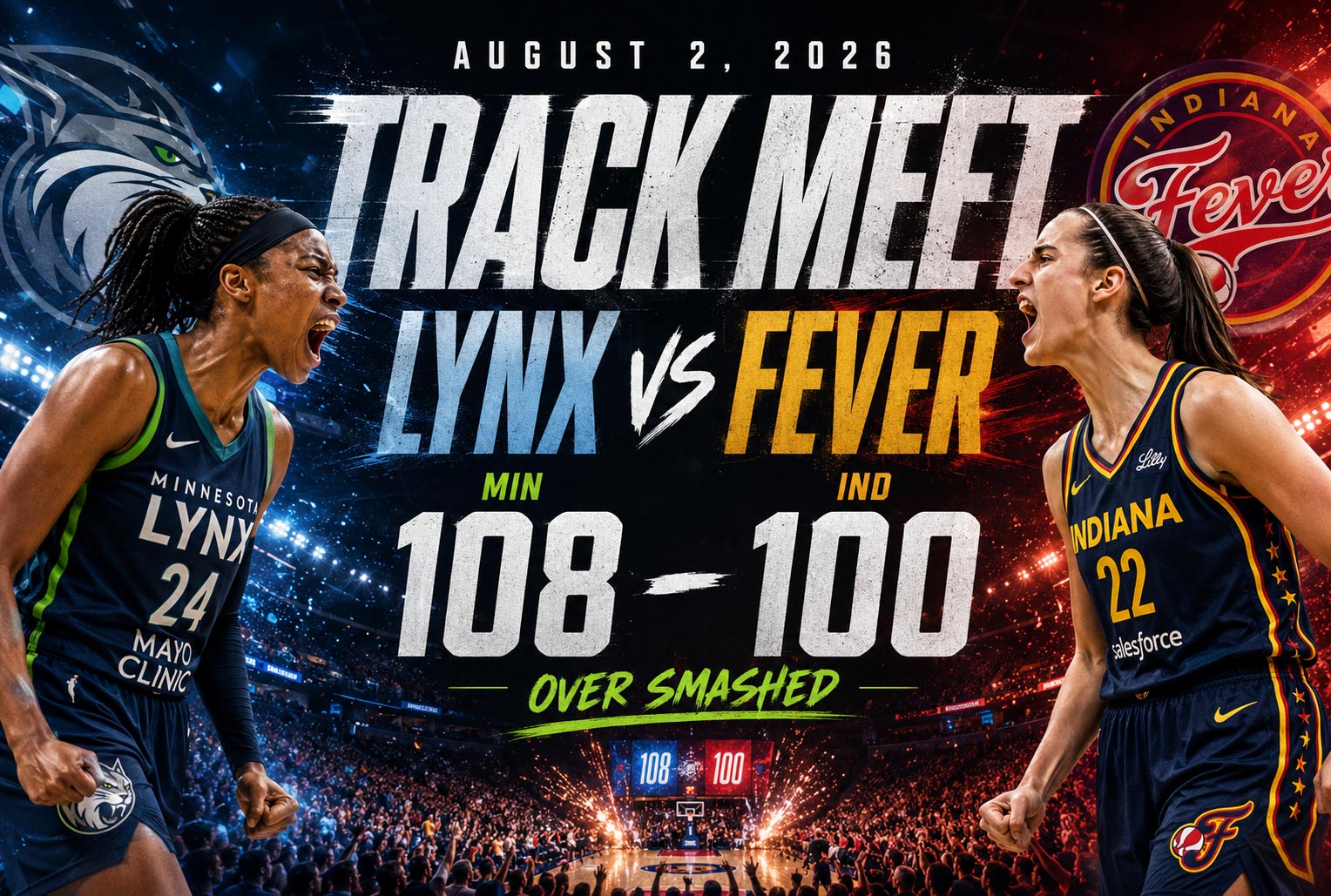
If you had "WNBA game total obliterates the over by 40+ points" on your Sunday bingo card, congratulations—you’re either a degenerate savant or you got incredibly lucky. The Minnesota Lynx and Indiana Fever turned Target Center into an absolute shooting gallery on August 2nd, combining for 208 points in a game that was supposed to settle somewhere in the mid-160s. Instead, we got a track meet that made Over bettors feel like they’d just discovered a market inefficiency so glaring it should’ve been illegal. This wasn’t just a cover; this was a generational heist executed in broad daylight while the books watched helplessly.
Lynx-Fever Over Cashes in Historic 208-Point Eruption
The line was sitting pretty at 165.5 when sharp money started circling this matchup like sharks around chum. Minnesota came in as the league-leading squad, and Indiana—despite their record—had been quietly pushing pace all season long. The books set what they thought was a reasonable total for two teams that could score, but nobody expected what was about to unfold.
By halftime, the scoreboard already looked like a Big 12 football game. Both teams were trading buckets like they were in a layup line, and the defense had apparently taken the day off to visit the Mall of America. The Fever, who were supposed to be the inferior squad on paper, kept pace shot-for-shot with Minnesota’s elite offense. This wasn’t sloppy basketball—it was efficient, high-octane scoring that made every possession feel like a highlight reel.
When the final buzzer sounded with Minnesota up 108-100, Over bettors were already planning their victory dinners. The 208 combined points didn’t just sail past the total—it lapped it, did a victory lap, and then lapped it again. Anyone who touched the Over at any number below 170 was printing money faster than the Federal Reserve during a recession. This is the kind of game that becomes legend in group chats for years to come.
How Sharp Bettors Printed Money on Sunday’s Scoring Fest
The sharp angle here wasn’t rocket science, but it required seeing what the public couldn’t. Minnesota had been averaging a league-high pace factor, and Indiana—despite their struggles—ranked top-5 in possessions per game. When you put two teams together that both want to run, the math starts doing itself. The books clearly undervalued the pace-of-play correlation, setting a total that assumed at least one team would pump the brakes.
Player props were where the real massacre happened. Star players on both sides had their point totals set assuming a normal game flow, not the offensive explosion that was brewing. Anyone who hammered the Overs on the top scorers from both squads watched those props cash before the fourth quarter even started. The individual scoring markets didn’t account for the compound effect of pace meeting execution—a classic case of the books pricing in a vacuum instead of considering game environment.
The live betting opportunities were even more absurd. If you caught the Over at halftime when both teams had already combined for 100+ points, you were essentially betting on whether basketball would continue being played in the second half. The in-game total adjustments came too slow, giving sharp live bettors multiple windows to exploit the obvious trend. This is why understanding pace and possessions creates edges—the market still treats WNBA totals like they’re static when they’re actually incredibly volatile based on style matchups.
The Market Psychology Behind the Miss
Books are still learning how to properly price WNBA totals, especially in matchups where pace profiles align perfectly. The betting handle on women’s basketball has exploded over the past two seasons, but the oddsmakers haven’t fully caught up to the nuances yet. They’re applying NBA frameworks to a league that plays differently, with different rest schedules and pace dynamics. That lag creates opportunity for bettors who actually watch the games instead of just reading box scores.
The public was split on this total because casual money tends to lean Under in WNBA games anyway—there’s this persistent misconception that women’s basketball is lower-scoring by default. Sharp bettors recognized that myth for what it was and attacked the Over with prejudice. The books got caught flat-footed, and by the time they realized what was happening, the damage was done. This is expected value theory in action: identify where the market is systematically wrong, then exploit it repeatedly until they adjust.
The ripple effects from games like this are huge. Books will overcompensate on the next Lynx-Fever matchup, probably setting the total way too high, which creates a reverse opportunity. This is the beautiful cycle of sports betting—every market inefficiency that gets exposed creates a new one in the opposite direction. The key is staying one step ahead of the adjustment curve instead of chasing yesterday’s edge.
Sunday’s 208-point explosion was a masterclass in why pace and possessions matter more than raw talent when handicapping totals. The Lynx and Fever turned what was supposed to be a competitive but reasonable-scoring game into an absolute ATM for anyone who recognized the pace matchup. If you missed this one, don’t beat yourself up—just remember that WNBA totals are still inefficiently priced compared to the major men’s leagues, and that’s where edges live. So here’s my question for the comment section: Are we finally seeing sharps take WNBA markets seriously, or was this just a perfect storm that won’t repeat? Drop your takes below, and let’s argue about it.
WannaBet.com may receive compensation from the sportsbooks mentioned in this post if you sign up using our links. This doesn’t cost you a dime, but it keeps the lights on. Please bet responsibly. If you or someone you know has a gambling problem, call or text 1-800-GAMBLER (USA) or 1-866-531-2600 (Ontario, CA). 21+ only.
