

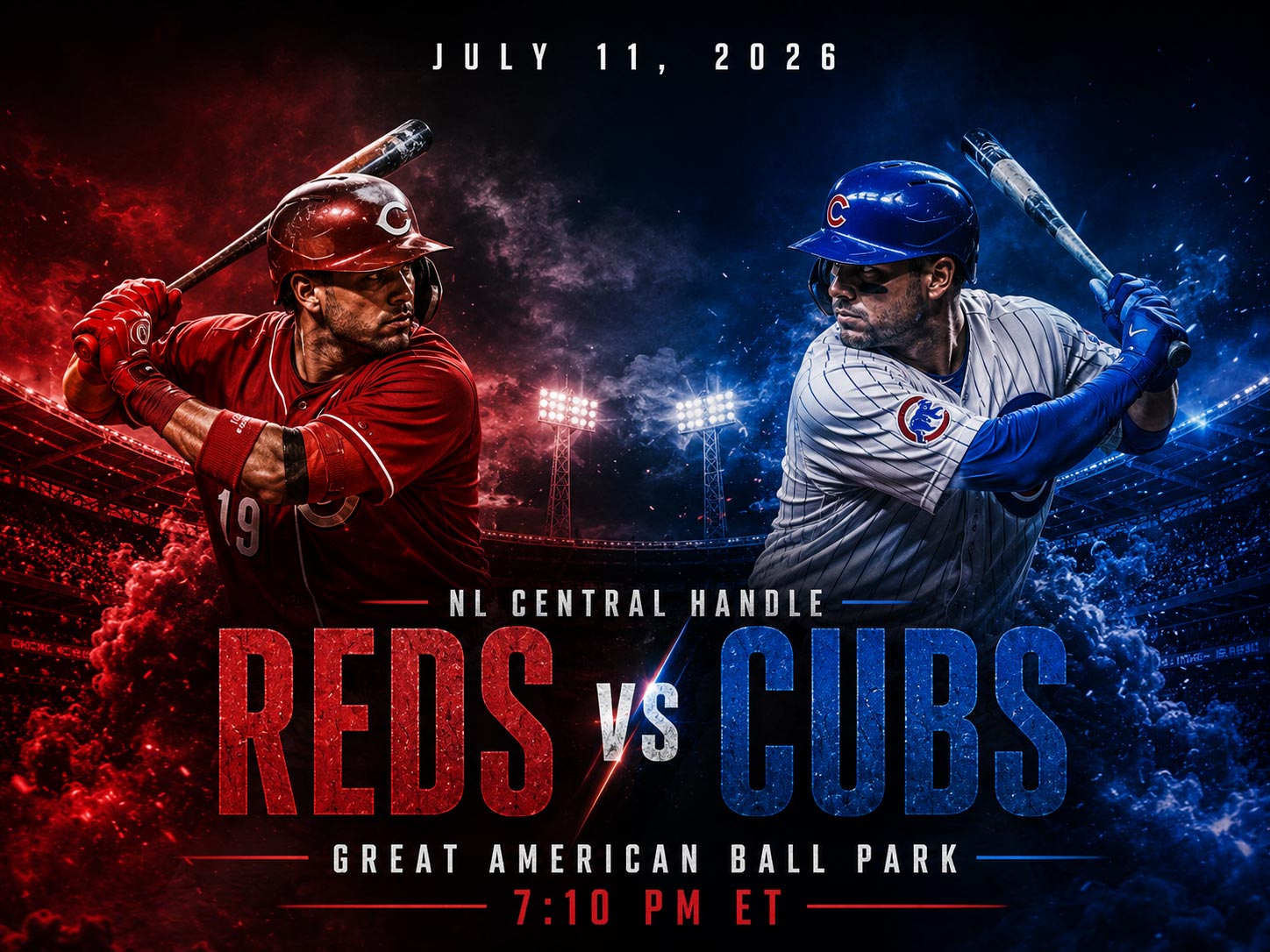
Reds vs Cubs Betting: Why Total Bases Props Matter
===INTRO:
The public is hammering run totals for Saturday night’s Reds-Cubs matchup at Great American Ball Park, but they’re missing the real alpha. While everyone’s debating whether to take the over on 9.5 runs, the smart money is quietly building positions on individual batter total bases props. This isn’t some degen lottery ticket play—it’s about identifying market inefficiencies where the books haven’t fully priced in venue-specific volatility. Let me show you why total bases props are the highest EV play in this NL Central slugfest.
Total Bases Props: The Market Edge You’re Missing
Here’s the thing about total bases betting: it’s essentially an asymmetric risk play that most casual bettors completely ignore. While your buddy is sweating a five-leg same-game parlay that needs the Cubs to score exactly 4 runs in the first five innings, you’re sitting on a simple Elly De La Cruz over 1.5 total bases at plus money. The expected value calculation is straightforward—you need your guy to get a double, or two singles, or obviously anything bigger, and you’re printing money.
The reason this market has edge is because sportsbooks are still primarily focused on pricing their main markets—spreads, totals, and moneylines. Total bases props are often set by algorithms that don’t fully account for matchup-specific factors like a struggling reliever coming in during peak platoon advantage situations. When you’re dealing with a hitter-friendly park like GABP and the books are offering what amounts to a binary outcome with three different paths to victory, you’re playing a different game than the masses.
Think about it from a portfolio diversification perspective. If you’re betting $100 on the game total, you’re exposed to bullpen implosions, defensive errors, and random variance across 18+ at-bats. But if you allocate that same $100 across two or three total bases props on guys hitting in favorable spots in the lineup, you’ve just created uncorrelated bets that can hit independently. That’s not gambling—that’s risk-adjusted return optimization.
Why Great American Ball Park Changes Everything
Great American Ball Park isn’t just hitter-friendly—it’s a legitimate launching pad that fundamentally alters how you should approach player props. The dimensions are absurdly short down the lines (328 feet to left, 325 to right), and the summer heat in Cincinnati turns routine fly balls into extra-base hits. We’re talking about a park that consistently ranks top-3 in MLB for home runs and doubles, which means your base case scenario for any competent hitter should skew heavily toward extra bases.
The market knows GABP inflates scoring, which is why the run total will be juiced. But here’s where the inefficiency lives: the books adjust the game total aggressively while being more conservative on individual player props because they’re trying to manage their overall liability. They can’t have every single batter prop set at inflated numbers or they’d get destroyed by sharp action. So they pick their spots, and if you know where to look, you can find guys whose total bases lines haven’t fully accounted for the park factor.
Let’s get tactical. When you’re handicapping this game, you need to cross-reference park factors with each team’s recent batting splits and the opposing starting pitcher’s home/road differentials. A guy like Seiya Suzuki, who already has plus power, becomes an absolute smash spot if he’s facing a righty in a bandbox. The Cubs’ lineup has enough thump to capitalize on GABP’s short porch, and the Reds counter with their own stable of guys who mash at home. This isn’t rocket science—it’s just about connecting dots that the public is too lazy to connect.
Saturday night’s Reds-Cubs game is setting up as a total bases prop bettor’s paradise, and if you’re still just betting the full game over/under, you’re leaving money on the table. The combination of Great American Ball Park’s extreme hitter-friendliness and the market’s structural inability to perfectly price every individual prop creates legitimate opportunities for anyone willing to do fifteen minutes of homework. Focus on guys hitting in the heart of the order, check the platoon splits, and don’t be afraid to sprinkle a little on the long-shot over 3.5 total bases plays when you’ve got legitimate power threats in a launching pad. What’s your favorite total bases prop for this matchup—are you riding with the Reds’ home bats or fading the narrative with Cubs hitters who’ve been hot on the road?
WannaBet.com may receive compensation from the sportsbooks mentioned in this post if you sign up using our links. This doesn’t cost you a dime, but it keeps the lights on. Please bet responsibly. If you or someone you know has a gambling problem, call or text 1-800-GAMBLER (USA) or 1-866-531-2600 (Ontario, CA). 21+ only.
