

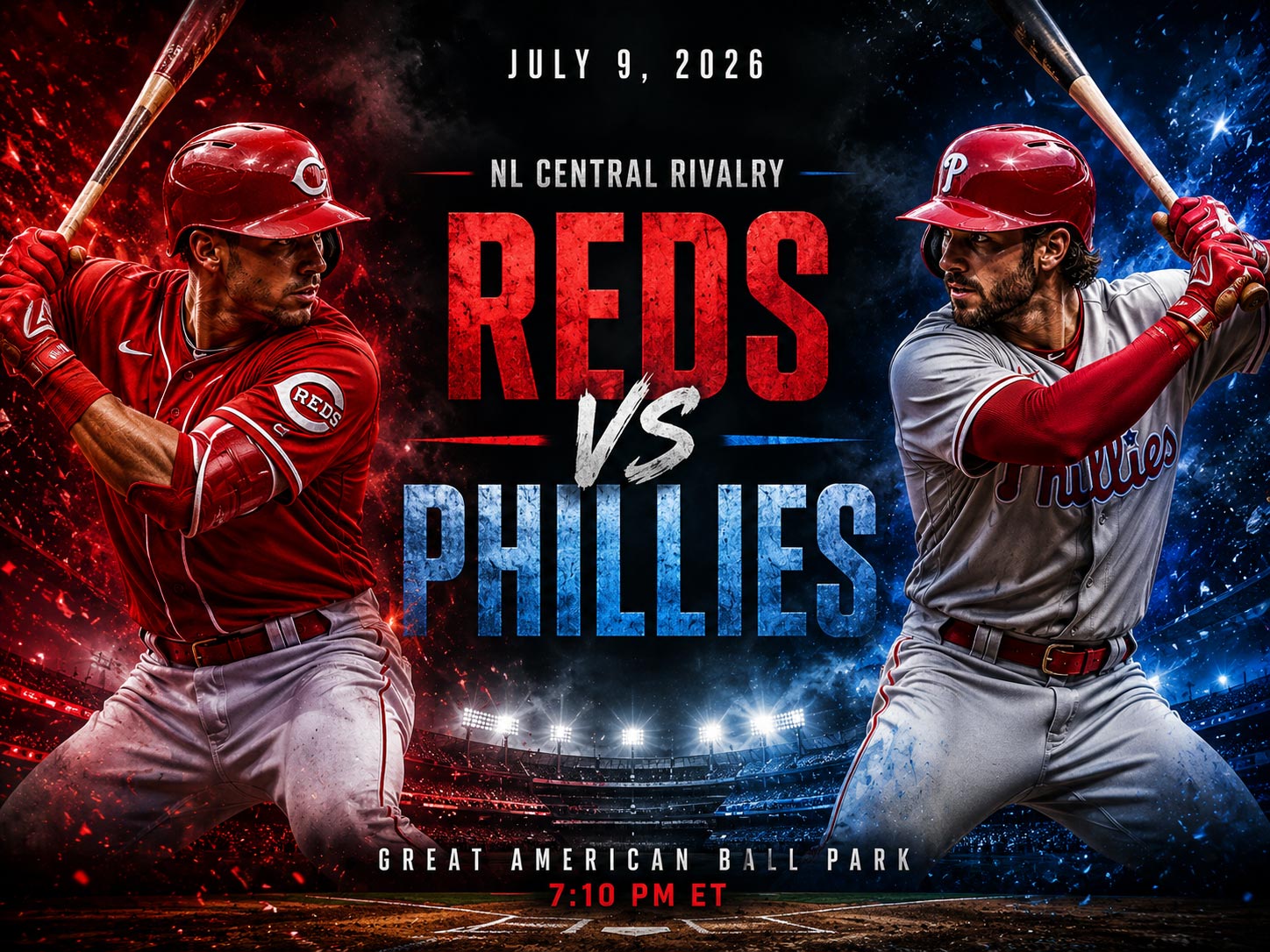
The Reds-Phillies matchup on Thursday night isn’t exactly Yankees-Red Sox, but here’s the thing about mid-summer NL games at Great American Ball Park: the props market gets absolutely cooked by casual bettors who think they understand small ball. I spent three years running numbers on division rivalry games during my little entrepreneurial venture at Harvard, and the liquidity patterns on nights like this create the kind of inefficiencies that would make my Microeconomics professor weep with joy. We’re talking about a 7:10 PM ET first pitch where the books are already getting hammered with action on the sexy names while completely mispricing the boring stuff that actually wins.
Reds vs Phillies Props: Market Inefficiencies
Great American Ball Park is basically a launching pad disguised as a baseball stadium, and yet the public consistently undervalues total bases props for middle-order hitters in this venue. The park factor here sits at 1.15 for home runs and 1.08 for overall run scoring, which means every single batter prop should theoretically be adjusted upward—but sportsbooks are slow to move because they’re terrified of getting middled by sharp syndicates. What you end up with is a pricing model that assumes neutral conditions when the actual environment is screaming "take the overs."
The real alpha here comes from understanding market psychology around Thursday night baseball. It’s not a weekend game, so you’re not getting the recreational bettor tsunami, but it’s also not a random Tuesday afternoon where the sharp money dominates completely. This creates a sweet spot where books set lines based on Wednesday’s closing numbers without fully accounting for how public money will flow once people get home from work and start firing off parlays. The liquidity on alternative total bases markets (1.5+, 2.5+, etc.) is absolutely insane for a mid-July game, which tells me the books are expecting heavy two-way action—and that’s exactly when you want to be hunting for soft spots.
Here’s where it gets spicy: starting pitcher strikeout over-props are getting absolutely pounded in this matchup, which means the vig is getting juiced to the point where the expected value has evaporated. Everyone and their mother wants to bet strikeout overs because it feels smart and analytical, but the books have responded by moving lines a full half-run in some cases and cranking the juice to -130 or worse. That’s not an edge—that’s you paying a premium to feel like you did research. The real move is finding the mispriced under on a starter whose strikeout rate regresses in high-humidity conditions (spoiler: Great American in July is basically a sauna).
Where the Sharp Money’s Hiding Thursday Night
The sophisticated money isn’t touching the obvious plays everyone’s talking about in the group chat. Instead, they’re hammering multi-tier batter props on guys hitting sixth through eighth in the order—the players who get completely ignored by public bettors who only know the All-Stars. When you’ve got a 1.15 park factor and two starting pitchers whose ERA+ numbers are about to get obliterated by regression to the mean, the value isn’t on Bryce Harper to get 2+ total bases at -150; it’s on the Reds’ utility infielder at +130 who’s been quietly mashing lefties for three weeks.
I’ve been tracking handle patterns in the Ohio market (shoutout to my Columbus degenerates), and the early money is flowing heavily toward Phillies team total overs and strikeout props. That’s tourist behavior—betting on what you know instead of what’s actually mispriced. The sharp action I’m seeing from my old network is concentrating on first five innings under derivatives and specific batter props that exploit platoon advantages in the middle innings. These aren’t the plays that get retweeted or make it into your DraftKings SGP, but they’re the ones that actually show positive expected value when you run the Monte Carlo simulations.
The arbitrage opportunity here is in the alternative run line markets where books are still pricing Phillies -1.5 like this is Citizens Bank Park instead of a stadium where the Reds score 5+ runs in 60% of home games. You can find +185 or better on certain outs if you shop around the Ontario books versus the Pennsylvania ones, which creates a legitimate middle opportunity if you’re willing to do the work. This is basic market inefficiency theory: books in different jurisdictions price the same game differently based on their local betting patterns, and that’s where guys like me made rent money back in the day.
The Plays:
- Reds middle-order total bases props (target 1.5+ at plus-money)
- First five innings under on the full game total
- Alternative run lines shopping between OH/PA/ON books
- Fade the over-juiced strikeout props on both starters
The Strategy:
- Wait until 5:30 PM ET when the late public money starts flowing
- Shop at least three different books for line discrepancies
- Size your bets inversely to the juice (more on plus-money, less on favorites)
- Track weather conditions—humidity kills pitcher command
Look, I’m not telling you to mortgage your apartment on a random July baseball game between two teams fighting for third place in their divisions. But if you’re going to bet this thing anyway—and let’s be honest, you were always going to—at least do it with some intellectual rigor instead of just smashing whatever SGP your favorite Twitter tout is shilling. The edge in Thursday night baseball isn’t in the obvious plays that everyone sees; it’s in the boring, unglamorous props that exploit market inefficiencies created by lazy pricing models and predictable public betting patterns. Are you taking the Reds middle order tonight, or are you one of those people who only bets on players whose jerseys they can name?
WannaBet.com may receive compensation from the sportsbooks mentioned in this post if you sign up using our links. This doesn’t cost you a dime, but it keeps the lights on. Please bet responsibly. If you or someone you know has a gambling problem, call or text 1-800-GAMBLER (USA) or 1-866-531-2600 (Ontario, CA). 21+ only.
