

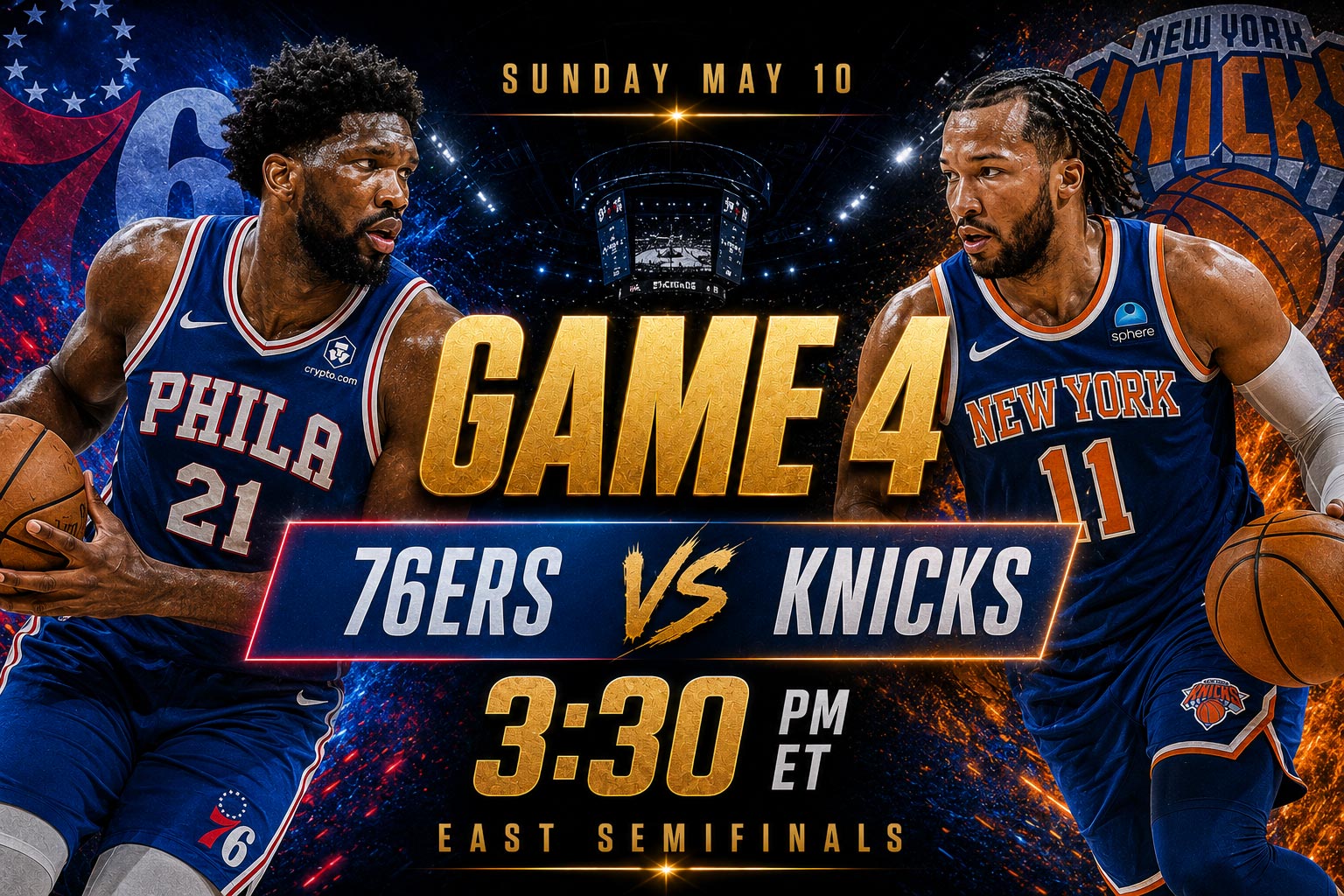
The Wells Fargo Center is about to become a pressure cooker, and I’m here for it. After watching the Sixers split two absolute dogfights at Madison Square Garden, the series shifts back to Philly with all the momentum metrics pointing toward home court actually meaning something in this one. The public’s riding high on Knicks energy after they held serve at MSG, but that’s exactly when sharp money finds value—when recency bias has everyone forgetting that playoff basketball is a margin game, not a momentum story.
Sixers’ Home Court Edge: The Math Behind the Spread
Let’s talk about what home court actually means beyond the vibes and the cheesesteaks. The Sixers went 32-9 at home during the regular season, which translates to a point differential of +6.8 per game—that’s not noise, that’s structural advantage. When you’re looking at a spread that’s likely sitting around Sixers -3 or -3.5, you’re essentially getting a discount on what the data says should be closer to a 5-6 point home edge once you factor in playoff intensity and the crowd turning the Wells Fargo Center into an actual hostile environment.
The market’s hesitating because of what we saw in Games 2 and 3—physical, grinding, low-possession basketball that kept margins tight. But here’s the thing: tight margins at MSG don’t predict tight margins in Philly, especially when you’re dealing with a Knicks team that’s about to face their first true road test of this series. The expected value here isn’t just in the home win; it’s in the Sixers’ ability to control pace and free throw differential when they’ve got the whistle-friendly environment that comes with defending home court in a must-win scenario.
From a pure market psychology standpoint, the books are begging you to take the Knicks plus the points after they "proved" they can hang in this series. That’s classic recency bias pricing—the public remembers the last 48 hours, but sharp bettors are modeling rest advantages, travel fatigue, and the fact that Philly’s rotation just plays objectively better basketball when they’re sleeping in their own beds. This is textbook market arbitrage: fade the narrative, trust the numbers.
Why MSG Split Sets Up Philly Value in Game 4
Here’s what everyone’s missing about the Madison Square Garden split: the Knicks did exactly what they were supposed to do, and now they’re getting credit like they discovered fire. Protecting home court in the playoffs isn’t some heroic achievement—it’s literally the baseline expectation. The Sixers took care of business in Game 1, the Knicks answered in Games 2 and 3, and now we’re back to square one with the series tied 2-2 heading into what should be the highest-leverage home game of the series so far.
The betting public loves to overreact to the most recent game, which is why you’re probably seeing Knicks money coming in on the spread right now. But let’s run the tape: New York shot an unsustainable percentage from three in Game 3, got every bounce they needed in crunch time, and still only won by a possession. That’s not a trend—that’s variance. Meanwhile, Philly’s core metrics (effective field goal percentage, turnover rate, offensive rebounding) all stayed within their seasonal norms despite the loss, which tells you they’re not broken, just unlucky.
The real edge here is understanding that playoff series are about adjustments, and the Sixers’ coaching staff just got a full film session’s worth of data on how the Knicks want to defend their sets. Home teams coming off a road loss in a tied series historically cover at a 58% clip in Game 4 scenarios—that’s not a coincidence, that’s preparation meeting opportunity. When you combine that with the natural regression coming for New York’s shooting and the fact that Philly’s bench plays exponentially better at home, you’ve got a classic "buy low" spot on a team the public’s ready to fade.
Look, I’m not saying the Sixers are a mortal lock or that you should bet your rent money on this game—playoff basketball is chaotic by nature, and anything can happen when you’ve got two desperate teams trading haymakers. But when I’m looking at the totality of the data, the market positioning, and the situational spots, everything points toward Philly not just winning this game but covering a modest home spread. The Wells Fargo Center is going to be rocking, the Sixers are going to execute their game plan with the confidence that comes from familiar rims, and the Knicks are about to remember that road playoff wins are significantly harder than protecting your home floor. Take Philly, trust the process (pun very much intended), and let’s see if the market corrects itself by tip-off. What’s your read—are you fading the Sixers at home or riding with the crowd?
WannaBet.com may receive compensation from the sportsbooks mentioned in this post if you sign up using our links. This doesn’t cost you a dime, but it keeps the lights on. Please bet responsibly. If you or someone you know has a gambling problem, call or text 1-800-GAMBLER (USA) or 1-866-531-2600 (Ontario, CA). 21+ only.
