

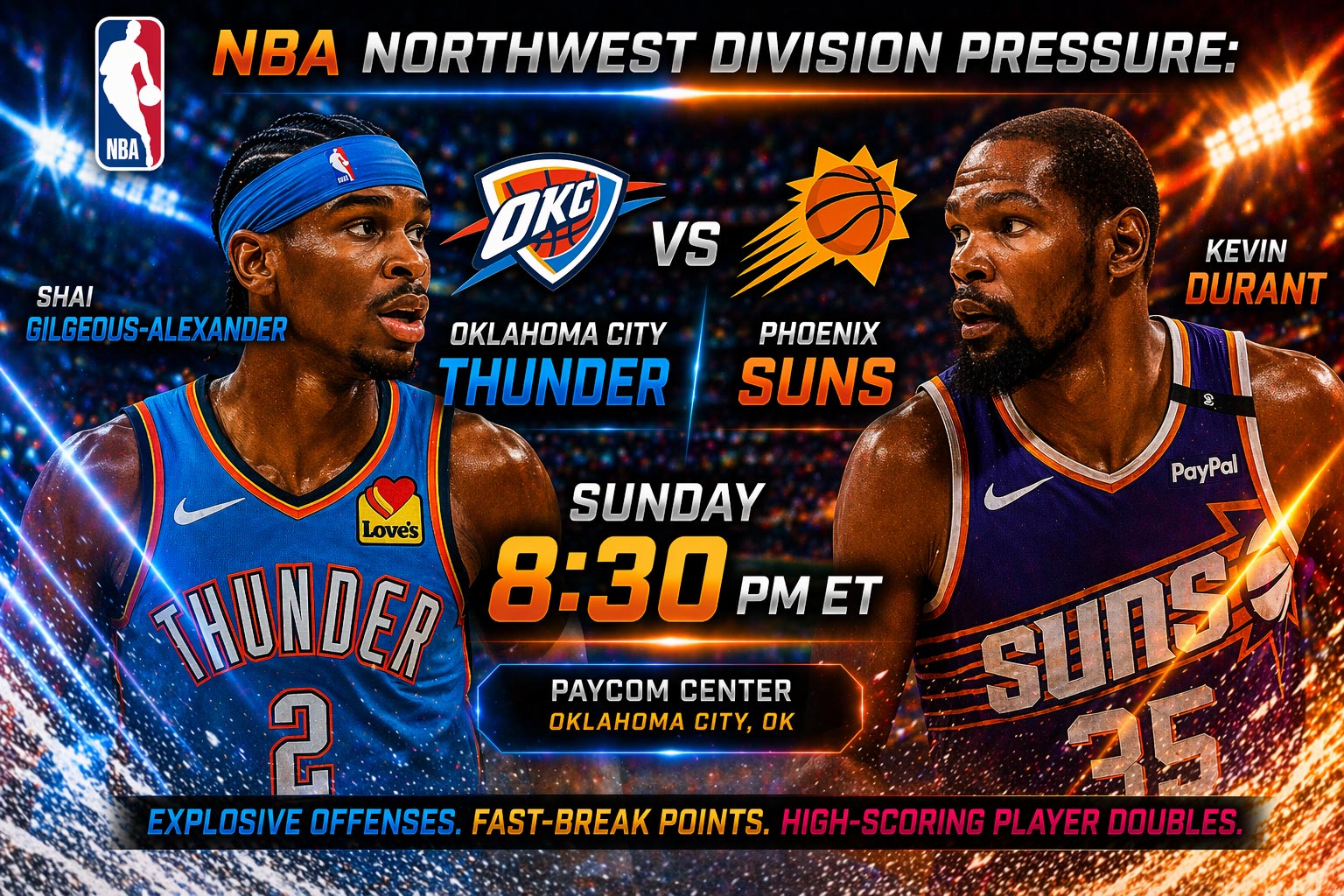
Look, I get it. When you see Thunder-Suns on the slate, your first instinct is to hammer the over and call it a night. Two top-10 offenses, pace that makes Mike D’Antoni weep with joy, and a total sitting somewhere in the stratosphere. But here’s the thing—when everyone’s zigging, that’s exactly when the smart money zags. This Sunday night matchup at 8:30 PM ET isn’t the points explosion the public thinks it is, and I’m about to show you why the sharps are quietly positioning themselves on the other side of this trade.
The market’s pricing in a track meet because both teams can score, but they’re completely ignoring the structural advantages OKC has at home that turn this into a defensive chess match. We’re talking about market inefficiency at its finest—the kind of edge that separates your buddy who’s always "about to hit big" from the guys who actually withdraw cash. Let’s break down why this game is the perfect example of public perception creating value on the contrarian side.
Thunder vs Suns: The Sharp Play Nobody Sees
Here’s what the recreational bettor sees: Phoenix averaging 116 PPG, OKC pushing the pace like they’re trying to finish before last call, and visions of a 240-point bonanza. The sportsbooks know this too, which is why they’ve juiced this total to the point where you’re getting fleeced on the over. But if you zoom out and look at the actual game theory here, OKC’s defensive metrics at home are borderline elite—top 8 in opponent effective field goal percentage in their own building.
The Thunder aren’t just running-and-gunning anymore; they’re playing calculated, efficient basketball that forces opponents into bad shots early in the clock. Shai Gilgeous-Alexander has evolved into a two-way monster who dictates pace better than anyone not named Luka, and Chet Holmgren’s rim protection turns the paint into a no-fly zone. Phoenix, meanwhile, is dealing with the classic "good stats, bad situation" problem—their defensive rating on the road is bottom-12 in the league, which means they’re getting cooked on one end while everyone focuses on KD’s scoring on the other.
The sharp play here isn’t some galaxy-brain derivative bet; it’s recognizing that when two high-octane offenses meet, the team with home-court advantage and superior defensive infrastructure wins the expected value calculation. We’re looking at a Thunder team that can control tempo, limit transition opportunities, and force Phoenix into half-court sets where their age and lack of perimeter defense gets exposed. That’s not a recipe for 240 points—that’s a recipe for a 220-225 final that leaves over bettors crying into their parlays.
Why the Public’s Getting Torched on This One
The cognitive bias at play here is what I call "highlight reel syndrome"—bettors see Booker dropping 35 and SGA going for 40, and they assume that’s the baseline for every game. But that’s like assuming every startup is the next Uber because you read TechCrunch once. The data tells a completely different story: when these teams played earlier this season, three of their four meetings went under the closing total, and the average margin of error was 8.5 points below the posted number.
The public’s getting absolutely smoked because they’re betting narratives instead of numbers. Everyone remembers the 235-point barn burner from December, but nobody’s talking about the 213-point grinder from January where OKC’s defense held Phoenix to 39% shooting. The recency bias is so strong that books have inflated this line knowing Joe Public is going to pound the over regardless of what the historical data suggests. This is market psychology 101—when the masses move in one direction, the house adjusts the odds to ensure they’re getting paid either way.
Here’s the risk mitigation play: if you’re hell-bent on action, take Thunder team total under or look at first-half under derivatives. The alternative—and this is where it gets spicy—is playing OKC moneyline straight up, because a team that controls pace and plays lockdown defense at home against a road-weary Suns squad is getting disrespected by a spread that assumes Phoenix can keep up for 48 minutes. The expected value on Thunder ML at plus-odds (depending on your book) is borderline criminal, and it’s the exact type of inefficiency that separates the sharks from the fish.
At the end of the day, this Thunder-Suns matchup is a masterclass in why betting against public perception creates long-term edge. While everyone’s loading up their 8-leg parlays with overs and player prop explosions, the smart money is quietly taking the structural advantages that OKC presents at home. This isn’t about being contrarian for the sake of it—it’s about recognizing when the market has overreacted to offensive firepower and undervalued defensive execution. The books are begging you to take the over; don’t give them the satisfaction.
So here’s my question for the comments: are you riding with the public and hoping for a shootout, or are you fading the noise and banking on OKC’s home-court defensive dominance? Because one of those strategies builds bankrolls, and the other one builds sportsbook revenue. Choose wisely.
WannaBet.com may receive compensation from the sportsbooks mentioned in this post if you sign up using our links. This doesn’t cost you a dime, but it keeps the lights on. Please bet responsibly. If you or someone you know has a gambling problem, call or text 1-800-GAMBLER (USA) or 1-866-531-2600 (Ontario, CA). 21+ only.
