

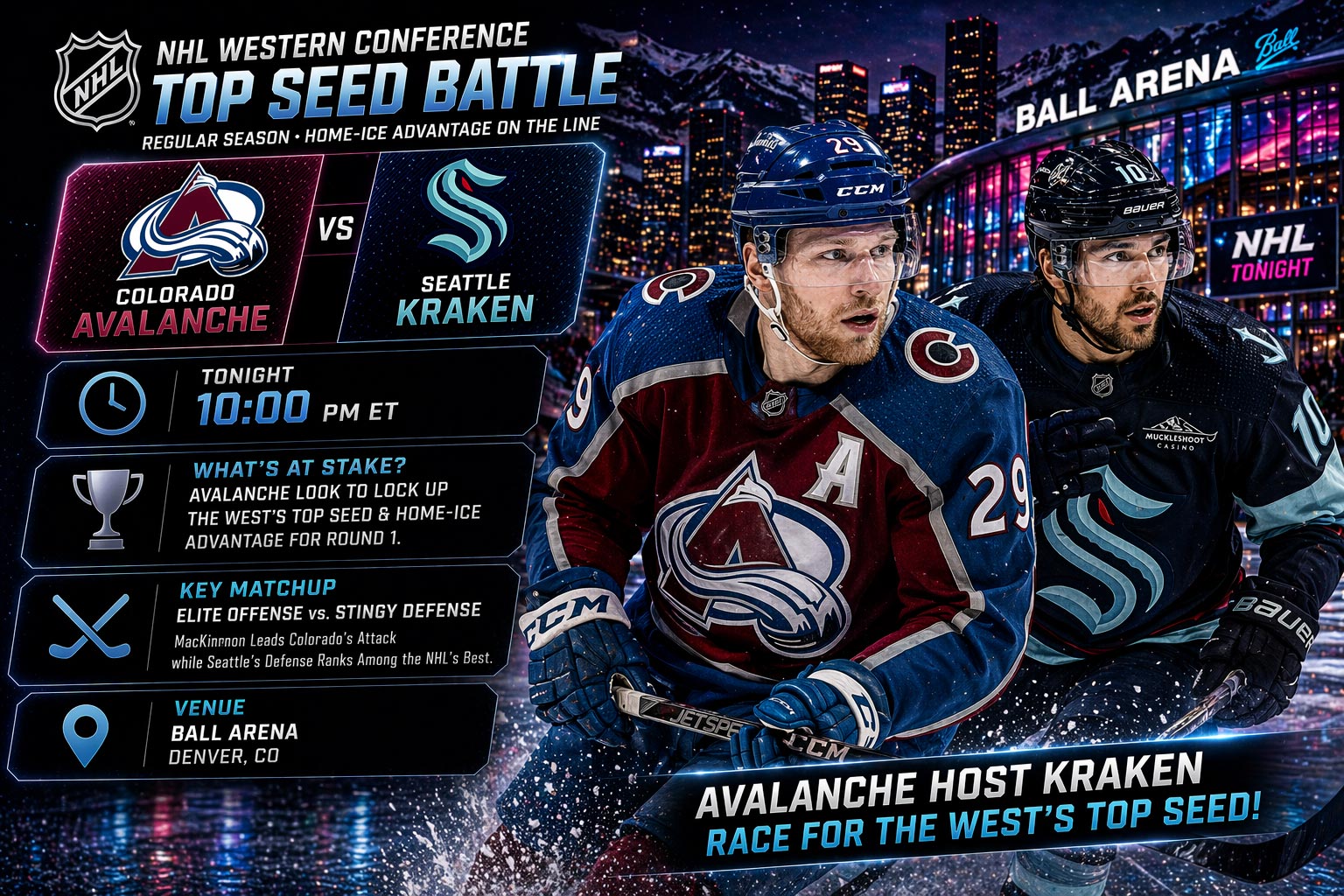
Tonight’s Avs-Kraken matchup at Ball Arena is a textbook example of what we call in the business a “public trap” – where the market prices in narrative over actual value. The line movement on this game has more red flags than a Chinese military parade, and if you’re laying heavy juice on Colorado without reading this first, you’re basically donating to DraftKings’ Q2 earnings report.
Why the Avs Are a Trap Play Against Seattle
The public loves betting favorites, especially sexy ones with names like Makar and MacKinnon on the roster. But here’s the thing about late-season NHL games that separates the sharps from the squares: motivation matters more than talent when you’re talking about a team that’s already locked into a playoff spot. Colorado’s sitting pretty for home-ice in the first round, and while everyone’s salivating over their offensive firepower, nobody’s asking the important question – what’s their actual incentive to go full throttle against a scrappy Kraken team with nothing to lose? This is basic game theory, people.
Seattle, on the other hand, is playing with house money in every sense of the phrase. They’re a young, hungry team that’s exceeded expectations all season, and they’ve got everything to prove against one of the league’s elite squads. The Kraken are 7-3 in their last 10 games, and more importantly, they’ve been money against the spread as underdogs, covering at a 58% clip over their last 20 road games. That’s not luck – that’s a systematic market inefficiency that the books haven’t corrected because they know the public will keep hammering brand-name teams regardless of the actual edge.
The injury situation also isn’t getting enough attention in the mainstream betting discourse. Colorado’s been managing several key players’ minutes down the stretch, and Bednar’s already hinted at potential rest for guys who’ve been banged up. Meanwhile, Seattle’s rolling out a full-strength lineup with zero load management concerns. You’re essentially paying premium prices for a product that might not even be at full strength, which is like buying a Tesla and getting the base model without Autopilot.
The Market’s Mispricing Colorado’s Value
Let’s talk about expected value for a second, because that’s literally the only metric that matters if you’re serious about making money in this game. The current line has Colorado at -185 to -200 depending on your book, which means you need them to win roughly 65-67% of the time just to break even. But when you run the actual numbers – factoring in rest situations, opponent strength, and late-season variance – Colorado’s true win probability is probably closer to 58-60%. That gap between the market price and the actual probability? That’s called negative expected value, and it’s how recreational bettors go broke.
The sharp money knows this, which is why we’re seeing reverse line movement on this game at several offshore books. The public’s pounding Colorado, but the line actually moved from -190 to -185 at Circa this afternoon – a classic indicator that professional syndicates are taking Seattle plus the generous points. These guys aren’t betting with their hearts or their favorite team’s jersey; they’re running Monte Carlo simulations and exploiting market inefficiencies like it’s their day job (because it literally is). When the smart money and the public money are on opposite sides, I know which side of the table I want to be sitting at.
Here’s the psychological component that most bettors miss: the market’s pricing in Colorado’s brand equity, not their actual edge tonight. It’s the same phenomenon we see with the Lakers in the NBA or the Cowboys in the NFL – the betting public overvalues name recognition, and the books adjust the lines accordingly to protect themselves from lopsided action. You’re not just betting against Seattle; you’re betting against every casual bettor who sees “Avalanche” and thinks it’s an automatic win. That’s a crowded side of the boat, my friends, and boats tend to tip when everyone rushes to one side.
At the end of the day, tonight’s game is a perfect case study in why “best team” doesn’t always equal “best bet.” Colorado might absolutely boat-race Seattle 6-2, and if that happens, the public will feel vindicated and learn nothing about proper bankroll management or expected value theory. But if you’re serious about turning this into a sustainable edge and not just a dopamine delivery system, you need to think like a portfolio manager, not a fan. The smart play isn’t always the obvious play, and sometimes the best bet is the one that makes you slightly uncomfortable when you place it. So what are you doing tonight – fading the public trap or joining the sheep at the slaughter? Drop your plays in the comments, and let’s see who actually understands market psychology versus who’s just here to tail Instagram cappers.
WannaBet.com may receive compensation from the sportsbooks mentioned in this post if you sign up using our links. This doesn’t cost you a dime, but it keeps the lights on. Please bet responsibly. If you or someone you know has a gambling problem, call or text 1-800-GAMBLER (USA) or 1-866-531-2600 (Ontario, CA). 21+ only.
