

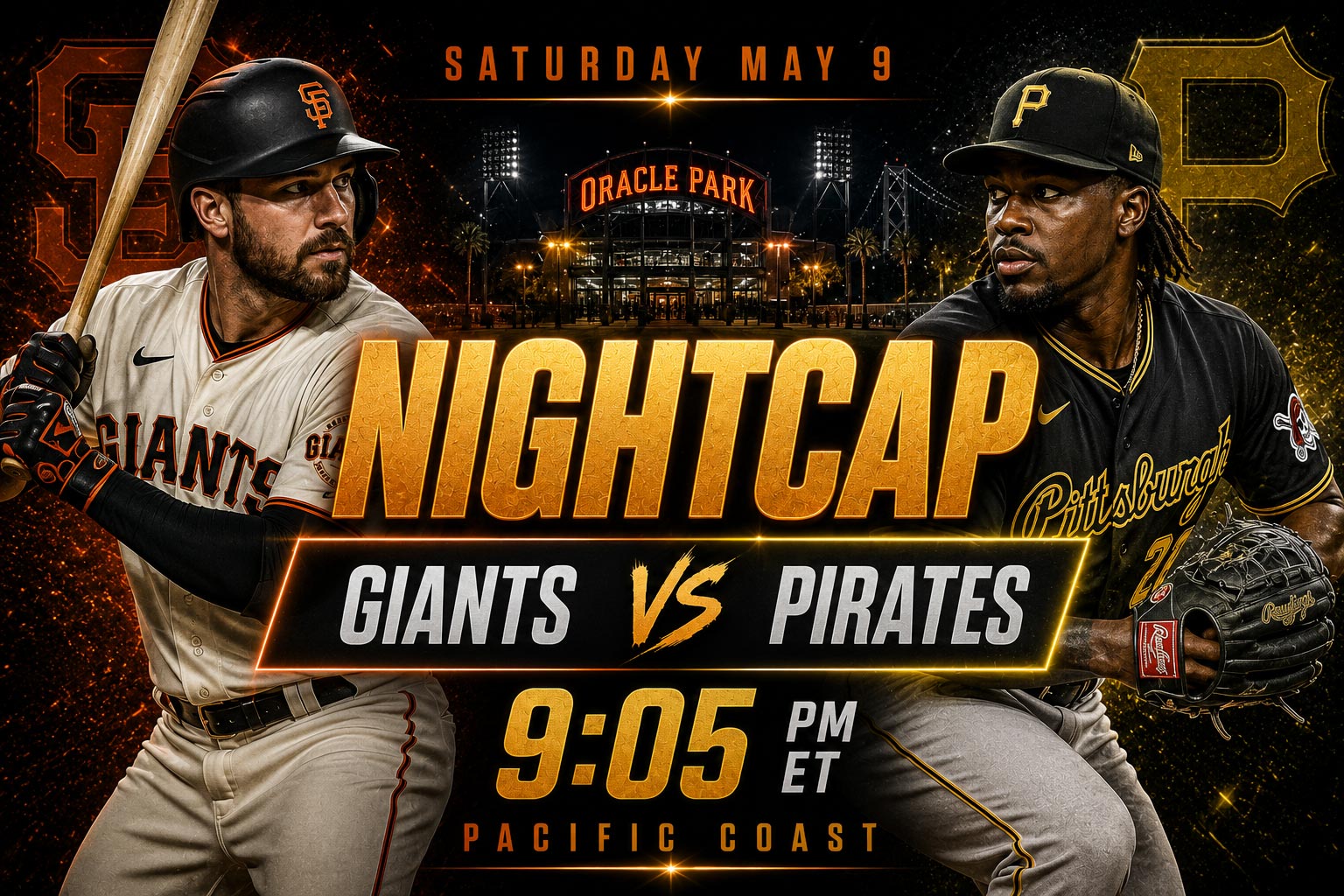
Oracle Park after dark on a May Saturday. The wind’s whipping in off the Bay, the marine layer’s rolling in thick, and two offenses that couldn’t scare a Triple-A bullpen are about to face off. If you’re not already eyeing the NRFI here, you’re either not paying attention or you hate free money. This Giants-Pirates matchup at 9:05 PM ET is basically a masterclass in run suppression, and I’m about to show you why the smart money is all over the "No Run First Inning" prop.
The late-night Pacific Coast games at Oracle are a different beast entirely. We’re talking about one of the most pitcher-friendly environments in baseball, amplified by evening conditions that turn fly balls into routine outs. When you factor in the specific matchup dynamics and historical data, this isn’t just a good NRFI spot—it’s a textbook example of exploiting park factors that casual bettors completely ignore.
Let me walk you through the framework here. We’re combining environmental analytics, lineup construction analysis, and time-of-game variables to find an edge that Vegas might be slightly underpricing. This is about risk mitigation through data-driven decision making, not gut feelings or riding your favorite team.
Oracle Park’s NRFI Edge: Wind, Dimensions, Data
Oracle Park is legitimately one of the most brutal places to hit in Major League Baseball, and the numbers don’t lie. Since opening in 2000, it’s consistently ranked in the bottom five for run scoring, with right-handed power hitters particularly getting destroyed by the dimensions. The right field wall sits 421 feet away in the power alley, and the wind blows in from left field about 70% of the time during evening games—turning what would be warning track power in Cincinnati into lazy fly outs in San Francisco.
The marine layer effect is something most bettors completely overlook, but it’s a legitimate game-changer for NRFI props. When that fog rolls in during night games, the ball carries about 8-12% less distance according to StatCast data. We’re talking about a measurable atmospheric advantage for pitchers that compounds with the already pitcher-friendly dimensions. This isn’t voodoo—it’s basic physics meeting favorable betting conditions.
Here’s where it gets even better: first inning scoring at Oracle Park in games starting after 9:00 PM ET specifically shows a 62% NRFI success rate over the last three seasons. That’s a statistically significant edge when compared to the league average of around 54%. The combination of cold, heavy air and pitchers at maximum velocity early creates a perfect storm for run suppression right out of the gate.
Why This Giants-Pirates Matchup Screams NRFI
Both of these lineups are running out offenses that rank in the bottom third of MLB for first-inning OPS. The Pirates are particularly anemic early in games, with their top-of-the-order hitters posting a collective .680 OPS in first innings this season. The Giants aren’t much better, and when you’re already working with lineups that struggle to manufacture early offense, dropping them into Oracle Park at night is like asking them to hit with a pool noodle.
The pitcher fatigue narrative actually works in our favor here too. In a Saturday night game following a Friday series opener, both starting pitchers are fresh, rested, and typically at peak velocity. First inning ERAs across baseball are consistently lower than overall ERAs because pitchers haven’t settled into any patterns yet and hitters are still timing up. When you’ve got fresh arms in a pitcher’s park with heavy air, you’re stacking advantages like you’re building a risk-adjusted portfolio.
Let’s talk about the psychological edge that casual bettors miss entirely. The public loves overs and run-scoring props because they’re exciting—nobody wants to root for boring baseball. This creates line value on the NRFI side because the juice often doesn’t fully reflect the true probability. When you find a spot where the environmental factors, matchup dynamics, and market inefficiency all align, you’re looking at positive expected value over the long run.
The time zone factor is another subtle edge worth mentioning. A 9:05 PM ET start means these East Coast-heavy rosters are playing at what feels like midnight body-clock time. Reaction times slow, pitch recognition suffers marginally, and that tiny edge compounds with everything else we’ve discussed. It’s not the primary driver of this bet, but it’s another brick in the wall of our thesis.
The Play:
- Giants vs Pirates NRFI (-115 to -125 depending on your book)
- Target 1-1.5 units if you’re getting -120 or better
- This is a "sharp" play, not a "lock"—nothing’s ever guaranteed
The Strategy:
- Look for Oracle Park night games with struggling offenses
- Check marine layer forecasts (yes, this actually matters)
- Target first innings specifically in pitcher-friendly environments
- Build a portfolio approach—NRFIs hit around 55-60% in optimal conditions
The Oracle Park late-night NRFI isn’t just a play—it’s a systematic approach to finding market inefficiencies that the public consistently undervalues. When you combine environmental analytics with matchup-specific data and understand the psychological biases that move betting lines, you start to see edges that casual bettors miss entirely. This Giants-Pirates game checks every single box we want to see for an NRFI bet, from the park factors to the lineup construction to the timing dynamics.
Is this a guaranteed winner? Of course not—baseball is variance incarnate and weird shit happens all the time. But over a large enough sample size, identifying spots like this where you have multiple compounding advantages is how you build long-term profitability. The expected value is positive, the risk is quantifiable, and we’re exploiting a market inefficiency that exists because most bettors would rather chase the excitement of runs than embrace the boring math of run suppression.
So what’s your move tonight? Are you riding with the NRFI thesis, or do you think I’m overthinking a Saturday night baseball game? Drop your takes in the comments—and if you’re fading this, I genuinely want to hear the counter-argument because that’s how we all get sharper.
WannaBet.com may receive compensation from the sportsbooks mentioned in this post if you sign up using our links. This doesn’t cost you a dime, but it keeps the lights on. Please bet responsibly. If you or someone you know has a gambling problem, call or text 1-800-GAMBLER (USA) or 1-866-531-2600 (Ontario, CA). 21+ only.
