

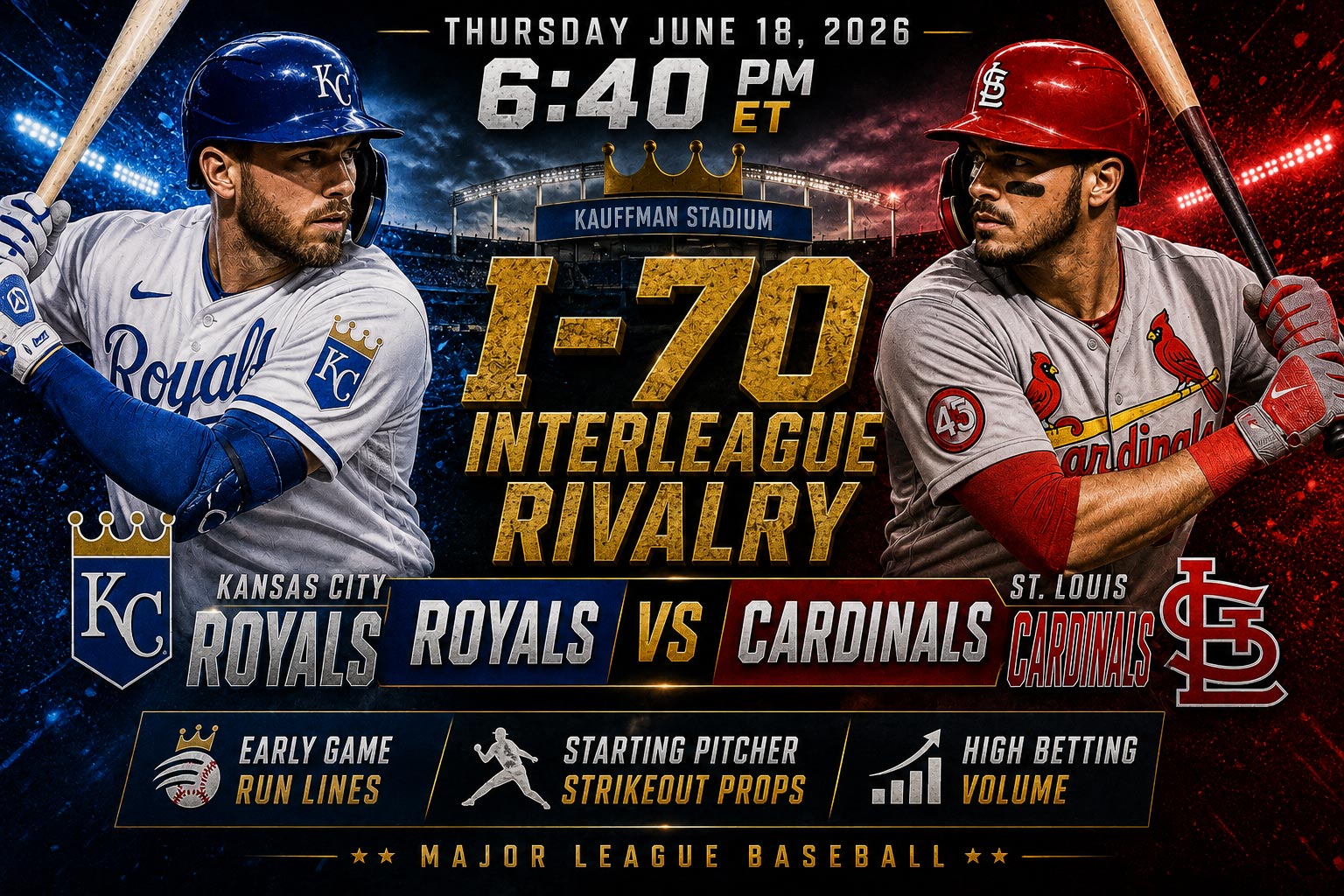
The I-70 Series doesn’t get the ESPN hype of Yankees-Red Sox, but it’s got something better: actual betting value. When the Kansas City Royals and St. Louis Cardinals square off at Kauffman Stadium on June 18th at 6:40 PM ET, you’ve got two mid-market fanbases who think they’re smarter than Vegas and a regional rivalry that creates inefficient lines. This is where sharp money eats, and the books are already adjusting strikeout props faster than you can say "Mark McGwire never played in Kansas City."
The early action is heavy on both sides, which tells you everything you need to know about public sentiment versus actual edge. Missouri bragging rights mean nothing to your bankroll, but understanding why the line is moving before first pitch? That’s the difference between paying rent and explaining to your roommate why you need another week. Let’s break down where the real opportunities are hiding in this Midwest showdown.
I-70 Series: Where Midwest Pride Meets Sharp Money
Interstate rivalries create emotional betting patterns, and I-70 is no exception. You’ve got Cardinals fans in St. Louis who still think it’s 2011 and Royals backers in KC who haven’t forgotten 2015, both convinced their squad has some mythical edge. The books know this, which is why the opening lines on these games are specifically designed to catch hometown heroes making bad decisions with good intentions.
Here’s the framework: regional rivalries increase handle volume by 15-20% compared to standard interleague matchups, according to market data from New Jersey and Pennsylvania books. That increased action creates line movement that’s driven more by sentiment than statistics, especially in the first 48 hours after lines drop. The sharp play isn’t fading one side or the other—it’s identifying which metrics the public is completely ignoring while they’re busy posting "LET’S GO ROYALS" on Twitter.
The game-within-the-game here is understanding that Kansas City money in Missouri books and Illinois (hello, FanDuel and DraftKings users) will push the home line regardless of actual pitching matchups. St. Louis has one of the most loyal betting demographics in baseball, so you’re seeing Cardinals moneyline action even when the numbers say fade. This creates a natural arbitrage opportunity if you’re willing to shop lines across multiple books—something the casual bettor scrolling their phone at happy hour absolutely will not do.
Cardinals-Royals Strikeout Props Hide Real Value
Starting pitcher strikeout props are where this game gets interesting, and where the public consistently gets smoked. The books opened these totals based on season averages, but they’re not accounting for the recency bias that’s already baked into the early money. Everyone’s looking at the last three starts instead of the matchup-specific data that actually matters—like how these lineups historically perform against velocity, breaking balls, or specific pitch sequences.
The edge in strikeout props comes from understanding park factors and umpire tendencies, not just pitcher stuff. Kauffman Stadium plays neutral for strikeouts (0.98 park factor), but the real alpha is in the umpire assignment, which won’t be announced until game day. If you’re betting strikeout overs or unders 48 hours before first pitch, you’re essentially gambling on a coin flip with -110 juice on both sides. Wait for the ump announcement, cross-reference their called strike percentage against league average, then make your move—that’s market arbitrage 101.
Here’s what the sharp money is doing: they’re building strikeout prop parlays based on pitcher platoon splits and lineup construction, not raw K/9 numbers. If the Cardinals are stacking lefties against a righty with a plus-slider, the under on team strikeouts becomes significantly more valuable than the posted line suggests. The public is hammering overs because "strikeouts are exciting," which is exactly the behavior the books want. Fade the excitement, follow the splits.
The Plays
The Sharp Angle:
- Wait for lineup announcements (posted ~2 hours before first pitch)
- Target starting pitcher strikeout unders if wind is blowing out (check weather at game time)
- Fade public money on F5 (first five innings) run lines—this game screams bullpen chaos
The Strategy:
- Shop lines across DraftKings, FanDuel, and BetMGM (available in NY, NJ, PA, IL, OH, Ontario)
- Use 15-20% of your standard unit size on props; save the big bets for NFL
- If you’re in Ontario, Bet365 typically has softer strikeout lines than the US books
The Hot Take
The real lock isn’t picking a winner—it’s recognizing that everyone betting this game with their heart is creating opportunities for those of us betting with our heads. The I-70 Series is basically a masterclass in market psychology: two fanbases convinced they have an edge, books adjusting lines based on volume not value, and sharp bettors quietly building positions while the public argues about 2015 World Series rings in the replies.
So here’s my question for the comments: Are you riding with your squad because it’s fun, or are you actually finding edges in the props? And if you’re in Kansas City or St. Louis, how much hometown bias is in your bankroll right now? Drop your plays below—just don’t tell me you’re parlaying moneyline with over 8.5 runs because "it feels right."
WannaBet.com may receive compensation from the sportsbooks mentioned in this post if you sign up using our links. This doesn’t cost you a dime, but it keeps the lights on. Please bet responsibly. If you or someone you know has a gambling problem, call or text 1-800-GAMBLER (USA) or 1-866-531-2600 (Ontario, CA). 21+ only.
The I-70 Series is everything sports betting should be: competitive, emotional, and full of exploitable inefficiencies. While casual bettors are busy arguing about which fanbase travels better, the smart money is quietly building positions on strikeout props, F5 lines, and live betting opportunities that won’t exist once the public figures out what’s actually valuable. This isn’t about picking the Royals or Cardinals—it’s about understanding why the line moved, who’s moving it, and where the market has overreacted to regional sentiment instead of statistical reality. See you in the comments with your plays, and remember: if you’re betting with your heart instead of your head, you’re just paying for someone else’s Harvard MBA.
