

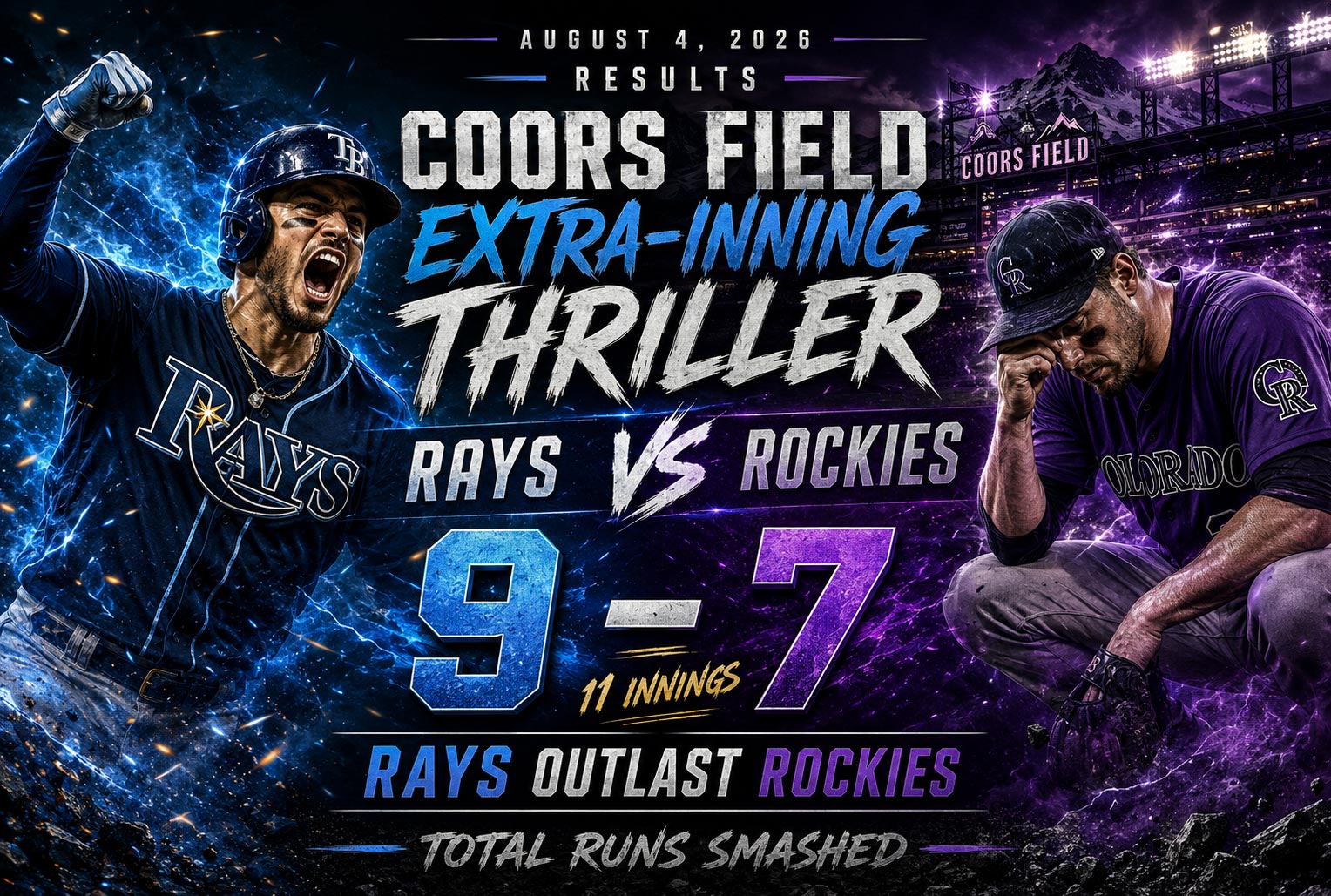
Coors Field just did what Coors Field does best: turned a Tuesday night in August into an absolute slot machine for over bettors. The Tampa Bay Rays outlasted the Colorado Rockies 9-7 in 11 innings on August 4th, 2026, cashing over tickets with the kind of efficiency that would make a McKinsey consultant weep with joy. If you had any variation of the over in this game—whether you took the opening total, live bet the extras, or just hammered team totals like a degenerate savant—congratulations, you just experienced what sharp bettors call "Coors variance working in your favor." The thin air at 5,200 feet above sea level combined with extra innings is basically a money printer for anyone who understands that altitude + baseball = runs, and lots of them.
Rays-Rockies Go 11 Innings: Over Bettors Feast
The game opened with a total hovering around 11.5 to 12 depending on your book, which honestly felt disrespectful to both Coors Field’s legacy and basic physics. By the time we hit the 7th inning with the score knotted at 6-6, anyone who took the over was already counting their money—but this thing had more juice left in the tank than a Tesla Supercharger station. The Rockies and Rays traded runs like Wall Street traders swap equities, and when regulation ended 7-7, the real fun began for anyone smart enough to hammer live over props during the extra frames.
Tampa Bay’s offense came alive in the 11th, pushing across two runs against a gassed Rockies bullpen that had nothing left after 11 innings of high-altitude hell. The expected value on taking overs at Coors is already positive in regulation—we’re talking a historical park factor that makes Yankee Stadium look like a pitcher’s paradise—but in extras? That’s when you’re essentially betting on whether the sun will rise tomorrow. The Manfred runner rule, combined with depleted bullpens and air so thin it makes baseballs travel like they’ve been shot out of a cannon, creates a perfect storm for run production.
For context, Coors Field games average about 0.8 more runs per game than the league average, but that number jumps significantly in extra innings when both teams are digging into their bullpen’s bullpen. Anyone who understands basic regression analysis knew that even if this game stayed under through nine (which it didn’t), the odds of it staying under through 11 were about as likely as finding a value bet on a -400 favorite. The sharp money was all over the over from the jump, and the public—bless their hearts—probably took Rockies ML because "home team at Coors" without understanding that Colorado’s pitching staff has the structural integrity of a house of cards in a wind tunnel.
Coors Field Delivers Another Total Smash in Extras
This wasn’t some fluke or variance—this was Coors Field operating exactly as the market should have priced it. The sportsbooks in Ontario and across major US markets like New York and Pennsylvania set that total at 11.5, which suggests they either didn’t respect the altitude’s impact enough or were baiting sharp bettors into the over (spoiler: the sharps took the bait and cashed). When you’re analyzing MLB totals, Coors Field should immediately trigger a mental adjustment of at least 1.5 to 2 runs above what you’d expect at sea level. Factor in that both teams’ bullpens were already overworked from recent series, and you had a textbook "smash the over" scenario.
The line movement throughout the game told the story of professional bettors feasting on recreational money. Live betting markets saw the total for "total runs in extra innings" hovering around 1.5 to 2.5, and anyone with a pulse should have been hammering the over on that prop. The implied probability of getting at least two runs in extras at Coors—with the Manfred runner starting on second and bullpens throwing guys who couldn’t crack a AAA roster—was probably north of 70%. That’s the kind of edge that doesn’t come around every day, and it’s exactly the type of market inefficiency that separates the pros from the guys still betting on vibes.
From a risk management perspective, this game also highlighted why bankroll discipline matters even when you’ve identified a legitimate edge. Sure, the over was practically printing money, but you never want to overexpose yourself to a single game, even at Coors. The smart play was allocating maybe 3-5% of your bankroll to the over and then potentially adding live bets as the game progressed and the total adjusted. Anyone who went full degen and bet their entire roll on this game got lucky it hit, but that’s not sustainable strategy—that’s just gambling with extra steps. The real winners were the bettors who identified the edge, bet accordingly, and are now looking for the next Coors Field matchup to exploit.
The Rays-Rockies extra-inning slugfest was everything we love about betting baseball at elevation: predictable chaos that rewards anyone who does their homework and understands basic market dynamics. Coors Field continues to be the gift that keeps on giving for over bettors, especially when games stretch into extras and the law of large numbers starts working overtime. If you missed this one, don’t worry—Colorado plays 81 home games a year, and there’s always another opportunity to capitalize on thin air and thinner pitching. Just remember: when you see a Coors Field total that looks too low, it probably is. The books aren’t dumb, but they also can’t set lines so high that they scare off all the action. That’s where your edge lives.
So here’s the question for the comments: Would you rather have a guaranteed 2-unit win on every Coors Field over, or a shot at a 10-unit parlay that includes a Coors over as one leg? Drop your bankroll management philosophy below.
| Key Betting Metrics | Details |
|---|---|
| Opening Total | 11.5 to 12 |
| Final Score | Rays 9, Rockies 7 (11 innings) |
| Total Runs | 16 |
| Park Factor | Coors +0.8 runs above league average |
| Sharp Money | Heavy over action from opening bell |
"WannaBet.com may receive compensation from the sportsbooks mentioned in this post if you sign up using our links. This doesn’t cost you a dime, but it keeps the lights on. Please bet responsibly. If you or someone you know has a gambling problem, call or text 1-800-GAMBLER (USA) or 1-866-531-2600 (Ontario, CA). 21+ only."
