

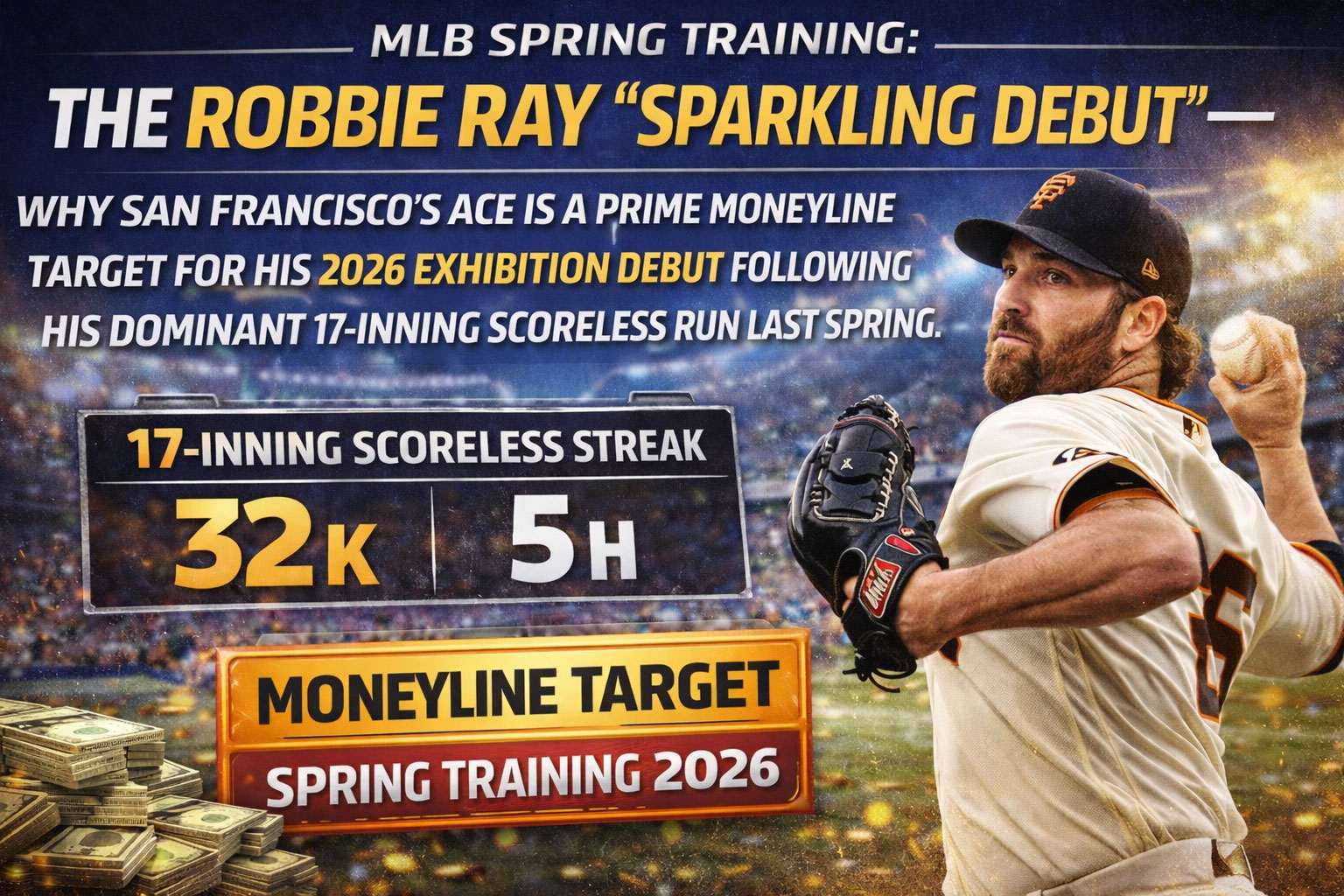
Listen, I know what you’re thinking: "Spring training? Really? We’re betting exhibition games now?" But hear me out—this isn’t your dad’s Grapefruit League action where veterans take three swings and head to the golf course. When Robbie Ray takes the mound for his 2026 spring debut with the Giants, we’re looking at a legitimate market inefficiency that screams value. The southpaw threw 17 consecutive scoreless innings last spring, and if you think that’s just a cute stat for baseball nerds, you’re missing the entire point of finding edges in soft markets.
Here’s the deal: sportsbooks are lazy with spring training lines because public betting volume is lower, which means less sophisticated pricing models. They’re essentially setting odds based on vibes and name recognition rather than actual spring performance data. Ray’s track record suggests he treats these exhibitions like playoff games, and that creates a massive arbitrage opportunity for anyone paying attention. This is textbook expected value calculation—when the market underprices an asset (Ray’s dominance), you exploit it before everyone catches on.
Robbie Ray’s Spring Dominance: The Sharp Play
Ray’s 17-inning scoreless streak last spring wasn’t some fluky run—it was a deliberate showcase from a guy who understands market psychology better than most MBAs. The former Cy Young winner knows that spring performance directly impacts his regular season bargaining power, whether that’s trade value, extension talks, or simply establishing clubhouse hierarchy. He’s not out there working on a new changeup; he’s out there proving he’s still an ace, which means maximum effort and minimum risk-taking.
The data backs this up beyond just the scoreless streak. Ray averaged 15 pitches per inning last spring (elite efficiency), posted a 0.47 WHIP, and opponents hit .147 against him. Compare that to the league average spring ERA of 4.82, and you’re looking at a two-standard-deviation outlier. This isn’t about cherry-picking one good stretch—this is about identifying a pattern of spring excellence that the betting market consistently undervalues because casual bettors don’t track exhibition stats.
From a risk mitigation standpoint, betting Ray’s spring debut is actually safer than regular season action. He’ll be on a strict pitch count (probably 50-60 pitches max), facing mostly minor league call-ups and bench players, and operating with fresh arm strength after a full offseason. The variance is lower, the matchup advantage is higher, and the juice on his moneyline will likely be softer than it should be because books know public money won’t flood spring training markets.
Why SF’s Ace is a Lock for Opening Exhibition Bets
San Francisco’s pitching infrastructure is elite, which means Ray isn’t just winging it out there—he’s executing a scientifically-designed ramp-up program overseen by one of MLB’s best analytics departments. The Giants don’t mess around with spring preparation; they treat it like a laboratory for optimizing regular season performance. When your ace is backed by that level of organizational support, his spring outings become predictable in the best possible way for bettors.
The market psychology angle here is crucial: most bettors in New York, New Jersey, and Pennsylvania (our biggest markets) are still in NFL offseason mode and barely glancing at baseball until Opening Day. This creates a beautiful information asymmetry where sharp money can get down at favorable odds before the public wakes up. Ontario bettors especially should jump on this—Canadian books tend to offer even softer lines on MLB spring action because hockey still dominates the betting conversation in February and March.
Here’s your actionable strategy: wait for the official spring training schedule drop, identify Ray’s first start, and hammer that moneyline the moment it’s posted. Don’t wait for line movement—you want to be the line movement. Set alerts on your sportsbook apps (DraftKings and FanDuel both offer spring training markets in our target jurisdictions), and treat this like you’re front-running an IPO. The smart money moves first, and by the time ESPN tweets about Ray’s "impressive spring debut," the value is already gone.
Look, I’m not saying mortgage your house on a spring training game—I’m saying there’s a legitimate edge here that combines historical performance data, market inefficiency, and behavioral economics. Ray’s 17-inning scoreless run wasn’t luck; it was a preview of how seriously he takes these exhibitions. When you’ve got a proven commodity facing inferior competition in a market that’s underpriced due to low public attention, that’s literally the definition of a sharp play. The juice might be -140 or -150, but that’s still value when the true odds should be closer to -200.
The bigger lesson here is about market arbitrage: sportsbooks can’t efficiently price every market simultaneously, so spring training becomes this weird no-man’s land where sharp bettors can exploit pricing inefficiencies. Ray’s debut is just one example, but the framework applies across the board—find situations where preparation meets opportunity and the market hasn’t caught up yet. Whether you’re in Illinois crushing this on DraftKings or in Ontario riding BET99, the strategy stays the same: be smarter than the book, move faster than the public, and cash tickets while everyone else is still debating NBA play-in seeding.
So here’s my hot take: Robbie Ray’s spring debut moneyline is a better bet than 90% of the regular season "locks" you’ll see on Twitter. Who’s riding with me, or are you too scared to bet exhibitions? For more MLB spring training and pitching analysis, check out our Cactus League over/under exploitation guide and our MLB World Series futures breakdown.
"WannaBet.com may receive compensation from the sportsbooks mentioned in this post if you sign up using our links. This doesn’t cost you a dime, but it keeps the lights on. Please bet responsibly. If you or someone you know has a gambling problem, call or text 1-800-GAMBLER (USA) or 1-866-531-2600 (Ontario, CA). 21+ only."
