

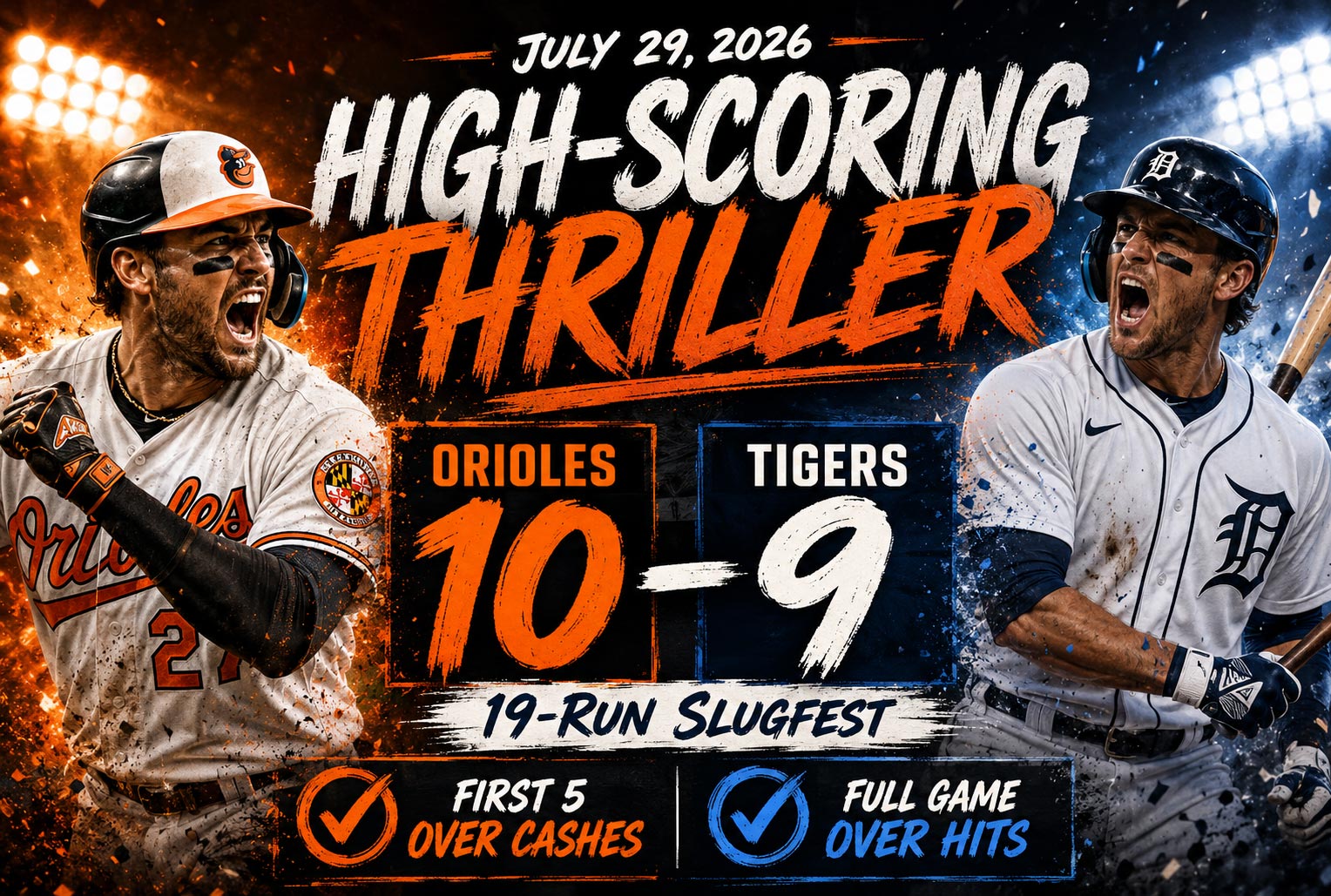
There’s nothing quite like waking up to check your betslip and realizing you cashed before the game even hit the final stretch. That’s exactly what happened on July 29th when the Baltimore Orioles and Detroit Tigers decided to put on an absolute batting practice exhibition disguised as a Major League Baseball game. The final score? A ridiculous 10-9 barn burner that had over bettors popping champagne while under believers were left wondering what the hell happened to "pitcher-friendly summer baseball." If you had the Over in any form—full game, first five innings, alternate totals—you were essentially printing money by the time both lineups finished demolishing every arm that touched the mound.
Orioles-Tigers Slugfest: Over Bettors Feast
The setup going into this game was textbook mid-summer baseball between two American League contenders. Sportsbooks posted the total around 8.5 to 9.0 runs, which honestly seemed reasonable given both teams’ recent form and the starting pitching matchups on paper. Sharp money was cautiously optimistic but not exactly backing up the truck—this looked like your standard "could go either way" total that wouldn’t move much before first pitch.
Then the game started, and both offenses collectively decided that pitching was optional. The Orioles lineup was hitting everything like they were in a Home Run Derby, while the Tigers matched them blow for blow in what became an absolute slugfest. By the time the dust settled with Baltimore edging Detroit 10-9, we had witnessed 19 total runs that made the original 8.5-9.0 total look absolutely laughable in hindsight.
The beautiful part? If you were smart enough to target the First 5 Innings Over, you were cashing tickets before most people even finished their ballpark hot dogs. Both teams combined for enough runs in the early frames that full game over bettors were essentially freerolling by the 7th inning stretch, just watching the bullpens try (and fail) to stop the bleeding.
How 19 Runs Turned Sharp Money Into Easy Cash
Let’s talk about market efficiency for a second—or in this case, the complete lack thereof. The sportsbooks set a total expecting a competitive but relatively controlled game between two teams that can hit but also had serviceable pitching. What they didn’t account for was both starting pitchers getting absolutely shelled and the bullpens offering zero resistance whatsoever.
The real edge here was recognizing that summer baseball, especially in late July, often features tired arms and hitters who’ve seen enough pitches to be locked in. Books tend to be conservative with totals during pennant race games, assuming both teams will tighten up defensively and managers will use their best relievers strategically. Instead, we got a track meet where every inning felt like it might produce a crooked number, and the expected value on that Over was screaming from the rooftops.
For the degens who hammered alternate totals in the 10.5-11.5 range (which typically offers juicier odds), this game was basically a retirement plan. The risk mitigation strategy of taking First 5 Overs also paid massive dividends—you got your cash before any late-game bullpen "ace" could potentially shut things down. This is textbook market arbitrage: finding spots where the public perception (tight pitcher’s duel) doesn’t match the actual conditions (tired arms, hot bats, summer weather).
The Lessons for Future MLB Betting
This game is a perfect case study in why blindly following consensus totals can leave money on the table. The public tends to underestimate how explosive offenses can get when everything clicks simultaneously, especially in divisional races where teams are pressing to score every run possible. Both the Orioles and Tigers came into this game with playoff aspirations, meaning aggressive hitting approaches and less conservative game management.
The temperature and weather conditions also played a role that sharps recognized but casual bettors ignored. Late July games often feature carrying balls and exhausted pitching staffs that have been grinding through the dog days of summer for weeks. When you combine that with two lineups full of legitimate threats 1-through-9, the over becomes exponentially more attractive than the closing line suggested.
Moving forward, look for similar spots: competitive teams, warm weather, and totals that seem conservatively set based on recent pitcher performances rather than current conditions. The books will always adjust eventually, but there’s a window between when sharp money recognizes value and when the lines move significantly. That’s your edge, and games like this Orioles-Tigers slugfest prove that when you identify it correctly, you’re not just gambling—you’re investing in asymmetric upside.
At the end of the day, this 19-run explosion was a masterclass in why MLB totals can offer some of the best value in sports betting when you know what to look for. The Orioles-Tigers game reminded us that sometimes the "safe" middle-ground total is actually the sucker bet, and the real money is in recognizing when conditions are ripe for an offensive eruption. Whether you caught it with a full game Over, a First 5 Over, or got greedy with an alternate total, July 29th was one of those nights where the baseball gods smiled on the over bettors and punished anyone who thought pitching would matter. So here’s my question for you: when you see two hot-hitting teams with tired bullpens on a summer night, are you still taking the under, or have you learned your lesson?
We called it: Read our pre-game Tigers vs Orioles betting preview to see how the lines set up before this slugfest.
WannaBet.com may receive compensation from the sportsbooks mentioned in this post if you sign up using our links. This doesn’t cost you a dime, but it keeps the lights on. Please bet responsibly. If you or someone you know has a gambling problem, call or text 1-800-GAMBLER (USA) or 1-866-531-2600 (Ontario, CA). 21+ only.
