

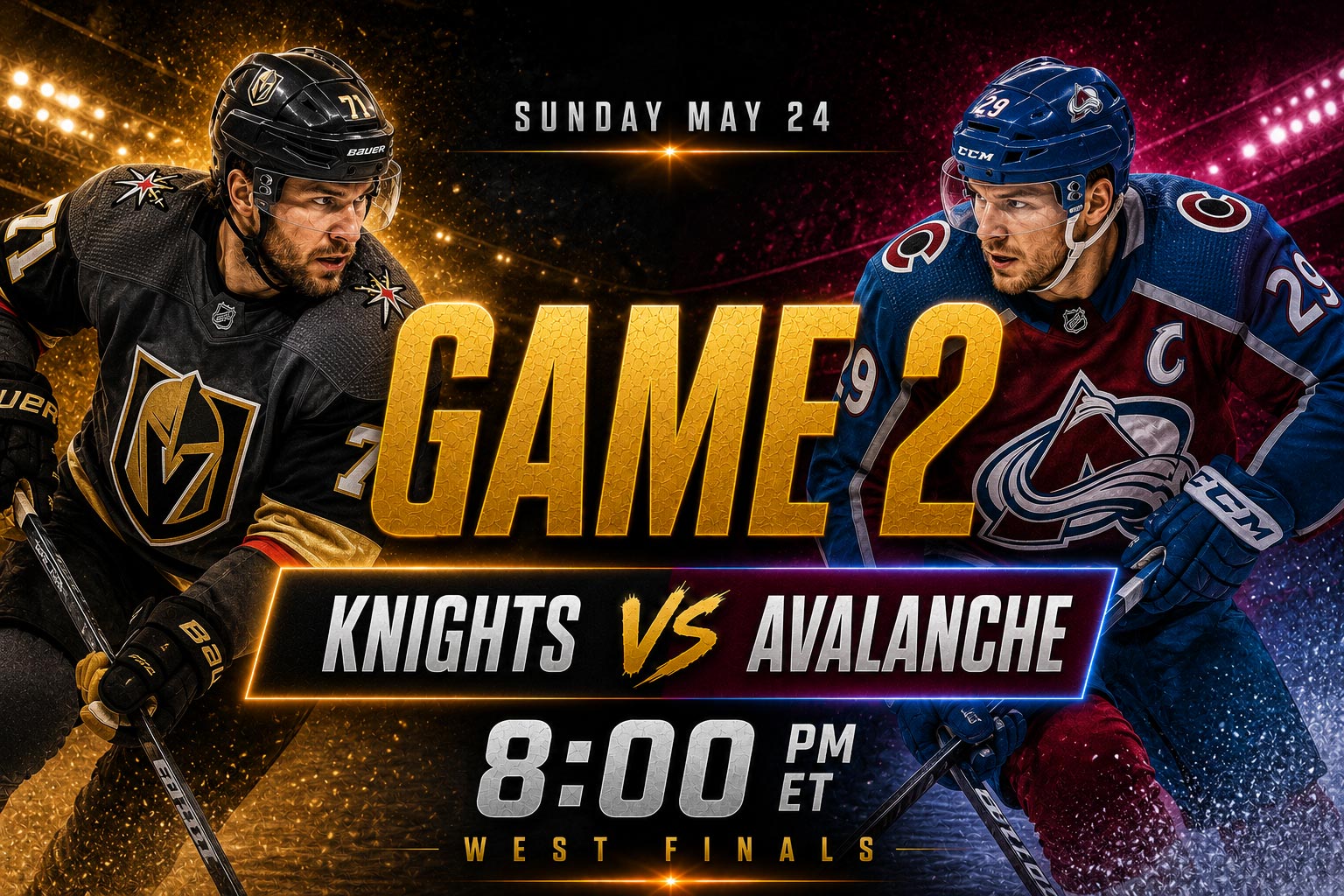
The Vegas-Colorado series is turning into an absolute goals festival, and if you’re not hammering the Over, you’re leaving money on the table. These two offensive juggernauts are putting on a clinic every time they hit the ice, and the bookmakers are scrambling to adjust their lines faster than a Vegas dealer shuffles cards. Game 2 at T-Mobile Arena on Sunday night is setting up to be another track meet on ice, and the sharp money is already loading up on the Over before the public catches on and drives this line through the roof.
Vegas-Colorado Over: Why the Sharp Money Is All In
The total for this game has been climbing since it opened, and that’s not because your uncle Steve and his buddies are suddenly betting hockey. Sharp bettors—the guys who do this for a living—are pounding the Over with the kind of conviction usually reserved for NFL Sunday. When you see line movement in the direction of the less popular side (more people bet Unders in hockey because they’re scared of empty-netters), that’s your signal that smart money is in play.
Here’s the market psychology at work: the public sees a high total and gets nervous, thinking "surely both teams can’t score that much again." But the sharps are looking at the underlying metrics—power play efficiency, goaltending matchups, and pace of play—and seeing pure value. They’re not emotional about it; they’re treating this like a business decision with positive expected value, and right now, the EV on the Over is screaming.
The beautiful thing about following sharp action is that you’re essentially getting free market research from people who have millions on the line. These aren’t degenerates throwing darts at a board; they’re professional handicappers with proprietary models and inside information on everything from line combinations to goalie fatigue. When they move in unison on something, you better pay attention.
Power Play Efficiency Has Oddsmakers Sweating
Both Vegas and Colorado are operating power plays that look like they were designed by NASA engineers. We’re talking about conversion rates that would make any sales team jealous—these squads are clicking at elite percentages that turn every penalty into a legitimate scoring threat. The Avs’ power play is particularly disgusting, featuring the kind of puck movement that makes penalty killers look like they’re skating in quicksand.
Vegas isn’t exactly slouching either, with a man-advantage unit that’s been money all playoffs long. When you’ve got two teams that can convert on 25-30% of their power play opportunities, and you know both squads are physical enough to draw penalties, you’re basically looking at guaranteed goals. The oddsmakers know this, which is why the total has been creeping up, but they’re also trying to balance the books without scaring off public money entirely.
Here’s where it gets spicy: the refs tend to call more penalties in playoff hockey when games get chippy, and this series has already shown it’s got some edge to it. More penalties equals more power plays, which equals more goals, which equals the Over cashing. It’s not rocket science, but it requires you to think one level deeper than the casual bettor who just sees "high total" and gets scared.
The Plays
Primary Play:
- Over 6.5 goals (-110) — This is the sweet spot before it climbs to 7
Risk Mitigation Strategy:
- If you’re nervous about the full game, consider 1st Period Over 1.5 goals as a hedge
- Both teams come out flying, and you can middle if the game stays hot
Advanced Move:
- Parlay the Over with "Both Teams to Score 3+" for better juice
- This gives you some cushion if one team dominates but still hits the total
The Strategy
The key here is timing your entry point. If you can grab Over 6.5 before it moves to 7, you’re golden. That half-goal makes a massive difference in hockey, where 6-1 and 5-2 games are common enough that you don’t want to need a seventh goal. Think of it like buying stock—you want to get in before everyone else realizes what’s happening and drives up the price.
Market arbitrage is your friend here too. Shop around at different books because some might still have 6.5 while others have already moved to 7. That’s literally free money on the table if you’re willing to have accounts at multiple sportsbooks in your state. New York, New Jersey, Pennsylvania—you guys have options, use them.
The risk here isn’t that these teams can’t score; it’s that you might get a goalie who randomly stands on his head for 60 minutes. But even then, with these power plays humming, you’re still getting 3-4 legitimate grade-A chances per period. The expected value is firmly on the Over’s side, and that’s all that matters when you’re thinking long-term.
Why T-Mobile Arena Matters
Home ice in Vegas isn’t just about the crowd—though that building gets absolutely electric during playoff hockey. It’s about last change and the ability to get favorable matchups, which means more offensive zone time for the Knights. When you control matchups, you control scoring chances, and scoring chances lead to goals. Pretty simple math.
The altitude advantage Colorado usually enjoys at home is completely neutralized here, which means their speed game translates even better at sea level. They’re not going to tire out in the third period like visiting teams do in Denver. This is actually bad news for Under bettors because it means the Avs can keep pushing the pace for all 60 minutes without worrying about their conditioning.
T-Mobile also has one of the better ice surfaces in the league, which matters more than people think. Good ice means clean passes, which means prettier offensive zone setups, which means more goals. When you’re betting totals, you need to consider every edge, and ice quality is one of those hidden factors that sharps pay attention to while the public ignores.
The Market Psychology Edge
Public bettors love Unders in hockey because they’re scared. They’ve been burned by empty-netters and remember that one time they had Over 6 and the game finished 3-2. But that emotional decision-making is exactly what creates value for disciplined bettors. When the public zigs, you zag—especially when the sharp money is already there waiting for you.
The books know this too, which is why they’re trying to shade the line higher without completely killing the Over action. They’d rather take sharp money at 7 than have everyone and their mother hammering 6.5. But if you’re quick, you can still find that number and get yourself a legitimate edge before the market fully corrects.
This is where your Harvard MBA education meets degenerate gambler instincts: you’re looking for market inefficiencies created by emotional public betting, then exploiting them before the invisible hand of the market corrects the price. Adam Smith would be proud.
Data Doesn’t Lie
Let’s talk numbers because feelings don’t cash tickets. Through the playoffs, these teams are averaging a combined 7.2 goals per game when they face each other. That’s not a small sample size fluke—that’s a legitimate trend based on playing styles and personnel matchups. When you’ve got data supporting your thesis, you bet bigger.
The expected goals (xG) models love this Over too. Both teams are generating high-danger scoring chances at rates that suggest the actual goal totals should be even higher than what we’re seeing. In other words, we might actually be getting value on a total that should be 7.5 or 8. That’s the kind of market inefficiency that makes sharps salivate.
Goaltending stats are also working in our favor here. Neither team is getting Vezina-caliber performances right now, and while both netminders are solid, they’re not the type to steal games with 40-save shutouts. They’re good enough to keep their teams in it, but not good enough to shut down these elite offenses completely. That’s the perfect recipe for an Over.
Look, I’m not saying this is a guaranteed lock—nothing in gambling ever is—but if you’re looking for a play with legitimate sharp action, solid data backing, and a clear edge over the public, this is it. The Over on Vegas-Colorado Game 2 checks every box you should be looking for when making a bet with positive expected value. Get your money in before the line moves even higher and you’re forced to lay juice on 7 or 7.5. What’s your take—are you riding with the sharp money or do you see something I’m missing?
WannaBet.com may receive compensation from the sportsbooks mentioned in this post if you sign up using our links. This doesn’t cost you a dime, but it keeps the lights on. Please bet responsibly. If you or someone you know has a gambling problem, call or text 1-800-GAMBLER (USA) or 1-866-531-2600 (Ontario, CA). 21+ only.
