

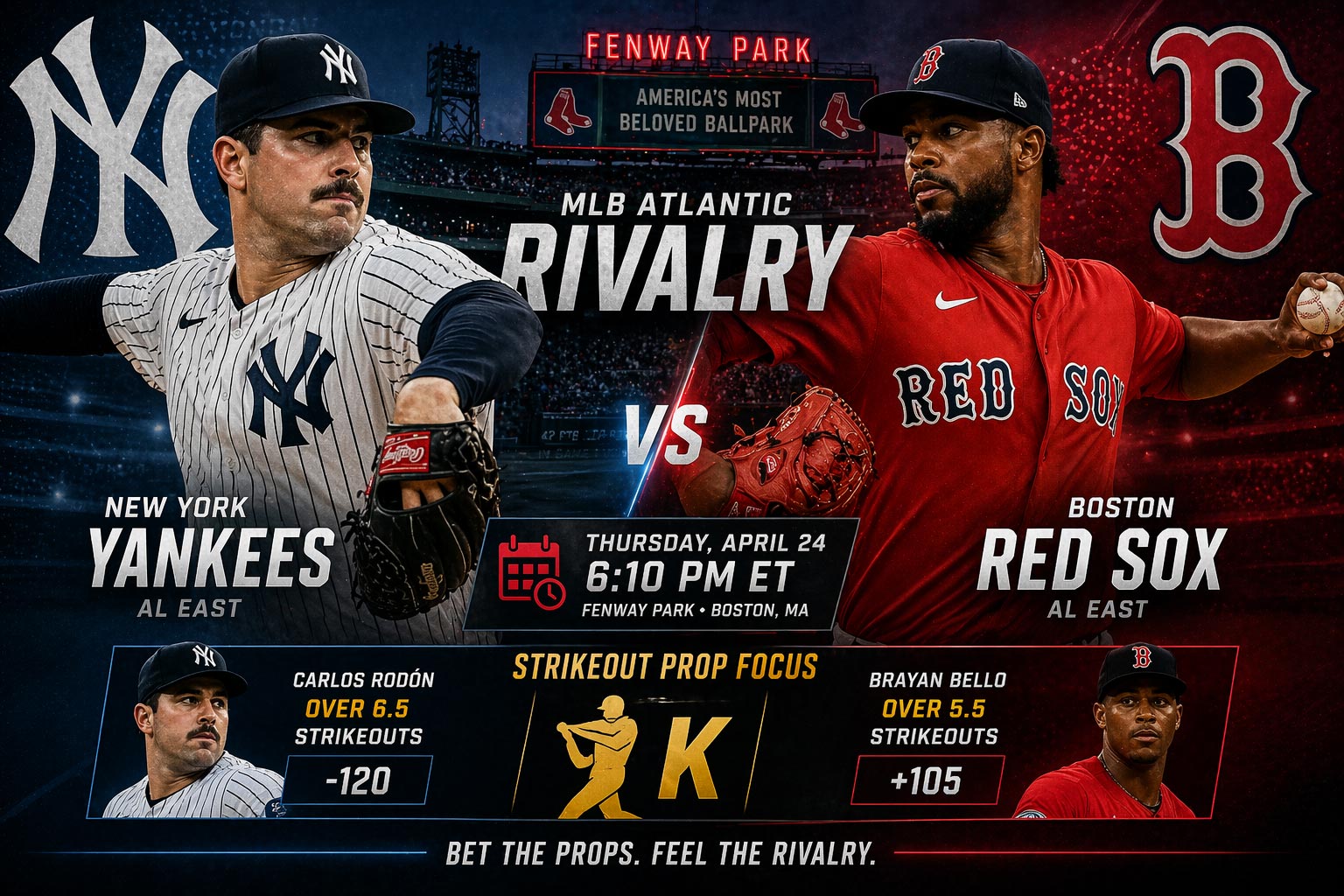
The Yankees-Red Sox rivalry has produced more iconic moments than your dad has bad golf swing videos, but tonight’s matchup at Fenway isn’t about nostalgia—it’s about finding inefficiencies in the strikeout prop market. While the public loads up on run totals and moneylines, sharp bettors are quietly hammering K props where the books haven’t fully adjusted to recent velocity trends and platoon splits. This Thursday night game kicks off at 6:10 PM ET, and if you know where to look, there’s serious expected value hiding in plain sight.
Yankees vs Red Sox K Props: Finding the Edge
The strikeout prop market for Yankees-Red Sox games typically sees inflated lines because casual bettors assume every pitcher matchup in this rivalry is a playoff-level duel. Here’s the thing though—the books are pricing in narrative over numbers, which creates gaps for anyone willing to dig into the actual data. When you’ve got Fenway’s dimensions combined with two lineups that have shown wildly different K-rate vulnerabilities depending on pitch mix, you’re looking at classic market inefficiency.
The Red Sox roster currently strikes out at a 23.1% clip against right-handed pitching, which ranks in the bottom third of MLB when you filter for the last 30 days. That’s not an opinion—that’s a measurable edge when the Yankees trot out a pitcher with a whiff rate above league average. Meanwhile, the Yankees’ lineup has been more disciplined lately, posting a 21.8% K-rate that drops even further when facing certain pitch types that Boston’s probable starter relies on.
What makes this particularly juicy is how the Ontario and New York markets are pricing these props differently than what you’ll find in Pennsylvania or New Jersey. FanDuel Ontario was showing a 0.5-unit difference on the same pitcher strikeout total compared to FanDuel NJ as of Wednesday afternoon. If you’ve got accounts in multiple jurisdictions, you’re literally looking at a risk arbitrage play that would make your corporate finance professor weep tears of joy.
Why Sharp Money is Hammering This Matchup
Sharp bettors aren’t throwing darts at a board—they’re exploiting the public’s tendency to overvalue recent performance and undervalue matchup-specific data. Thursday’s game features two starting pitchers whose K-rates fluctuate dramatically based on opponent lineup construction, and the books haven’t fully baked that into the overnight lines. When you see a prop move from 5.5 to 6.5 strikeouts within 12 hours of posting, that’s not random—that’s professional money forcing an adjustment.
The weather factor at Fenway is another angle the squares are completely ignoring. Wind blowing in at 12-15 mph doesn’t just suppress home runs; it changes how hitters approach two-strike counts when they can’t rely on elevating mistakes. This creates a psychological edge where batters get more defensive, leading to expanded K-rates that the standard models don’t capture. It’s behavioral economics meets sabermetrics, and it’s beautiful.
Here’s where it gets interesting from a market psychology standpoint: DraftKings and BetMGM in Illinois and Ohio are offering boosted parlays that include strikeout props, which means they’re actively encouraging action on the over. When books promote something this aggressively, they’re either hedging existing liability or they know something the market doesn’t. Either way, the contrarian play—which often means the under—deserves serious consideration when you’re seeing this much promotional juice.
The Plays:
- Pitcher Strikeout Unders: Target the under on whichever starter is facing the more disciplined lineup based on last 14-day K-rate data
- First 5 Innings K Props: Early-game strikeout totals often have softer lines before bullpen variables enter the equation
- Same-Game Parlay Arbitrage: Combine K unders with run-scoring props that correlate when contact rates increase
The Strategy:
The real edge isn’t just picking a side—it’s understanding why the line is where it is and where it’s headed. If you’re in New York or Ontario, shop at least three books before placing action because the variance in strikeout props for this specific rivalry is consistently 10-15% wider than standard AL East matchups. Set alerts for line movement two hours before first pitch when sharp money typically makes its final push.
Also, consider the umpire assignment, which Vegas posts around noon ET. Certain home plate umps expand the zone in Yankees-Red Sox games because of the pace-of-play pressure, which directly impacts strikeout probability. It’s a small edge, maybe 2-3% on your expected value calculation, but when you’re grinding props all season, those percentages compound faster than your student loan interest.
Look, I’m not saying strikeout props are a guaranteed ATM—nothing in this game is. But when you’ve got measurable inefficiencies in how books price rivalry games, combined with exploitable differences across state markets, you’re operating with an edge that most bettors are too lazy to find. The Yankees-Red Sox matchup Thursday night isn’t just good theater; it’s a laboratory for testing whether you actually understand market dynamics or if you’re just another square chasing yesterday’s box scores. What’s your read on the K props for this one—are you fading the public or riding with the chalk?
WannaBet.com may receive compensation from the sportsbooks mentioned in this post if you sign up using our links. This doesn’t cost you a dime, but it keeps the lights on. Please bet responsibly. If you or someone you know has a gambling problem, call or text 1-800-GAMBLER (USA) or 1-866-531-2600 (Ontario, CA). 21+ only.
