

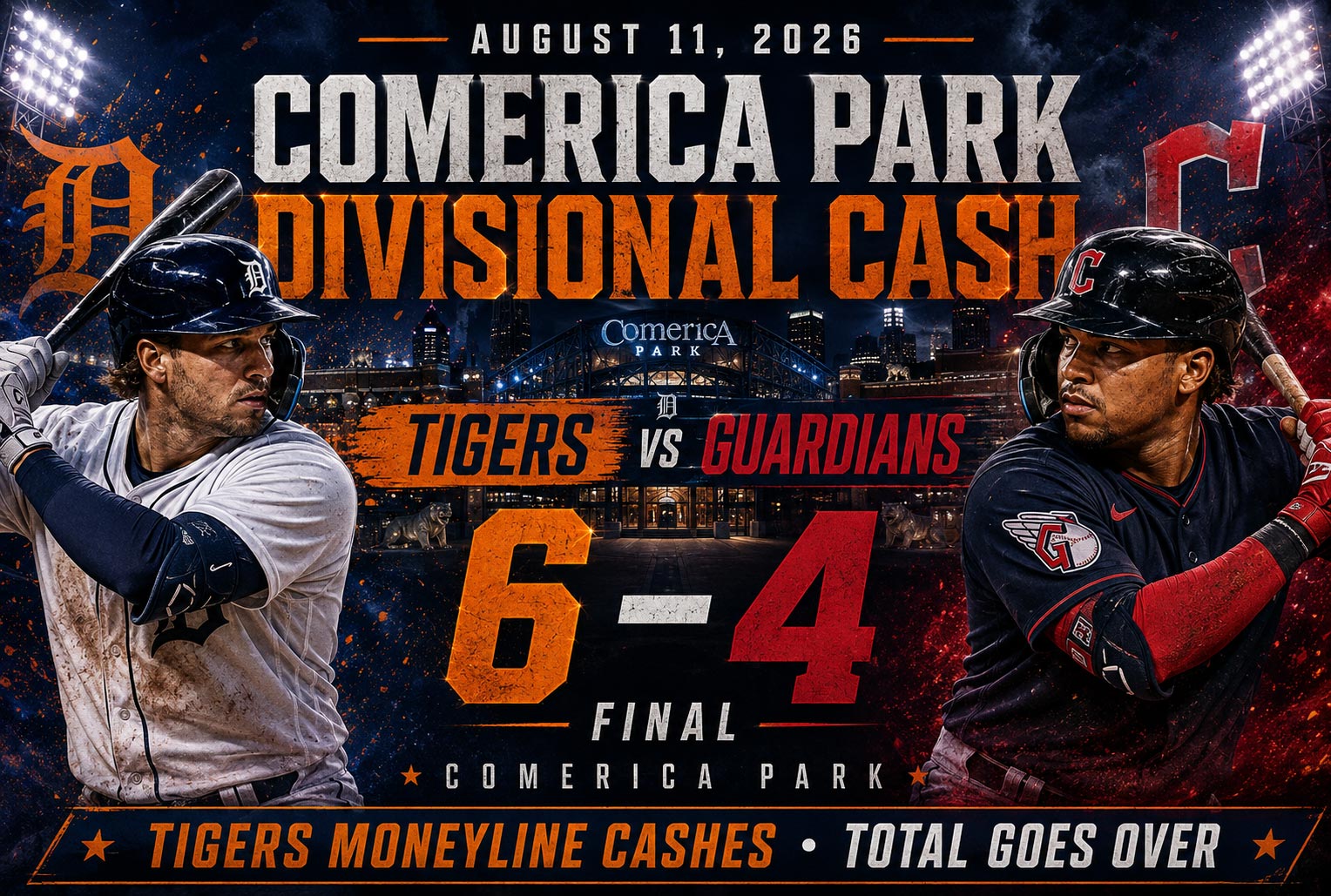
The Detroit Tigers just handed home moneyline bettors a fat W on Tuesday night, taking down the Cleveland Guardians 6-4 at Comerica Park. If you faded the public and rode with Detroit at plus-money—or even caught them at a pick’em depending on your book—you’re cashing tickets while the sharp money nods in approval. This wasn’t some blowout that makes you feel like a genius; this was a grind-it-out divisional battle that rewarded anyone who understood the Tigers’ home splits and Cleveland’s recent road struggles.
Tigers Cash Home Moneyline in 6-4 Victory
Detroit came into this one as a slight underdog or coin-flip on most boards, which frankly made zero sense given their home performance this season. The Tigers are now 34-21 at Comerica Park in 2026, and they’ve been particularly nasty against AL Central opponents when playing in front of their crowd. Cleveland, meanwhile, has been leaking oil on the road for the past three weeks, going 4-9 away from Progressive Field since mid-July.
The game itself played out exactly how the sharp money anticipated—tight early, Tigers breaking through in the middle innings, and Cleveland making it interesting late but never quite catching up. Detroit’s offense manufactured runs the old-school way with timely hitting and aggressive baserunning, while their bullpen held just enough to preserve the two-run cushion. If you were watching the live lines, there was actually decent value on Cleveland +1.5 when they were down 6-2 in the seventh, but that’s a different conversation.
From a betting perspective, this outcome validates what the market was telling us all along: home field matters significantly more in divisional matchups, especially in August when teams know each other’s tendencies inside and out. The public hammered Cleveland based on name recognition and season-long records, creating line value for anyone willing to back the home dog. Expected value isn’t about winning every bet—it’s about consistently finding spots where the odds are mispriced relative to actual probability.
Detroit Bettors Collect as Guards Fall Short
Let’s talk about the total for a second, because this game sailed over 8.5 runs like it was nothing. Most books opened at 8 or 8.5, and sharp action actually pushed some lines up to 9 before first pitch. Anyone who got in early on the over is now enjoying a stress-free cash, watching both offenses combine for 10 runs with relative ease.
Cleveland’s bullpen has been their Achilles heel all season, ranking 23rd in ERA since the All-Star break and hemorrhaging runs in late-inning situations. Detroit’s pen isn’t exactly lights-out either, sitting middle-of-the-pack in most metrics, which created the perfect storm for an over. When you’ve got two mediocre bullpens and lineups that have seen each other enough times to recognize every pitcher’s third-best offering, runs tend to pile up.
The market inefficiency here was beautiful—casual bettors see "Guardians" and assume elite pitching and defense based on reputation, but the underlying numbers told a completely different story. This is why you can’t just bet on vibes and team logos; you need to dig into recent form, bullpen usage patterns, and situational matchups. The sharps who hammered Tigers ML and over 8.5 understood this game had all the ingredients for a mid-scoring Detroit victory.
Breaking Down the Betting Angles
The Moneyline Math:
- Tigers closed around -105 to +105 depending on your book
- Implied probability of roughly 50% on both sides
- Actual win probability for Detroit at home against Cleveland’s road form? Closer to 58-60%
- That’s a 8-10% edge—which is massive in sports betting terms
The Total Play:
When you’re analyzing totals, you can’t just look at season-long averages. You need to focus on recent bullpen performance, starting pitcher workload, and how teams perform in the specific ballpark. Comerica plays relatively neutral these days (they moved the fences in a few years back), so it’s not a major park factor, but both teams’ relief corps were gassed coming into this series.
Market Psychology:
The public loves betting favorites and brand-name teams, which is why Cleveland money kept the line tight despite Detroit’s clear home-field advantage. This created a classic "sharp vs. square" scenario where informed bettors could get value simply by fading public perception. It’s the same reason the Yankees are consistently overvalued—casual money flows toward recognizable teams regardless of actual matchup dynamics.
This Tigers-Guardians result is a textbook example of why doing your homework pays off in sports betting. The casual bettor saw Cleveland’s better overall record and assumed they were the play; the sharp bettor recognized Detroit’s home dominance, Cleveland’s road struggles, and two exhausted bullpens setting up for runs. Moneyline bettors who backed the Tigers are cashing at plus-money or better, and over bettors are sleeping easy after both teams combined for double-digit runs. The lesson? Market inefficiencies exist everywhere in baseball—you just need to know where to look. So here’s my question for the comments: Are you still betting team records, or are you finally digging into the situational splits that actually matter?
"WannaBet.com may receive compensation from the sportsbooks mentioned in this post if you sign up using our links. This doesn’t cost you a dime, but it keeps the lights on. Please bet responsibly. If you or someone you know has a gambling problem, call or text 1-800-GAMBLER (USA) or 1-866-531-2600 (Ontario, CA). 21+ only."
