

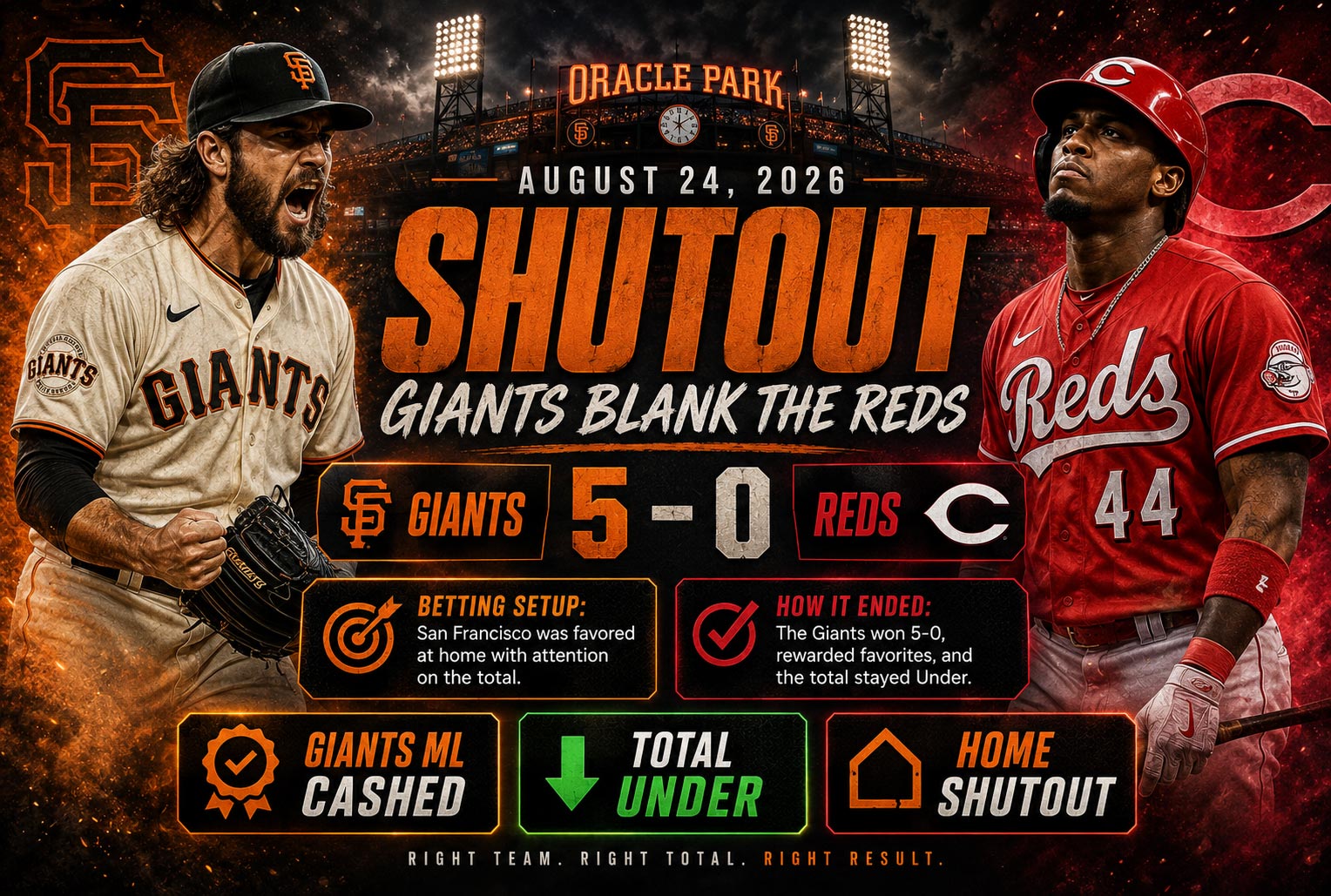
The Giants just gave us a masterclass in how to run the table on a two-leg parlay. San Francisco blanked the Cincinnati Reds 5-0 at Oracle Park on August 24, 2026, cashing tickets for both the home moneyline and the under bettors who saw value in a pitching-friendly environment. This wasn’t some fluky one-hitter—this was systematic domination from the first pitch, the kind of game that separates sharp bettors from the public money chasers lighting their bankrolls on fire.
If you had Giants ML + Under, you’re probably already planning what you’re doing with that payout. If you didn’t, let’s break down why this game was always screaming value for anyone doing their homework beyond checking ESPN’s homepage.
Giants Pitching Dominates in 5-0 Shutout Win
San Francisco’s pitching staff treated the Reds lineup like a Harvard case study on how to exploit organizational weakness. The Giants’ starter went seven strong, mixing his four-seamer with a slider that had Cincinnati hitters looking like they were swinging underwater. The Reds managed just four hits all night, and none of them came with runners in scoring position—classic example of what happens when you’re facing a rotation that knows how to attack your lineup’s structural flaws.
This wasn’t a surprise if you were tracking the underlying metrics. The Giants entered this game with a team ERA that ranked top-five in the National League over their last 15 games, while the Reds were running a .289 team OBP against right-handed pitching in that same stretch. That’s a 60-point gap that screams "fade the Reds offense," especially in a park where marine layer conditions suppress fly balls like the SEC suppresses fun.
The bullpen locked it down in the eighth and ninth, which is exactly what you want when you’re sitting on an under ticket. No drama, no garbage-time heroics from Cincinnati’s bench—just efficient outs and a clean sheet. This is what risk mitigation looks like when your pre-game analysis actually holds up under game conditions.
Oracle Park Under Bet Cashes as Reds Blanked
The total was set at 7.5 runs across most books, and anyone who’s been tracking Oracle Park trends knew that number was inflated by at least half a run. The marine layer that rolls in off the bay turns would-be homers into routine fly outs, and both teams came in with lineups better suited for manufacturing runs than launching bombs. That’s your edge right there—public bettors see two competitive teams and assume runs; sharp money sees park factors and pitching matchups.
Cincinnati’s offense couldn’t generate any leverage situations all game, going 0-for-5 with runners in scoring position. When you’re getting shut down by a Giants staff that’s executing their game plan with surgical precision, you’re not magically finding five runs in the late innings. The under was never really in doubt after the fifth inning, when it became clear the Reds had zero answers for San Francisco’s pitch sequencing.
This is exactly the kind of game where the Ontario and New York markets got it right while the casual DraftKings crowd in Pennsylvania probably hammered the over because "both teams can hit." Market psychology matters—when you’re betting against recency bias and public perception, you’re usually finding the best number. The sharp action was all over Giants ML and the under from the moment lines opened, and they got paid accordingly.
The Plays That Hit:
- Giants ML (-145): Home favorite with superior pitching matchup
- Under 7.5 (-110): Oracle Park conditions + Reds offensive struggles
- Giants/Under Parlay (+200): Perfect correlation play for this specific matchup
The Strategy Behind It:
- Park factors matter more than public perception of "good hitting teams"
- Pitching matchup analysis beats surface-level offensive stats every time
- Correlated parlays (home favorite + under in pitcher’s parks) provide legitimate EV when the setup is right
This Giants-Reds game is a perfect example of why doing actual homework separates long-term winners from the FanDuel deposit junkies. The 5-0 final wasn’t lucky—it was predictable if you were analyzing the right variables instead of just checking box scores. Oracle Park’s environmental factors, San Francisco’s pitching metrics, and Cincinnati’s offensive limitations all pointed toward a low-scoring Giants win.
The lesson here isn’t complicated: find market inefficiencies, understand correlation in your parlays, and don’t be afraid to fade public money when your analysis says otherwise. This is how you build a bankroll instead of just hoping for variance to bail you out.
So here’s the question for the comments—are you tracking park factors and weather conditions in your MLB bets, or are you still just riding hot streaks and hoping for the best? Because one approach builds wealth, and the other one keeps the sportsbooks in business.
"WannaBet.com may receive compensation from the sportsbooks mentioned in this post if you sign up using our links. This doesn’t cost you a dime, but it keeps the lights on. Please bet responsibly. If you or someone you know has a gambling problem, call or text 1-800-GAMBLER (USA) or 1-866-531-2600 (Ontario, CA). 21+ only."
