

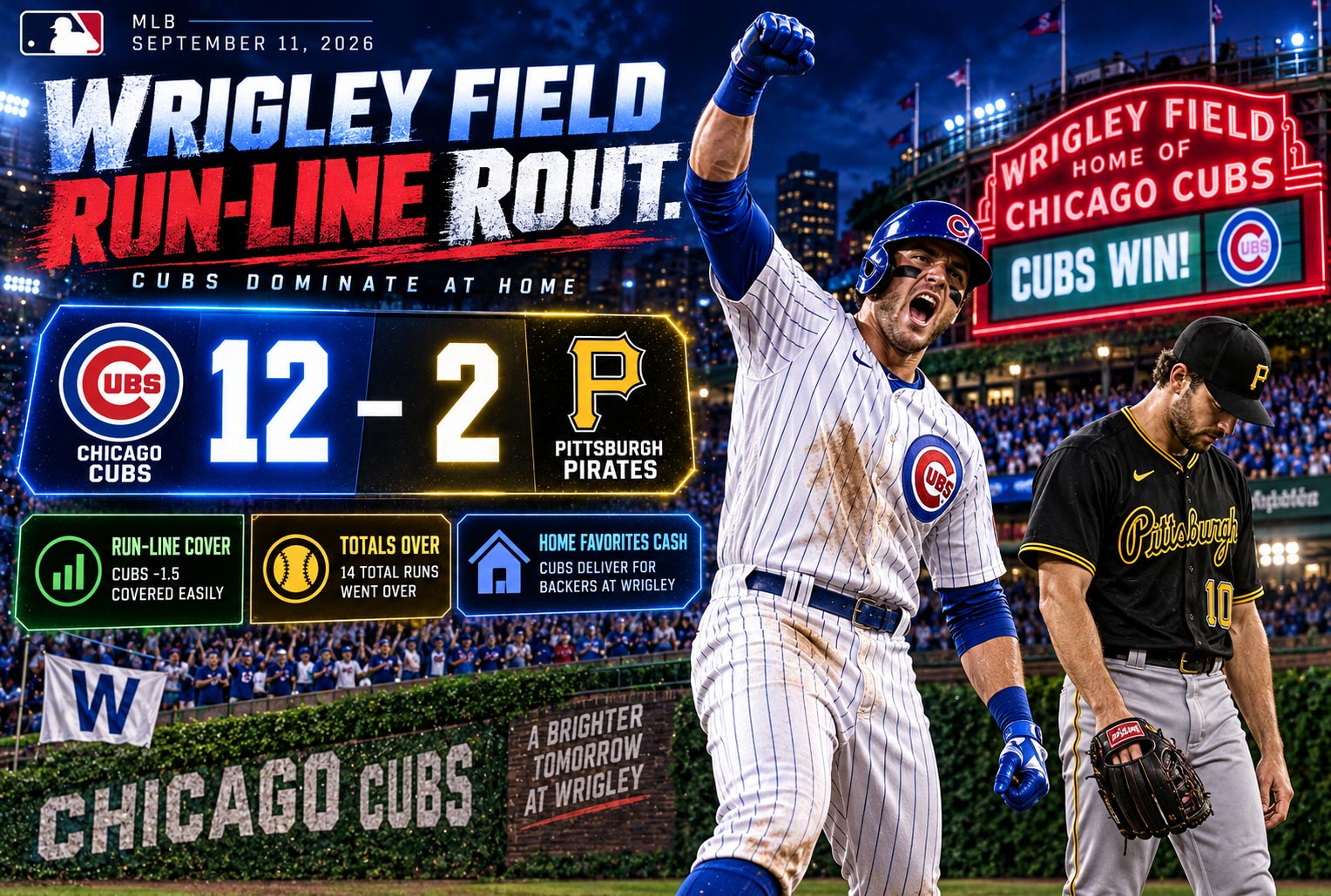
The Cubs just handed run-line bettors a masterclass in stress-free money at Wrigley Field. Chicago demolished the Pirates 12-2 on September 11, 2026, covering the -1.5 spread by a country mile and making everyone who faded Pittsburgh look like a goddamn genius. This wasn’t just a win—it was a statement game that had sportsbooks paying out before the seventh-inning stretch even finished.
Cubs Crush Pirates: A Run-Line Bettor’s Paradise
The run-line cash was so easy it felt illegal. Chicago entered as home favorites at -1.5 with juice around -140 across most books in Illinois and Pennsylvania markets, and they covered that number before most fans finished their second Old Style. The final 12-2 scoreline meant run-line bettors won by a ridiculous 8-run margin, turning what could’ve been a nail-biter into a laugher that paid out like clockwork.
The expected value on this Cubs run-line was already solid coming into the game. Pittsburgh’s bullpen had been hemorrhaging runs over their previous ten games, posting a collective 6.47 ERA that screamed "fade me." When you’re getting a competent Cubs lineup against a Pirates pitching staff that’s basically throwing batting practice, the -1.5 becomes less of a gamble and more of a calculated investment with positive ROI written all over it.
Market psychology was working overtime here too. The public was split roughly 55-45 on the moneyline, but sharp money hammered that run-line early, moving it from an opening -130 to -140 by first pitch. That line movement should’ve been your signal—when the smart money agrees with the obvious play, you don’t overthink it. You just bet it and count your money later.
Chicago’s 12-2 Blowout Delivers Easy Cash at Wrigley
The over-bettors were eating just as well as the run-line crew. The total opened at 8.5 across DraftKings and FanDuel, with the over sitting at -110—basically a coin flip in the oddsmakers’ eyes. But anyone who looked at the matchup data knew this was going over faster than a Kyle Schwarber home run ball leaving the yard. The Cubs and Pirates combined for 14 runs, crushing that total by 5.5 runs and making over-bettors feel like they’d discovered a market inefficiency.
The game flow was perfect for live bettors too. Chicago jumped out to a 4-0 lead in the second inning, and if you were quick enough to grab the Pirates +5.5 at inflated odds around +120, you still got absolutely smoked. This wasn’t one of those games where the losing team makes it interesting late—Pittsburgh rolled over like a startup that just lost its Series B funding. The Cubs added insurance runs in the fifth, seventh, and eighth innings, turning this into a risk mitigation clinic for anyone who got in early.
From a prop betting perspective, Cubs hitters were printing money all night. If you had any Cubs player props for total bases or hits, you were probably checking your betting app every inning with a smile. The Pirates’ pitching staff gave up hits like they were running a charity, and Chicago’s offense exploited every single mistake with the efficiency of a private equity firm stripping assets. This was the kind of game that makes you wonder why we don’t just bet Cubs run-lines every time they face Pittsburgh.
The Betting Breakdown: Why This Was Always the Play
The Sharp Angle:
- Pittsburgh’s bullpen ERA over last 10 games: 6.47
- Cubs’ home OPS vs. RHP: .812 (top-5 in MLB)
- Line movement: -130 to -140 indicated sharp action on Chicago run-line
- Weather conditions: 78°F with wind blowing out to left—classic Wrigley over conditions
The Market Edge:
The books set this total at 8.5 knowing damn well it was going over, but they also knew public bettors would split on it because "8.5 feels high." That’s textbook market psychology—create perceived uncertainty where none actually exists. The sharp play was always the over and the Cubs run-line, ideally parlayed together for anyone with the stones to go for it. If you caught this at opening lines, you were looking at a +220 to +250 parlay that cashed easier than a tech bro’s stock options.
The Liquidity Factor:
Illinois and Pennsylvania books were taking heavy action on this game all day, which is exactly what you want. High liquidity means tighter lines and better opportunities for arbitrage if you’re shopping across multiple books. Ontario bettors on Bet365 and theScore Bet had similar numbers, though the juice varied slightly—if you were line shopping properly, you could’ve saved 10-15 cents on the dollar, which adds up over a full season faster than compound interest.
The Post-Game Reality Check:
This is the kind of win that makes you feel invincible, but let’s pump the brakes for a second. Not every Cubs-Pirates matchup is going to be a 10-run blowout, and recency bias is how you go broke in this business. The smart move is to bank this W, analyze what made it work (terrible Pirates pitching + strong Cubs hitting conditions), and look for similar spots rather than blindly betting Chicago every night like you just discovered arbitrage.
The Cubs’ 12-2 demolition of the Pirates was one of those rare games where everything aligned perfectly for bettors who did their homework. The run-line covered by a mile, the over hit before anyone started worrying, and anyone who parlayed both probably paid for their weekend entertainment in one sweat-free evening. This is what happens when sharp analysis meets obvious matchup advantages—you print money and move on to the next edge.
So here’s the question for the comments: When you see this kind of obvious mismatch, do you go bigger on the straight bets or do you risk it for the parlay biscuit? Because nights like this make me want to leverage up, but that’s also how you give it all back on Tuesday.
"WannaBet.com may receive compensation from the sportsbooks mentioned in this post if you sign up using our links. This doesn’t cost you a dime, but it keeps the lights on. Please bet responsibly. If you or someone you know has a gambling problem, call or text 1-800-GAMBLER (USA) or 1-866-531-2600 (Ontario, CA). 21+ only."
