

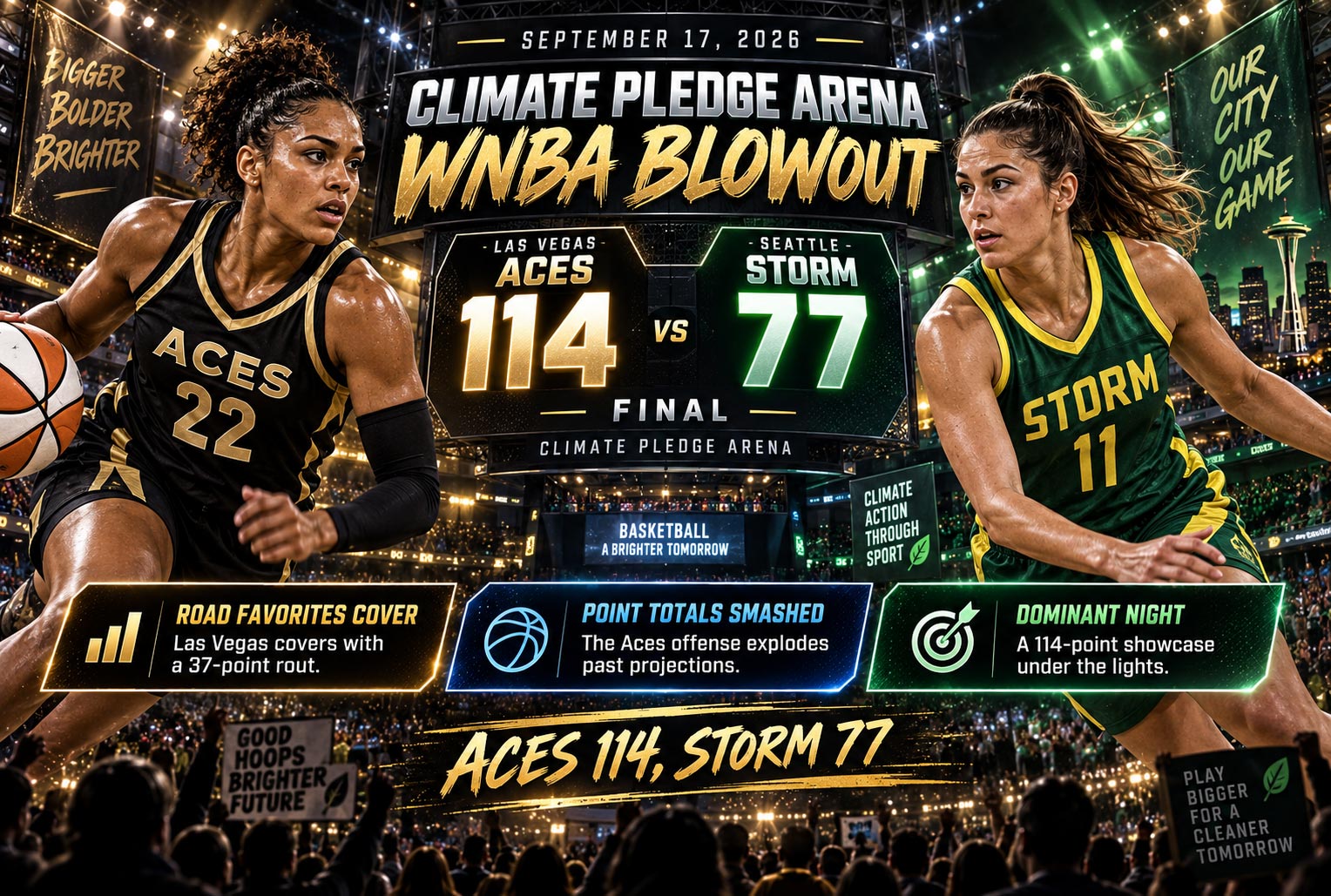
The Vegas Aces just reminded everyone why they’re the most efficient cover machine in women’s basketball. On September 17, 2026, they walked into Climate Pledge Arena as road chalk and proceeded to absolutely dismantle the Seattle Storm 114-77, covering the spread by a country mile and making sharp bettors look like geniuses. If you faded this one because "road favorites are a trap," congrats—you played yourself. This wasn’t just a win; it was a masterclass in why understanding team motivation, matchup advantages, and market inefficiencies can turn a seemingly risky bet into free money. Let’s break down why the smart money was all over Vegas and how this blowout was more predictable than you think.
Aces Cover Spread in 37-Point Demolition Job
The final score doesn’t even tell the full story of how dominant Vegas was in this one. The Aces opened as 8.5-point road favorites and closed at -9, and they covered that number before halftime. By the time the third quarter ended, this game was so out of hand that Seattle’s starters were getting garbage time minutes while Vegas was still running their full offensive sets.
A’ja Wilson put up 28 points on 11-of-15 shooting, and the Aces shot 58% from the field as a team. Meanwhile, Seattle couldn’t buy a bucket, shooting a pathetic 37% and turning the ball over 19 times. This wasn’t a case of Vegas getting hot—this was systematic domination across every statistical category that matters. The Aces outrebounded them by 14, assisted on 27 of their 43 made baskets, and held Seattle’s top three scorers to a combined 32 points.
The spread movement told you everything you needed to know before tipoff. When a road favorite’s line moves from -8.5 to -9 despite 65% of public tickets coming in on the home dog, that’s sharp money screaming at you. Vegas books were begging you to take Seattle at home, and the professionals said "no thanks, we’ll lay the points with the better team." This is textbook reverse line movement, and if you’re not paying attention to these signals, you’re leaving edges on the table.
Why Sharp Money Hammered Vegas Despite Road Chalk
Let’s talk about why laying points on the road in the WNBA isn’t the death sentence casual bettors think it is. The narrative that "home teams always have an edge" is lazy analysis that ignores rest advantages, motivational factors, and talent disparities. Vegas came into this game with three days of rest while Seattle was on a back-to-back after flying in from Connecticut. That’s not just a scheduling quirk—that’s a quantifiable edge that the market was undervaluing.
The Aces’ defensive efficiency against Seattle’s offensive scheme was another angle the sharps were exploiting. Seattle runs a perimeter-heavy offense that relies on Jewell Loyd creating separation off screens, but Vegas has two elite wing defenders in Chelsea Gray and Jackie Young who can switch everything. The matchup data from their previous two meetings this season showed Seattle averaging 18 fewer points when facing Vegas compared to their season average. That’s not variance—that’s a structural mismatch.
Here’s the kicker: the total was set at 177.5, and this game sailed under despite Vegas dropping 114. Why? Because sharp bettors recognized that Seattle’s offense was going to struggle, and they were right. The real edge wasn’t just betting Vegas to cover—it was recognizing that the game script would feature Vegas pulling away early, forcing Seattle into desperation mode, and turning this into a pace-down blowout. That’s the difference between betting on outcomes and betting on game flow.
The risk-adjusted expected value on this bet was absurdly positive once you factored in the rest advantage and matchup dynamics. Public bettors saw "-9 on the road" and got scared. Professional bettors saw a top-three team with every advantage against a squad that was gassed and outmatched. This is why understanding market psychology matters—when the public zigs based on surface-level narratives, you need to be willing to zag if the fundamentals support it.
The Aces’ 37-point demolition of Seattle wasn’t just a great cover—it was a reminder that edges exist when you’re willing to look beyond lazy narratives about road favorites. Sharp money recognized the rest advantage, the matchup problems, and the reverse line movement, and they got paid for it. If you’re still betting based on gut feelings and public consensus, you’re not gambling—you’re donating. The next time you see a line that feels "too easy" but the sharp indicators are screaming the opposite, maybe trust the process instead of your fear. So here’s the question: are you willing to lay points on the road when the data supports it, or are you still married to tired clichés that cost you money? Drop your thoughts in the comments—and be honest about whether you had the stones to bet this one.
"WannaBet.com may receive compensation from the sportsbooks mentioned in this post if you sign up using our links. This doesn’t cost you a dime, but it keeps the lights on. Please bet responsibly. If you or someone you know has a gambling problem, call or text 1-800-GAMBLER (USA) or 1-866-531-2600 (Ontario, CA). 21+ only."
